
Kilnhurst: The Yorkshire village which was a hub for mining, pottery and rail
Situated north east of Rotherham, the small settlement of Kilnhurst saw canal and railway developments during the 18th and 19th centuries. This brought about much industrial activity.
At the outset of the 18th century serious consideration was given to make the River Don navigable.
William Palmer & Partners produced a plan in 1722 to improve the passage of vessels from Hull to Doncaster and Sheffield.
The River Don meandered through Kilnhurst and the plan shows the proposed navigation would pass the area in a straight line.

Noticeable in Kilnhurst at this time were certain industries, such as metal forges and corn mills. The waterway was completed as far as Rotherham by 1740, the canal skirting Kilnhurst’s eastern edge.
The River Don Navigation was completed to Tinsley in 1751 and extended to Sheffield by 1819.
An early UK railway line which extended 72 miles from Derby to Leeds was opened in its entirety on July 1, 1840, providing a much-needed link to the North.
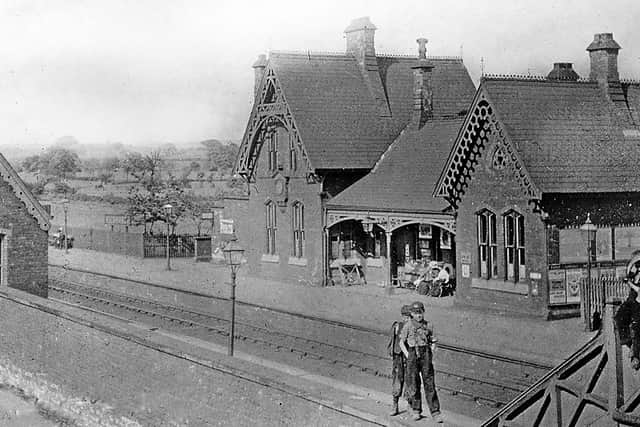
A railway station on the route was established at Kilnhurst, opening on April, 1841, but a newspaper report said that services from there would be discontinued after Sunday January 1, 1843.
The facility was back in the timetable from October 1852. The station was renamed Kilnhurst West from September 25, 1950 whilst closure came on January 1, 1968.
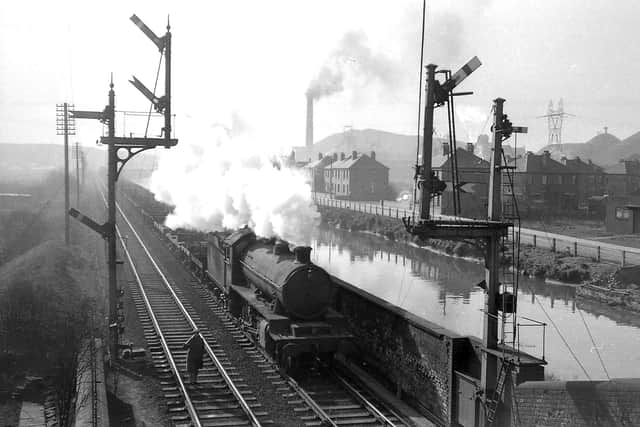
Another railway line, the Rotherham and Mexborough Extension Railway, passed through Kilnhurst from Thursday March 23, 1871, the day of the opening.
One account said: "At Kilnhurst, considerable enthusiasm was manifested, the greater part of the villagers apparently having turned out for the occasion. A station, on the route, Kilnhurst, first appeared in a timetable during September 1871.”
The facility became Kilnhurst Central from September 25, 1950. Closure came after much argument on February 5, 1968.
There has been a variety of industrial activity at Kilnhurst including coal mining, pottery making and the manufacture of railway wheels.
According to the Express of November 16, 1929, the Kilnhurst Pottery was established in 1746 and manufactured earthenware.
Early owners were Wiliam Malpass and William Hawley. Later, they included Jospeh Twigg and Brothers. Towards the end of the 19th century, the number of employees was 70 or 80 men and women.
The firm’s speciality was the production of mugs and jugs known as ‘Bristol’ stone ware. These were beer mugs in gill, pint and quart measure and they met with a ready sale.
More than one million were sold between 1844 and 1907.
Due to changing conditions of manufacture, increased competition and the effects of the First World War, the firm closed its gates on August 5 1929, the plant dismantled and sold several months later.
A coal pit is noted at Kilnhurst on an 1838 map. Also, references may be found to Kilnhurst colliery from at least 1839 and this was owned by J. and J. Charlesworth.
Then, on February 28, 1857, a notice appeared for sinkers and contractors with an announcement: "The Thrybergh Hall Coal Company are now prepared to receive tenders for sinking a shaft in their property at Kilnhurst.
"Thereafter, the colliery, run by J. and J. Charlesworth, was referred to as the Thrybergh Hall colliery or just simply the Kilnhurst colliery.
"During November 1858, three men named Hurst Dyson and Jagger, were killed whilst a new shaft was being sunk.
“In December 1863, an account said six men had been killed at the Thrybergh Hall colliery. One quote said the pit had been in operation ‘more than two years…and between 200 and 300 men are employed in the extensive workings.”
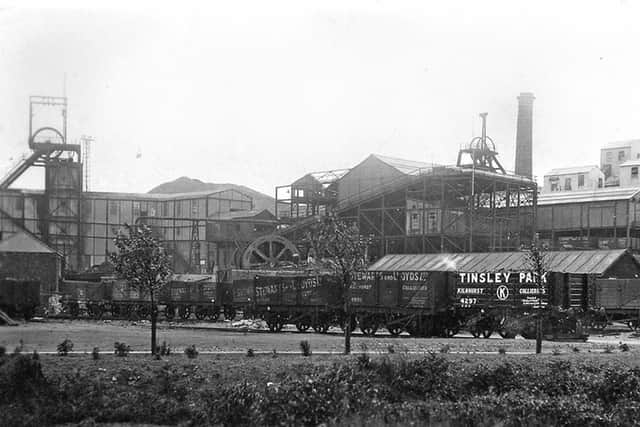
A report from May 1924 said the colliery had been acquired by Stewart and Lloyd, Birmingham. Twelve years later, the Tinsley Park Colliery Company took control after paying £310,000.
Kilnhurst colliery became part of the Manvers Complex early in 1986, but this operation ceased production on February 26, 1988.
A business newcomer to Kilnhurst at the outset of the 20th century was John Baker & Co in 1903 establishing a steel works, making railway wheels and axles.
This was in addition to the company being noted as steel, iron and brass founders. A year later, John Baker died and the business was taken over by his son, George Baker.
During the First World War, the whole works was turned into a munitions factory and shell forgings were reported to be the special product.
John Baker and Co. (Rotherham) became a public company from 1920. Nine years later Henry Bessemer and Co. was taken over, a new company being styled John Baker & Bessemer.
An announcement said this merger was ‘to rationalize capacity in rail making.’ The operation was to be concentrated at Kilnhurst with Bessemer’s Sheffield site closing down.
In 1951, under the Iron and Steel Act, the firm became part of the Iron and Steel Corporation of Great Britain. By 1961 the company reportedly employed 1,300 employees.
The Kilnhurst site survived until 1963 when it was bought by the Iron and Steel Investments consortium from the Holding and Realization Agency. Kilnhurst, on July 1859, saw the Archbishop of York arrive to consecrate the new church of St Thomas.
Designed in the early English style by Pritchard & Son of York, the contractors for the work and fittings were Chadwick & Son of Conisbrough. The stone was acquired from the quarries at Hooton Roberts.
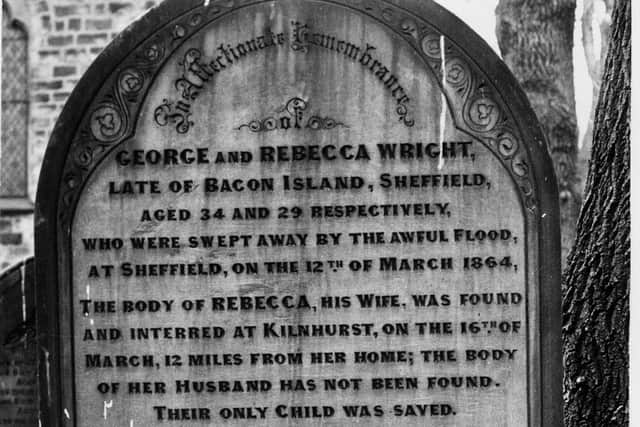
An inscription on a tombstone in the graveyard states that George and Rebecca Wright, aged 34 and 28 respectively, and of Bacon Island Sheffield, were swept away by the flood of March 12, 1864.
Rebecca’s body was found and interred at Kilnhurst, but the body of her husband remained missing. Their only child was saved. One of Kilnhurst’s famous sons was sculptor, Charles Sargeant Jagger.
Born at Kilnhurst in December 1885, he was the son of Enoch Jagger, for many years an official of the Thrybergh Hall colliery.
Charles’s first ambition was to go to sea, and it was said that his artistic instincts were aroused by seeing a man modelling a sphinx in clay on Whitby sands where his father had taken him for the day.
Charles received his first training at the Sheffield School of Art, then at the Royal College of Art, South Kensington, followed by a travelling scholarship enabling him to spend some time in Rome and Venice.
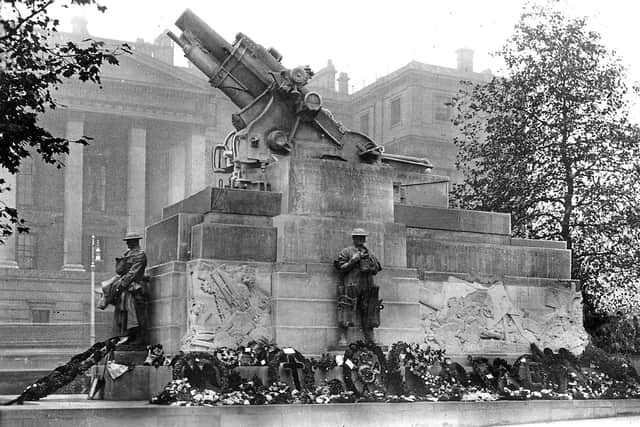
During WWI, Jagger was gassed and wounded several times, eventually being awarded the Military Cross. One of his first commissions came from the British War Memorials Committee and he produced a large relief entitled the First Battle of Ypres.
Throughout the 1920s Jagger was extremely busy with war memorial work and undertook commissions for Manchester (1921); Southsea (1921); Brimington (1922); the Great Western Railway Company (1922); the Royal Artillery (1921-5); Belgium's Anglo Belgian War Memorial (1922-3); Nieuwpoort (1926-8); Cambai (1927-8) and Port Tawfiq (1927-8).
According to Ann Compton in Charles Sergeant Jagger: War and Peace Sculpture (1985). he was elected an Associate of the Royal Academy in 1926. He died of pneumonia at his home in Battersea, London on 16 November 1934.