
Kiplin Hall: How Yorkshire Victorian women taught men a thing or about woodwork
Historic house museum Kiplin Hall and Gardens explores how trees not only decorate the landscape but have become useful and beautiful objects throughout history in its new 2026 exhibition, Wood: from utility to beauty.

Visitors to Kiplin Hall are often struck by the vivid green of the Lime Tree Avenue, framing the historic approach to the Hall. Tree planting has been used to create route ways and scenic views to be enjoyed for decades on end. Seedlings of trees spanning the generations in the 400 years since the hall was built. But it’s not just outside where trees play an important role.
Inside the building timber features in everything from the construction of the building to the furnishings and objects inside it. Ornately carved fire surrounds, cabinets and chairs. Doors, staircases, wooden spoons and handles on knives. Wood is everywhere.
The best examples have been gathered into this new exhibition and through highlights around the Hall.
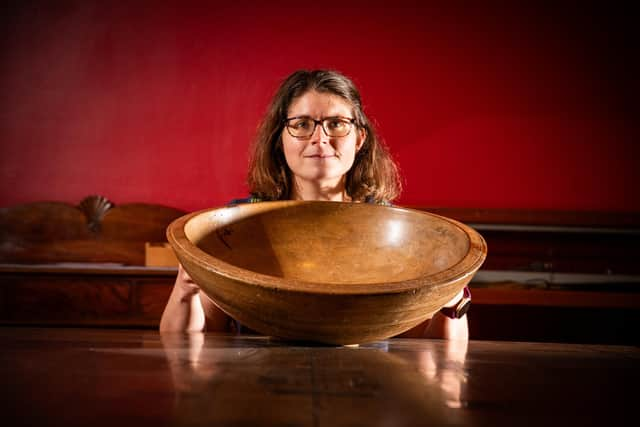

“The inert nature of sycamore, makes it ideal for kitchen items as it leaves no taste behind,” says Curator Alice Rose. “This is why is was used for dairy bowls and other kitchen items.”
Sturdy oak provides strength to architectural beams. In the exhibition visitors can see a wealth of different wooden objects on display. Gaining an understanding of the useful and beautiful properties of the timber, a long lasting and renewable material.
The exhibition came about as part of the wider Yorkshire Country House partnership which sees a number of the county’s country houses come together to work towards a particular theme. This year’s theme is Plants, Trees and the Country House.
"I knew at Kiplin that we had this wonderful collection of Arts and Crafts material and decorative wooden objects but we also have a wonderful collection that was given to Kiplin called the Annie Marchant Kitchen and Dairy collection,” explains Alice. "It features a lot of very beautiful but more everyday things that ordinary people would use. Together they show how wood is used for its practical purposes but also for its beautiful aesthetic properties.”
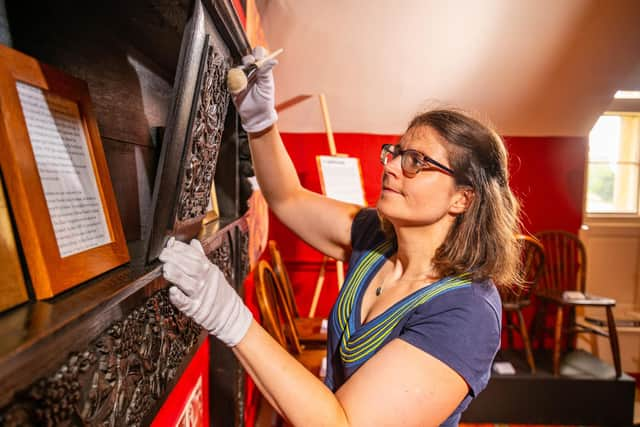
Alice says one of her favourite elements of the exhibition is the role of women.
“We often think of woodwork as a male dominated hobby or profession. But that is not the case. Many visitors are surprised to discover the role of women in the creation of many of the wooden objects on display at Kiplin. Beatrice Carpenter, appropriately named, designed many of the items we have on display today.”
The exhibition provides details about Beatrice (1853 – 1927), née de Grey, who married Walter Cecil Talbot (later taking the name Carpenter to inherit Kiplin Hall) in 1887 following the death of his first wife. Beatrice’s sister, Emily was already married to Walter’s brother, Alfred. The family tree is very much entwined.
“Beatrice was a talented artist. She got involved in the Home Arts and Industries Association in 1884,” explains Alice.
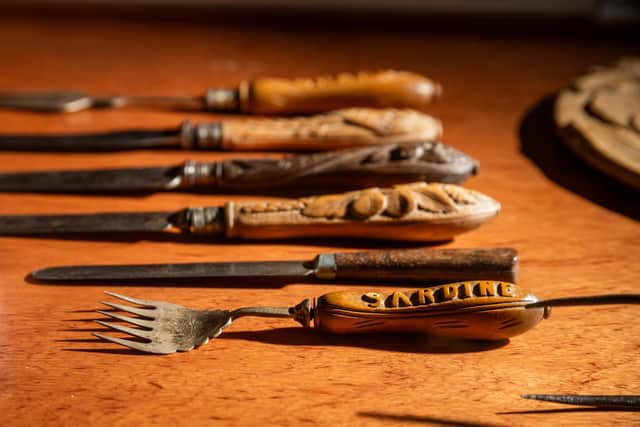
"She ran a wood working class for working men in Ratcliff, London. When she moved to Kiplin Hall, she ran wood carving classes nearby, in Bolton-on-Swale. We believe she taught the class.
"Beatrice designed pieces of furniture and objects for the class members to make. By sharing her skills with working men she was likely offering them other ways to earn money or gain employment. We also have profiles of some of the individual men who attended Beatrice’s classes and who these individuals were and what they made from her designs.”
Beatrice was also a talented designer, many of the objects she designed and possibly made, can be seen throughout the Hall and were featured in the popular magazine ‘The Studio’.
"We also have some scrapbooks of her tracings and design work, including a design for the bird cabinet. We have the sketch and a pair of the bird cabinets that are all inlaid. Which also ties in with her interest of he natural world around her.
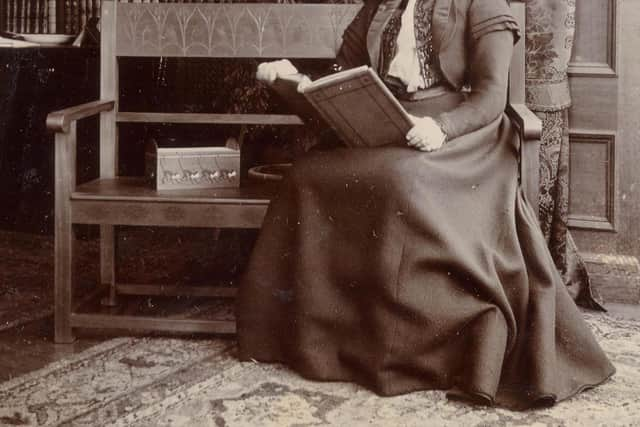
“We don’t know what artistic training she had or how she got into wood working but it was must have been a family thing. It seems Beatrice’s passion for woodwork was shared in the family. Her sisters were also involved in the Home Arts and Industries Association. Mabel de Grey and Odeyne de Grey also ran wood carving classes,” says Alice.
“Mabel served on the Home Arts and Industries Exhibition Committee. Through letters to her step-daughter, Sarah Carpenter (later Turnor), we know she was involved in the Home Arts and Industries Association until at least 1923. It seems that woodcarving was an acceptable craft for middle class Victorian women, although it was viewed as a ‘minor art.’
“Sarah went on to own Kiplin Hall, before Beatrice’s niece Bridget Talbot (daughter of Emily) became the last owner of Kiplin. Bridget is credited with saving Kiplin from demolition and gathering the family possessions that form the museum collection today.”
The is also a part of the exhibition dedicated to Windsor chairs which are part of the Annie Marchant Dairy and Kitchen collection. “It was a traditional design of chair that everyday people would have been very familiar and an array of domestic objects that people would have used in their homes – including the sycamore dairy bowls.” The exhibition also explores where different woods have come from - from native woods through to the more aesthetic woods from other countries.
"We also touch on the consequences today of over use of those woods – particularly mahogany and ebony – which led to deforestation and also links to slavery,” says Alice.
A family fun Tree Trail featuring rubbing plaques to collect will take place in grounds in the summer months, complimenting the indoor exhibition. “It has been really lovely to bring aspects of the outside inside – to create the connectivity between the trees outside to the furniture inside.”
‘Wood: from utility to beauty’ is on at Kiplin Hall until November 26. kiplinhall.co.uk