
Kirkby Fleetham: The historic Yorkshire village with a pub named for Dick Turpin
Hundreds of years after finding an unusual way of maintaining classes for children in the small village, Kirby Fleetham residents' were last year forced to accept their much-loved school would become the latest in a long line of such closures in North Yorkshire.

Historians have recorded how before the Napoleonic Wars the school in the village five miles north-east of Bedale was a cottage on the north-east side of the village green where The Close bungalows now stand, with a capacity for just six pupils, so some went to classes in the morning, others in the afternoon.
Such a system was no longer an option when last year when the Dales Academies Trust, which took over Kirby Fleetham Church of England Primary School, also overlooking the village green, before the pandemic, concluded there was no way forward after the roll fell to 18 pupils alongside financial viability concerns. North Yorkshire Council and then the Education Secretary concurred.
The decision represented a significant blow to the community, which had voiced its objection with a 650-signature petition amid claims the closure would be "life-altering" for the village's children.

A father of one pupil said he felt an "extreme amount of disappointment" and "a little bit of anger".
Within days of the school's closure residents underlined their passion for another important link with the village's past, Kirby Fleetham Feast.
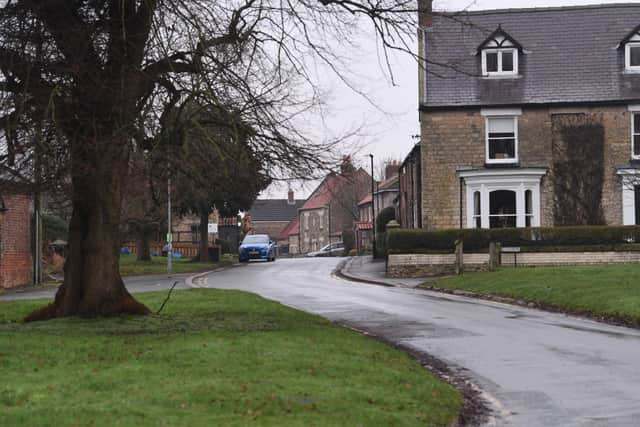
Organisers said the village green, also overlooked by a well-used village hall, was "buzzing with excitement" over the 123rd edition of the event, which dates back to 1876.
Heralded as a "thoroughly English rural institution", the annual August event features a number of quoits competitions, reflecting a strong presence for The Northern Game in the area.
Last year the village's top team, which plays on pitches behind the Black Horse Inn, were placed fifth in the Lower Dales Quoits League.
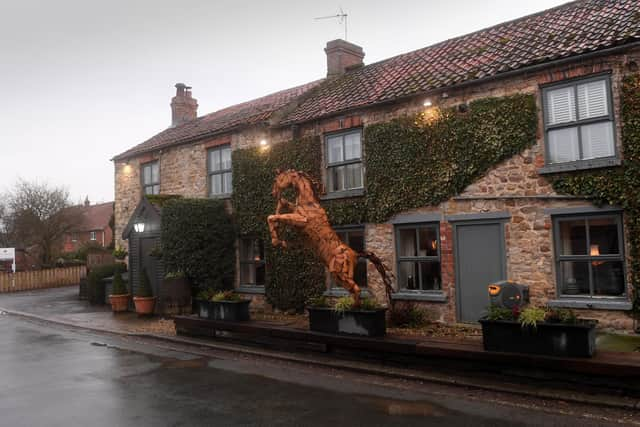
The pub, near the former school premises on Lumley Lane, has also been a venue for members of the Bedale Hunt, which can trace its roots to 1816 and has its kennels nearby.
With 14 bedrooms, a restaurant featuring dishes ranging from pan seared seabream in a brown shrimp caper butter to Teesside-style parmo as well as a weekly fish and chips takeaway, the pub has been a particular boost for the community since s major refurbishment in 2009.
Locals claim the pub gained its name in the 18th cenury from Dick Turpin's stallion as the highwayman moved up and down the nearby Boroughbridge to Catterick road, now the A1(M), before eloping with a woman from the pub.
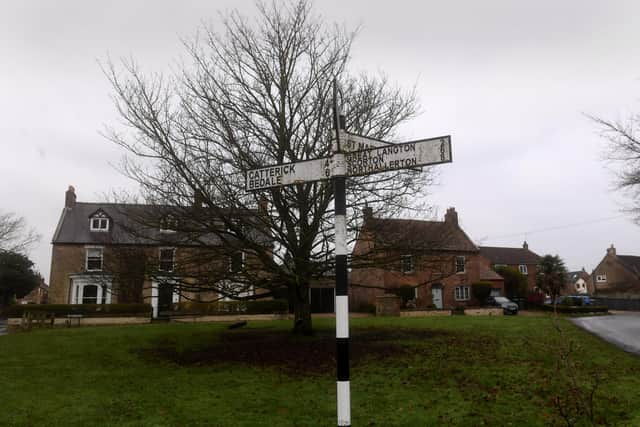
The village is also half-way between Catterick and Northallerton, where Bede, the seventh century chronicler, wrote Roman missionary and the first Bishop of York St Paulinus baptised some of his first converts, in the River Swale, which meanders to the north and east of Kirby Fleetham.
A rowing boat was kept at Langton Farm to the north of the village to cross the river before until Edward Courage, of the brewing dynasty family, bought Kirby Fleetham Hall Estate in 1889 and had the steel Great Langton Bridge built together with subscribers in 1902.
The estate features an 18th century eight-bedroom country house a mile north of the village set in grounds featuring a serpentine driveway, secret walled garden, a lake, church and rolling woodlands and has recently been launched as a wedding venue.
John Aislabie, who had been disgraced Chancellor of the Exchequer following the South Sea Bubble, bought the estate as a wedding present for his son, William, who with his father created what is now a UN World Heritage site at Fountains Abbey and Studley Royal.
Workmen are said to have been have been ferried from Ripon to the estate to create the riverside gardens, an orangery and walled garden.
The nearby Church of St Mary dates to the 12th century. Its tower is thought to have served as a place of refuge from Scottish invaders.
It features monuments such as a cross-legged effigy of knight and judge Sir Nicholas Stapleton, who died in 1290, with a lion at his feet alongside his sword, shield and chainmail helmet.
Four years ago, residents published a book following a year cleaning and transcribing memorials to people in the church and graveyard, which revealed the story of 19th century circus impressario George Morgan, who rescued his star attraction elephant after its caravan fell off Bedale Bridge into the Bedale Beck a day before he fell under the wheels of his caravan at Little Fencote and was killed.
His memorial in the graveyard reads: "All travellers who may pass by; Stop here awhile and cast an eye, Like you in life, I once was gay, In the next moment turned to clay. My wife and seven children dear and honoured sister mourn me here. With them on earth I hoped to stay, But God he called me hence away."
It’s said the church is outside the village as it was built to serve the Danish settlement of Kirby, before it was devastated by flooding and its residents moved to nearby Fleetham.
Other theories include that plague wiped out many residents and or that they were forced out by marauding Scots.
The Scots proved such a headache in the 14th century that the Chief Baron of the Exchequer Henry le Scrope built a motte and bailey castle with about seven towers at Fleetham, just to the east of the A1.
Due to the dry Spring in 2020 stone for the moat stone and building platforms were revealed and erosion caused by rabbits has exposed a series of cobbled surfaces and pottery dating from the 12th century.
At the outset of the 17th century, the Smelt family bought the manor of Kirkby before buying the manor of Fleetham decades later, leading to the fusion of the villages.
The Leonard Smelt charity, which was established in 1712 to prevent or relieve poverty in Kirby Fleetham, continues to offer grants to permanent long-term residents from rental income for two fields by the village.