
Landmark windmill on Yorkshire coast restored to be used as holiday let
Throughout the ups and downs of a restoration project that has taken nearly a quarter of a century, the passion for restoring a historic landmark near Filey has never waned.

There was a windmill at Muston back in the 14th century, and it was converted from a post to a tower mill in the mid 1800s. Around the time of the First World War, Muston Mill was reduced to a stump.
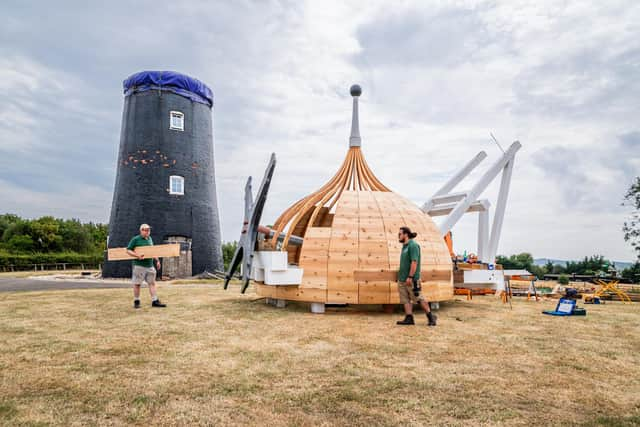
More than 100 years on, however, it has been rebuilt to its correct height, and is getting retarred, making it look spick and span.
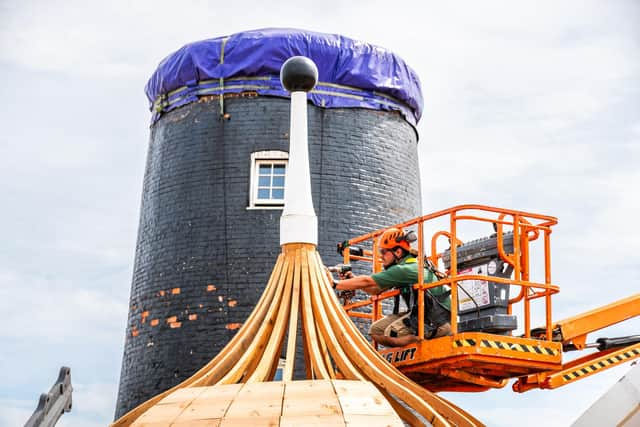
It’s about to get its cap on, before beginning a new chapter in its life as a holiday let.

Filey-born Ed Watkinson says he and son Richard “wanted to give something back to the town.”
When Richard bought the land back in 2002, the mill was in a desperate condition, having been used as an animal shelter, its doors and windows long since rotted away.
It was hard to believe it it would ever resume its former impressive stature on the hill above the town.
Around 1910 the mill’s fantail and remaining sails got wrecked in a storm. This was the "point of no return” as shortly afterwards the cap, sails and the whole third storey were dismantled.
One theory is that it followed an Admiralty order to reduce landmarks which were visible from the North Sea, after the bombardment of coastal ports by the German Navy.
The phrase “a labour of love” doesn’t adequately convey the effort the project has taken to get so far.
Ed said: "We’ve had so many setbacks you wouldn’t believe it. The planning took 12 years. We spoke to the original heritage officer after we’d been discouraged.
"He said ‘oh no we’d rather see it stand as a ruin in the landscape’. The local councils were fantastic.”
Richard said his wife Suzanne always wanted to live in a windmill.
His dad who lives locally, has been the “eyes and ears” on the ground.
"Boy has it been a journey,” he said. “There’s been many times when we wondered whether it was all worth it.” However “everybody you speak to, there eyes light up. ‘You’ve got a windmill!’ They are enthralled. Apparently windmills were at one point voted Britain’s favourite buildings.”
They’ve had five millwrights, with some retiring part way through the job because the project has taken so long.
The latest, Suffolk Millwright “were the cavalry” who rode to the rescue of a half-built cap.
The windmill won’t have sails initially. Ed said. “We are cautious as in gales it is very vulnerable and we don’t want to do anything that will result in an accident. We are talking 24ft diameter and tonnes of timber.
"We are going to suck it and see for a couple of years but the intention is to put sails on, but it won’t happen for a little while.”