
Leeds Corn Exchange: The unique Yorkshire landmark modelled on a Roman colosseum
After the huge acclaim he received for the design of Leeds Town Hall, completed in 1858, the Hull-born architect Cuthbert Brodrick won a second competition to envisage another major building in the city with his proposed design for a corn exchange.
It was built to replace the original exchange, which had opened in 1829 at the north end of Briggate.
With Leeds growing in population and regional importance, this was found to be too small within a couple of decades and an architect was sought for a larger building.
Work on Brodrick’s exchange, this time located at the south end of Vicar Lane, began in 1861and the building was opened on 28th July 1863.
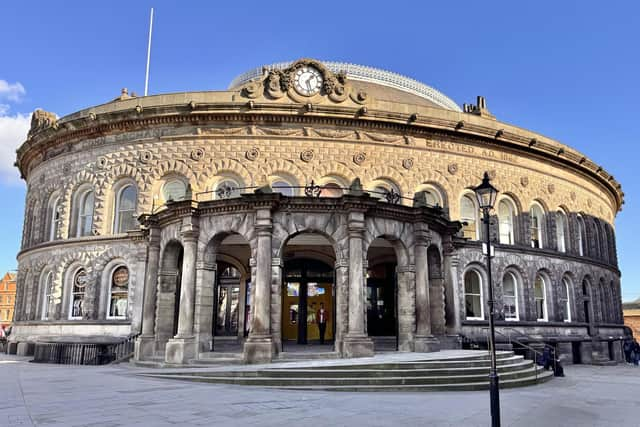

Forever a man of surprises, Brodrick’s vision for the corn exchange could not have been more different from his town hall.
It steered clear of the great squares and rectangles of his famous civic commission, and was instead dominated by curves.
The oval building - actually modelled on a Roman colosseum - was dominated by a massive elliptical dome said to have been based on that of the Bourse de commerce in Paris.
If the exterior was like nothing else in Leeds, the interior was also unique.
The ribbed dome had off-centre glazing, which provided a remarkable amount of light for the two-tier hall.
When used for its original purpose the exchange had 172 stands from which merchants traded sacks of corn.
This business gradually declined through the 20th century, however, and although many of the individual units were converted to speciality shops in the late 1980s corn continued to be traded in the main hall every Tuesday until 1994.
Around 30 independent retailers and food outlets are now housed in the Grade I-listed building, one of just three UK corn exchanges still functioning as a centre for trade.