
Lothersdale: The remote Yorkshire village which inspired Charlotte Brontë
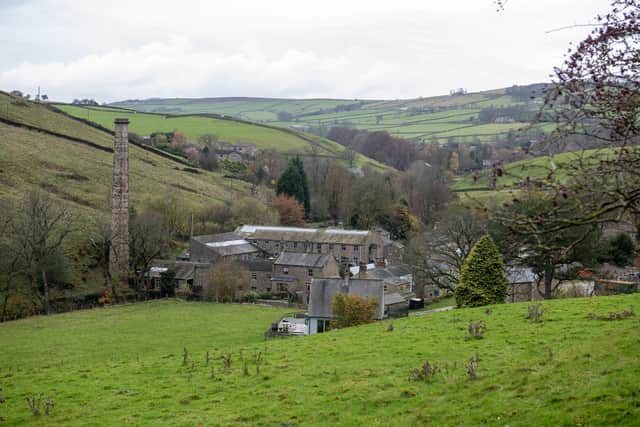
A headwater of the 92-mile River Aire, Lothersdale Beck continues to define the dispersed community and linear settlement it helped spawn in a remote valley between Skipton and Colne.

However, on closer inspection the course of the beck has been altered to meet the demands of the village, for the playing fields, playground and twice crossing the main thoroughfare, as well through dams and culverts.
The negative impacts of this human interference, both in the village and downstream, has in recent years been countered by the Wild Trout Trust and community group Wild About Lothersdale with work to improve water quality and slow the flow of the beck.
With climate change seeing increasingly frequent instances of deluges gushing down the surrounding steep hillsides, the Love for Lothersdale Beck project have moved to boost resilience of the watercourse, which is like a golden thread linking the settlement from near the Bethel Chapel burial ground to the west to near Lothersdale's Christ Church to the east.

Despite having a population of about 500 residents, Lothersdale is sufficiently remote not to have mains water or gas, and according to the parish council only a small percentage of the population is on a wastewater pipe.
Heralding the village from the west there's a black and white style signpost featuring a reminder of Lothersdale's position in West Riding until 1974, after which it formed part of North Yorkshire along with Filey and Whitby, which are more than two hours' drive away.
From the top of Calf Mill Lane there are sweeping views of the rolling countryside on the southern slopes of Skipton Moor and pastures, broken up by copses of deciduous trees and copious drystone walls.
Emerging from trees overhanging the road there is the first of Lothersdale's compact areas of housing, featuring terraces such as The Fold row of 18th and 19th century rubble with stone slate roofed properties.
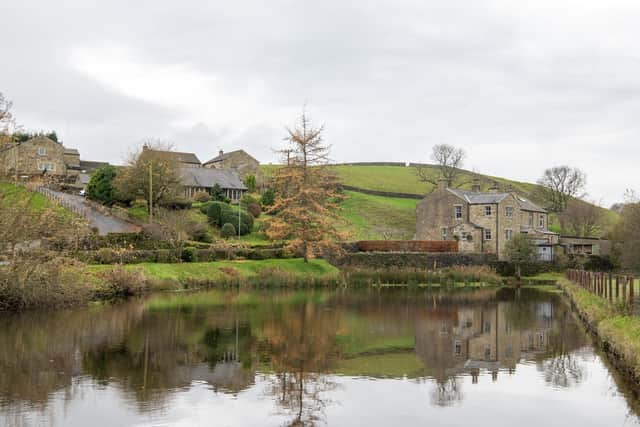
Gritstone homes of age form the vernacular, some having small drystone walled gardens, alongside sympathetic modern developments. Millstone Grit forms the moorland surrounding the village.
Here there is a lane leading to a former limestone quarry, and mine where high density and barytes was also worked, before the site was tranformed into Raygill lakes, a popular destination for anglers seeking coarse fish, trout and pike.
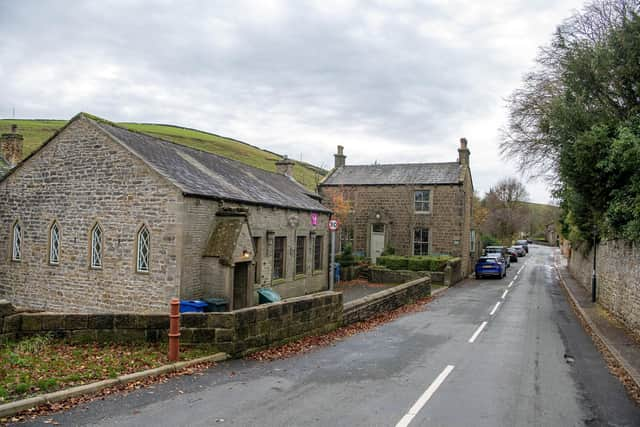
A landmark at this side of the village is the 1851 Bethel Chapel, which has been transformed into a home. Past the redundant graveyard, Lothersdale re-emerges with some of its proudest assets.
Lothersdale Primary School, which Ofsted inspectors rated as outstanding in all areas in June, describes itself as "a close-knit community", with around 108 pupils on roll.
Inspectors have noted how the school is boosted by relationships with inspirational figures in community, such as two-time Paralympic gold medal-winning archer Danielle Brown.
Villagers show their appreciation of the school's importance to Lothersdale through initiatives such as its pub, the Hare and Hounds, donating 50p for school playground improvements for every portion of onion rings sold.
Meanwhile, the school's young historians have been recognised by Historic England for identifying what makes their local area special.
Continuing west, there's more historic terraced housing, including three-storey homes, which appears particularly incongruous given the open hills opposite.
Moving towards the Dale End part of the village, there's a Friends' Meeting House and cottage dating to 1776 a few doors down from the Hare and Hounds pub, housed in one of the oldest buildings in the village.
The premises has served as an inn since it was built. When it was owned by Halifax-based Websters Brewery the pub featured in a well-known advert for its Sugar Lumps stout.
Now a free house, the inn serves "pub classics, always using the best locally available ingredients to give a Yorkshire twist".
The area outside the pub was used to stage the annual sheep fair and the car park opposite the pub was once a pinfold circular enclosure for stray sheep.
Passing directly in front of the pub, and accounting for a number of its customers, is the Pennine Way, forming the most northerly section of the route through Brontë Country.
While working as a governess for some “unmanageable cubs” in 1839, Charlotte Brontë lived in Lothersdale at Stone Gappe.
Her employer, the then owner of the three-storey five bay property south of Stansfield Brow which dates to 1725, Charlotte’s is said to have resembled her character Edward Rochester in Jane Eyre.
Closer to the village on Stansfield Brow stands Christ Church, which opened the year before the author came to the village.
To Lothersdale's south Woodhead Farmhouse forms the area's oldest residential property, having been fashioned from thin coursed rubble in the 1670s and featuring a triangular-headed doorway with a lintel inscribed: "Fear you S Lest you be cut. The Lord God P M off with the Sword."
Prior to this the village boasted its own mill, harnessing hydropower from the 16th century to grind corn.
However, in the 1790s following Arkwright's invention of textile machinery an eighteen year-old from Appletreewick saw the potential of Dale End Mill, which stands as a well preserved example of a water-powered factory opposite the pub. By the 1830s the mill was a centre for worsted spinning.
The Victorian era saw extensions at the mill, including a water wheel, a grand engine and a 90ft chimney for its boiler and economiser alongside weaving sheds and weavers' cottages.
The indoor 45ft diameter waterwheel is the largest of its kind in Britain and once provided up to 40 horsepower for 190 looms until it was taken out of use in 1932.
In 1861, an inspection of the mill found the number of women – girls aged over 13 – greatly outnumbered men working there and there were some 16 children aged under 13 employed.