
Maltby Colliery: The Yorkshire coal mine tainted by a 1923 disaster
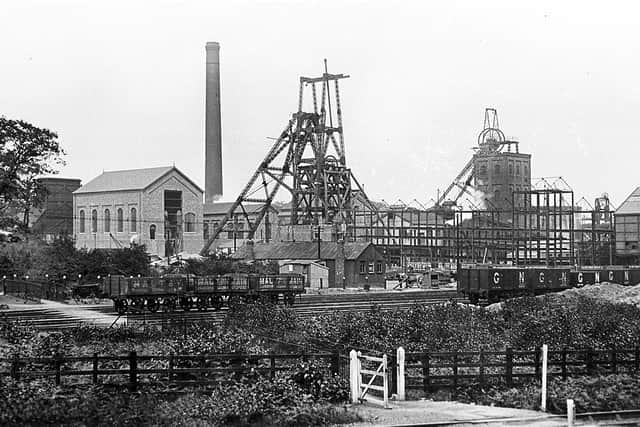
Once situated eight miles east of Rotherham, Maltby colliery was another pit sunk to the concealed part of the South Yorkshire coalfield.
Establishing the mine by the Maltby Main Colliery Company took place between 1908 and 1911. A new village for colliers was laid out on model village lines, between the old rural Malby settlement and the pithead. Some 400 houses were initially erected.
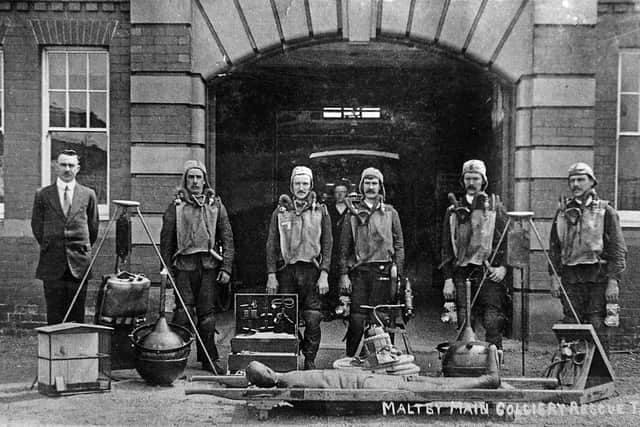
A catastrophe occurred at the colliery on Saturday morning July 28, 1923 when at 9.15 am, about a mile from the pit bottom, an explosion took place killing 27 men.
The blast swept through the mine and brought down great quantities of coal, stone and dirt, blocking the passages to the area where the men were employed.

There had been trouble underground for a number of weeks with fires. Several explosions had also occurred and attempts to overcome the problems were continuing at the time of the tragedy.
The disaster was the worst in South Yorkshire since the appalling events at Cadeby in 1912 where over 80 lives were lost. The average age of the Maltby men killed was 29.9 years. A few of them were still in their teens – one of them a mere 15.
As news unfolded at Maltby during the Saturday morning the pithead was soon crowded with people eager for information. Women were there in great numbers asking about husbands and sons.
The news of the disaster reached C. Markham, chairman of the pit company, while he was adjudicating on the bench at Chesterfield.
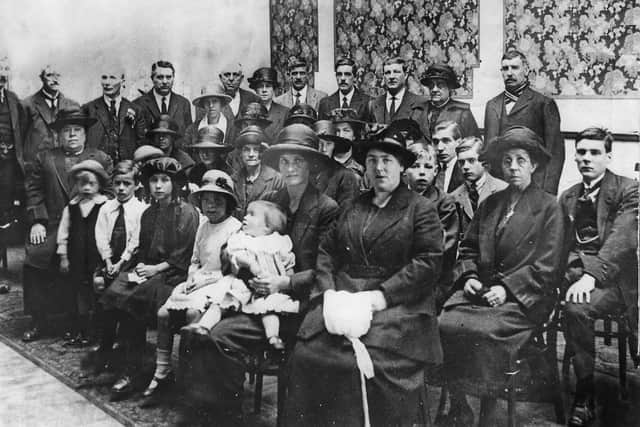
There was a pitiless downpour of rain through Saturday where people made a constant procession along the splashing road to the colliery and every moment saw the crowd of white-faced waiters grow greater and greater.
Right through the night some kept their vigil and not long after dawn others began to join them. During Sunday thousands appeared on foot, bicycle or in motor cars.
The badly burnt body of only one man, named Original (Reg) Renshaw, was recovered.
It was considered too dangerous to attempt recovery of the other miners, and so the danger area was sealed off by substantial stoppings.
A Royal message of condolence was sent to the colliery offices. It said the King and Queen were distressed to hear of the disastrous Maltby colliery explosion.
Their Majesties expressed heartfelt sympathy with the families of those who had lost their lives.
In the House of Commons on July 30, 1928 Mr Lane Fox (Minister of Mines) answered several questions from MPs.
He said that at Maltby colliery all coal getting had been suspended for some days before Saturday (28) owing to a gob fire, and that work underground was confined to the construction of four dams, with the object of stopping the fire.
Reg Renshaw’s funeral service, conducted by the Bishop of Sheffield, was held on August 1, 1928 at the Maltby Model Village’s Church of the Ascension.
Prominent among the mourners were relatives of the 26 men whose bodies still remained in the wrecked portion of the mine. They were joined by Directors of Collieries, inspectors and officials of neighbouring mines.
Renshaw’s coffin, in addition to bearing the name, also bore the number ‘One’ indicating the fact that he was the first of the victims to be interred. Thousands attended the service.
A Maltby Colliery Relief fund was opened and it was given a good start by a donation of £2,000 from the Doncaster Colliery Association and £500 from Charles Markham.
An exhaustive official inquiry into the causes of the Maltby colliery disaster was concluded at Sheffield City Hall after seven days on September 27, 1923.
A report by HM Chief Inspector of Mines Sir Thomas Mottram was published on February 25, 1924.
In the document, Mottram commented: "I have come to the conclusion that up to the time of the repeated minor explosions on 16-17 July, the efforts of the management to subdue the fire were in conformity with the recognised practice adopted in dealing with gob fires and it was not through any lack of attention or precautions that the fire was not arrested.”
Discussing the hazardous undertaking of fighting a fire underground – particularly in a fiery mine – the Chief Inspector added that there were always volunteers, brave miners and officials, ready to help, but there were some, who, when left to themselves to act, allowed zeal to overrule discretion, even at the risk of endangering their own lives.
‘There was,’ he proceeded, ‘I think, no difference of opinion at the inquiry that this was what happened at Maltby Main on the 27th and 28th July, and brought about the disaster.’
In time, a stained-glass window to mark the tragedy was placed in the local Church of the Ascension.
At a Rotherham inquest on December 30, 1947, it was found that human remains discovered in the Malby colliery’s Barnsley Bed on November 13 of the same year, were those of an unknown man killed in the 1923 disaster.
A County Pathologist said the man was probably between 22 and 30 and about 5ft 3in in height. Many of the bones were detached. A verdict of accidental death was recorded.
The Maltby 1923 disaster featured strongly in a wide array of public events that were staged over the weekend of May 31, 2008. This was to commemorate 100 years of coal production at the colliery.
The centenary included a Family Fun Day, with a free children’s fun fair; Rother Valley MP Kevin Barron, presenting long service awards to dedicated colliers; live music and charity auctions at Maltby Miners’ Welfare.
Then, on Sunday concluding the activities was a Memorial Service to honour those who had lost their lives at the pit, particular the 27 on the day that has become known as ‘Black Saturday’.
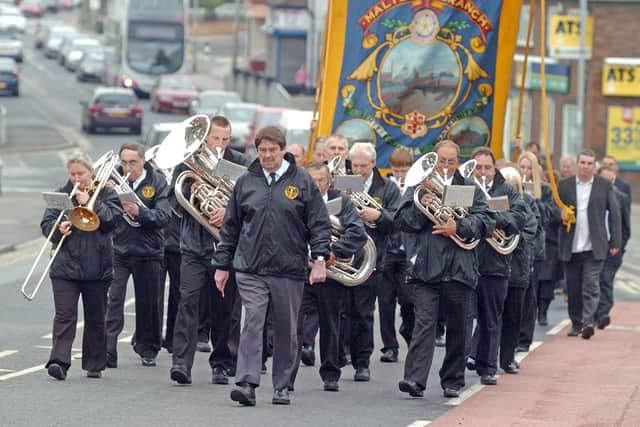
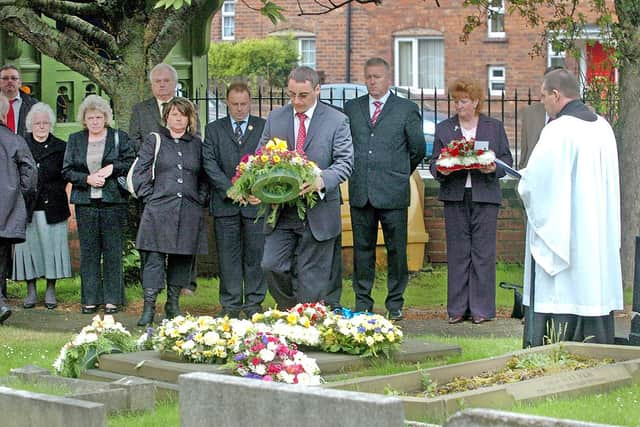
Yorkshire Post photographers were at the Centenary weekend and took a batch of pictures including one of the Maltby Miners Welfare Band and another at the graves of Renshaw and the unknown miner in the Grange Lane cemetery.
Maltby Colliery was acquired by R.J.B. Mining in 1994 but was sold for £21.5 m to Hargreaves Services in 2007. Hargreaves owned the Monkton Coke and Chemical Company which consumed 25% of the coking coal produced at Maltby.
In 2012, Hargreaves announced Maltby Main was considered no longer viable on safety, geological and financial grounds. Closure followed early in 2013 with the loss of around 250 jobs.
Exactly 92 years after the disaster, on July 28, 2015, a 10.5 tonne granite and black marble memorial stone to the 27 men was unveiled by Lord Scarbrough.
With the names of all those who died carved on it, the stone is situated on Limekiln Lane, positioned on the surface directly above where the disaster took place hundreds of feet underground. For the event, roads were closed for a service conducted by the Rev Margaret Caunt.
Wreaths were laid by relatives of the victims as well as Rother Vallery MP Sir Kevin Barron, the Mayors of Rotherham and Doncaster and organisations including Maltby and Stainton Parish Councils and Maltby Parish Church.
During 2023, another memorial was erected. Hargreaves Land donated a position between the site of the former Maltby Miners’ Welfare Club and a sports field.