
Marsden: The historic Yorkshire village which was the scene of the 'Night of the Black Flood'
Only places of the highest distinction, one could argue, should get geological eras named after them.

While the Marsdenian age relates to 317 million years ago, Marsden at the head of the Colne valley, surrounded by the south Pennines moors and eight miles west of Huddersfield, is distinguished by its wealth of heritage.
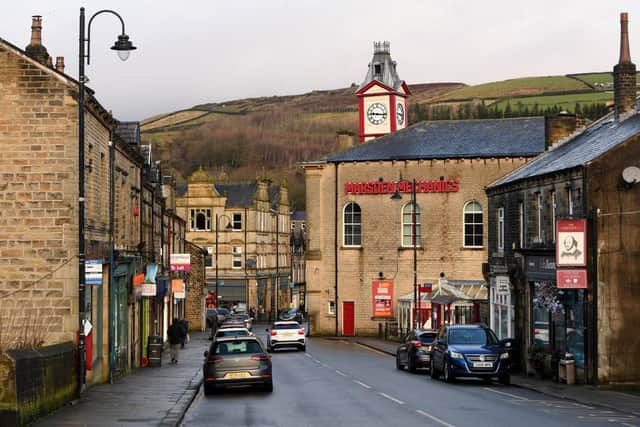
There are about 100 listed buildings within a mile’s radius of Marsden’s rather impressive Market Place, which gives some indication of the village’s historic economic strength.
However, it’s the geology, or rather the gritstone and shale hills, surrounding Marsden that gave rise to perhaps the most remarkable of these protected structures are the Standedge Tunnels, just to the west of the village.

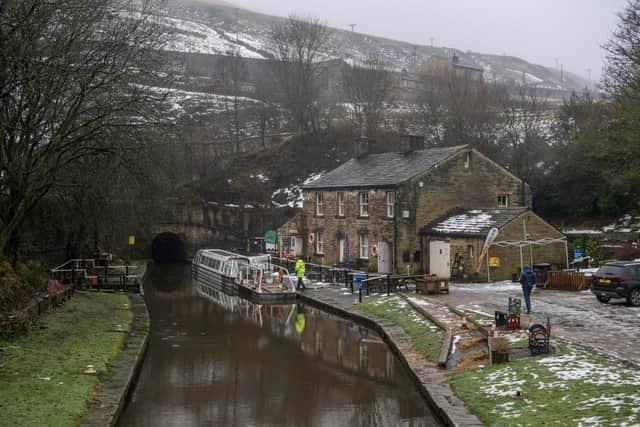
Built over 17 years to carry the Huddersfield Narrow Canal from Marsden to Diggle, in Oldham, when the first of four tunnels opened in 1811 it was the longest, most costly, deepest and highest British canal tunnel.
Previously the canal had ended at Marsden, meaning goods had to moved by horse across the moors.
As the owners of water-powered mills along the River Colne feared the canal would draw too much water from the river, the Haigh, Diggle and Slaithwaite reservoirs were created.
But disaster struck in 1810, months before the tunnel opening, disaster struck when the earthwork of the Swellands Reservoir dam wall collapsed.
On what has become known as the Night of the Black Flood, torrents flooded the valley at Marsden up to the Paddock area at one o’clock in the morning, killing five people and destroying many homes and factories.
For 138 years boats were "legged" through the tunnel, as it was not sufficiently wide for a towpath, which took up to three hours with a full load.
When the Huddersfield and Manchester Railway Company bought the canal in 1840s it signalled the canal’s commercial demise and the opening of the first of three railway tunnels.
Trains passing through Marsden’s station, in the village’s west, on the Manchester-Leeds line, continue to use the third tunnel which opened in 1894.
After decades of efforts and a £5m restoration, the canal tunnel was re-opened in 2001, with boat operators now offering two-hour canal trips under the Pennines.
As the poor soil and wild moorland made farming in the area difficult, a domestic cloth weaving industry developed. Weavers houses, which were built with long upper windows to lighten the work room, can still be seen in the area.
The industrial revolution and the opening of four mills in the village led to a rapid expansion of Marsden and much of the terraced housing for the mill workers remains.
This industrialisation of the village continued, with council estates being built north of the river and off Mount Road, until textile manufacturing fell away in the 1960s, . leading some of the mills to be demolished and be replaced by housing estates for Manchester and Leeds commuters.
Nevertheless some of the textile factory buildings remain, with one looming large over the steep terraced housing on Binn Road.
Another impressive building from the Victorian era, in the Market Place, is today a Coop supermarket, but opened as Marsden Self Help Co-operative Society shop.
By the 20th century it had become a bit of a department store featuring departments ranging from coal and butchery to millinery and dressmaking.
Opposite the Coop stands the 1860 Marsden Mechanics building, now the village library and a community-owned venue, which has been run by a trust for the past eight years for events, such as the annual Marden Jazz Festival.
Nevertheless, the Championship Section Marsden Silver Prize Band, which dates to 1889, has used its own bandroom on Marsden Lane since the 1930s and the Marsden Parish Church Operatic and Dramatic Society has used the Parochial Hall, by St Bartholomew’s Church for almost a century.
When the society selected Viva Mexico and Murder in the Vicarage in 1974 the vicar, the Reverend James Holroyd condemned it in the church magazine saying the time had come to “to make it plain that the altar is the place that counts and not the stage” and that the sociert would be dissolved.
The society's chairman responded saying although Rev Holroyd was entitled to his views “he would best promote those views by reasoned argument than dictatorship".
Soon after settling his differences with the society, the clergyman became involved in a row with the Royal British Legion, when he refused to conduct the annual service of remembrance at the War Memorial in Marsden Park “because I think that at this time of year the weather is unsuitable for an outdoor service and I considered a half hour service in church was sufficient”.
Another colourful cleric, the Reverend Lancelot Bellas, who was curate of Marsden from 1779, has been described as developing “tendencies to laxity in the performance of his duties”, instead spending time in the village’s pubs.
It is said on one occasion mourners were forced to to leave a body in the church overnight as Rev Bellas was too drunk to finish the funeral service.
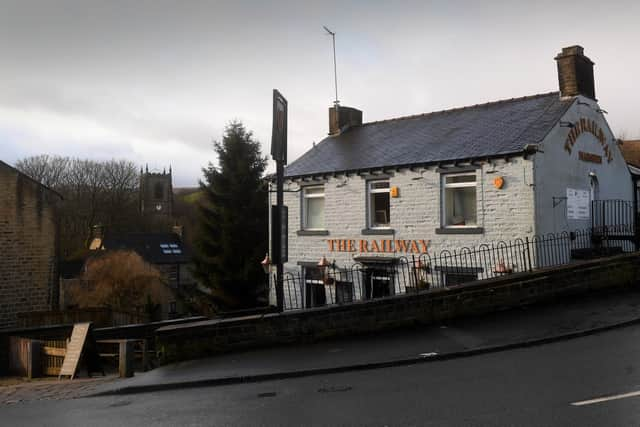
Partly due to the canal, railway and packhorse routes, Marsden has had more than its fair share of inns.
There is a stone dated to 1762 stone on the village green featuring two carved tulips from The Two Dutchmen, the home of the last person condemned to spend time in the village stocks in Towngate.
In 1820, when the mill bells were rung to herald Queen Caroline succeeding in preventing George IV from divorcing her, the licencee’s husband celebrated over-enthusiastically by ringing the church bell for five minutes before being convicted of being drunk and disorderly and sentenced to six hours in the stocks, which have been restored.
One of the Manchester Road pubs, The Olive Branch, is thought to have been named after the Olive Branch petition which handed to the king by American colonists seeking to avoid war with Britain.