
Mary Beard: '4,000-year-old bread sparked my fascination with the past - it was as close as you can get to time travel'
Dame Mary Beard brings her latest enthralling show about the Romans to York this week, exploring the lives of those often left out of the history books. Laura Reid speaks to her about the ancient world.

She never knew his name, but the actions of one British Museum worker were so influential on a young Mary Beard that earlier this year the historian decided to dedicate her latest book to him – the man who inspired what became her lifelong passion for the past.
She was just five when he unlocked a display case housing a 4,000-year-old piece of Egyptian bread, igniting in Dame Mary a complete fascination with the ancient world. She’d already been enthralled by the Egyptian mummies on her visit when her mother, a schoolteacher, pointed out the bread.
“I remember thinking, 'Wow, that’s actually more interesting than the mummies’, something that was so ordinary and so familiar to me but impossibly old,” the now 71-year-old says. “The trouble was it was right at the back of this high display case. Mum tried to lift me up, but it was all a bit difficult, and then this guy walked past and asked if we were trying to look at anything in particular.
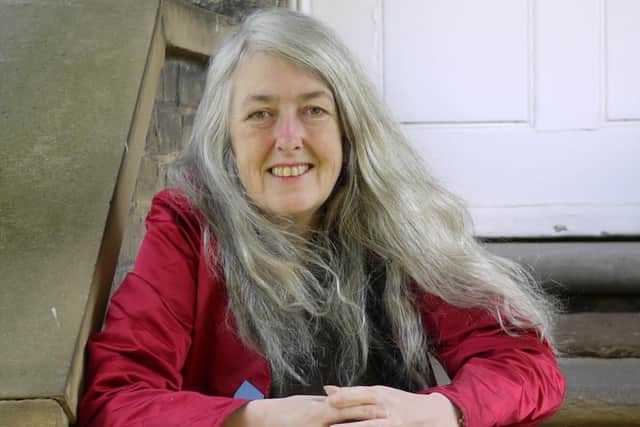

“He must have been a curator because he put his hand in his pocket, got some keys out and unlocked the case. He got the bread out, and he held it in front of my nose, and it was completely magical,” she enthuses. “It was close as you can get to time travel. It was just amazing that sense of utter distance from this because it was so old, but utter closeness because it was right there in front of my nose. And I never looked back after that. I just thought the distant past was really interesting.”
Shropshire-born Dame Mary often thinks fondly of the unknown man and how that moment inadvertently shaped her. “He was a role model really of the proper use of museums, the proper use of teaching and of speaking to kids. I have no idea who he was, but I dedicated my book to him, the man who opened the case at the British Museum, because I think he encouraged me. He also gave me an example of opening cases for other people, and I think that’s terribly important,” she says.
She tries to do that in her own work and has inspired a curiosity around history in many of those she has reached during her long career as a classicist. As well as being Professor Emerita of Classics at Cambridge and the Classics editor of The Times Literary Supplement, she is also the co-host, with journalist Charlotte Higgins, of the podcast Instant Classics and the author of a number of books on ancient history.
“Academics should help people see that the world is more complicated than we often imagine,” she reflects. “And they should help them to be interested in things that they think they might otherwise not be.”
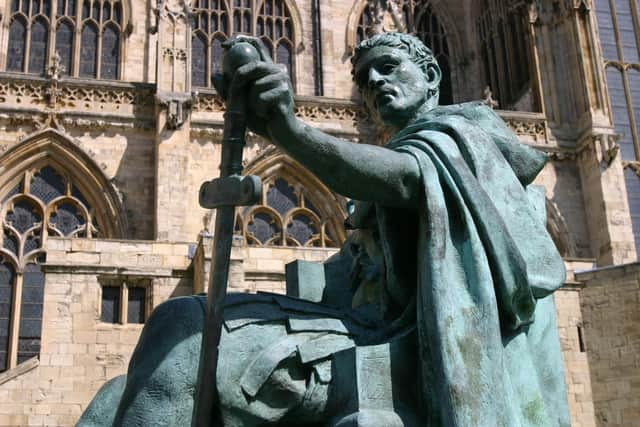
She’s good at that, thoroughly engaging as she regales with tales drawn from years of research on her specialist subject – the Romans. She is currently on the road with her latest tour on the topic, bringing More Secret Histories of Ancient Rome to York this week. The show goes beyond the well-worn paths of emperors and battles, revealing the rich and complex lives of those often left out of the history books, whilst also tackling some curious ancient mysteries.
Want more stories like this? Subscribe to our newsletter here.
Along the way, Dame Mary considers how historians have stitched together a picture of the past from fragments of archaeological and sometimes surprising written evidence, including remarkable cartoon paintings and graffiti made on the walls of the ancient city of Pompeii. Such personal traces can help build a richer and more complicated picture of life 2000 years ago.
“I think that many people get the impression that the only people we know about from ancient Rome are old rich blokes who were either generals or emperors or politicians, and that we don’t know anything really or very little about the women, the slaves, the ordinary people – the people like us,” she says.
“There is a tiny, tiny bit of truth in that. Most of the surviving literature that we read from the ancient world is written by those guys. But there is huge amounts of evidence, really appealing evidence, about what ordinary people got up to, the messiness of the ancient world, where they hung out, what they did, and what the dangers were. And what I’m doing in this show is lifting the lid on some of that.”
“Otherwise you get such a skewed vision of ancient Rome as if it was all toffs going around in togas,” she continues. “Romans don’t wear togas much more often than men in Britain wear dinner jackets. I want to say, ‘Look, the ancient world is more varied. It’s more interesting. It’s messier. It’s fun. Sometimes it’s puzzling’, because these ordinary Romans, they’re partly just like us, and they’re partly weird and not like us at all.
“One of the excitements of the past is that sense of them being partly people that we can relate to very easily. They did go to the lavatory, and they scrawled messages on the lavatory walls. Whether you would be able to walk into a Roman bar even after you’ve heard what life is like there and fit in, I don’t know. But it’s fun to imagine. It’s fun to speculate.”
Being able to relate to those from history makes the past feel more pertinent, and through both her podcast and her latest book Talking Classics: The Shock of the Old, Dame Mary seeks to explore why it is that ancient history is still relevant today. The life, art and literature of the ancient world can challenge us, she says, to understand people who lived long ago and to reflect more deeply on our own modern world too.
“I think in general living in the UK, we’ve got to keep our eyes open for the Romans because, especially in places like York, for example, they’re under our feet. They’re still around. I think that at some level it would be very uncurious not to ask, ‘Who were these people that have left a mark on our landscape?’ And I think that it would be very incurious about much of our own culture not to think how much of this comes from the ancient world...
“Does ancient history and Roman history have a lesson for us? I think in very crude terms, no. There aren’t really oven-ready lessons that we can take off the supermarket shelf… but what this does is it shows you different ways of thinking about problems. It gives you a different perspective on issues that we still find tricky.”
“I think anybody who’s got their eyes open finds parts of the ancient world off-putting,” she acknowledges. “I mean, take the violence, misogyny, and slavery for a start. But the ancient world isn’t something that we just admire – it’s something that we look at and engage with.”
Even the excitement of her encounter with the 4,000-year-old bread at the British Museum came with a lesson that has shaped how Dame Mary has lived and worked. Whether literally or metaphorically, it showed to her that museum cases can be opened – and her latest show is another example of how she’s now giving others that window into the past.
More Secret Histories of Ancient Rome with Mary Beard is at York Barbican on October 12 at 7.30pm. For tickets, visit www.yorkbarbican.co.uk/whats-on/mary-beard