
Melsonby Hoard: How you can get the rare chance to see Iron Age hoard found in Yorkshire

A North Yorkshire Iron Age find is to go on public display from May.
The Yorkshire Museum said it was delighted to announce that the internationally significant find the Melsonby Hoard will be displayed from May 15.
Following a fundraising campaign in 2025, the Yorkshire Museum successfully acquired the hoard and is now preparing to unveil a first-look exhibition.
This unprecedented find sparked global attention for its astounding array of over 800 objects unearthed near a small village in North Yorkshire.
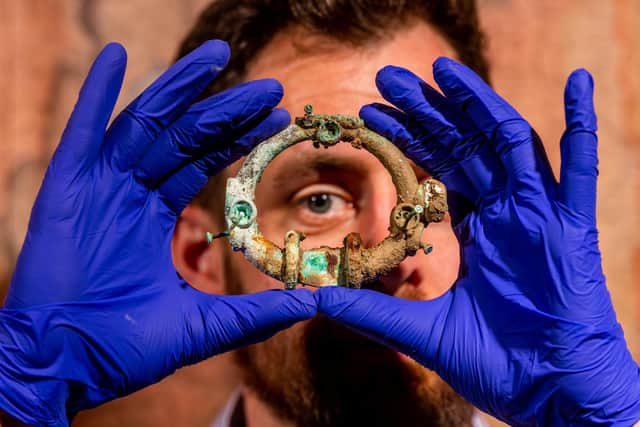

From chariot wheels and cauldrons to horse bridles and spears, the Melsonby Hoard is the largest hoard of Iron Age metalwork to ever be discovered in the United Kingdom.
The exhibition will explore the significance of this once in a generation discovery, showcasing the scale, variety and importance of these objects.
The Yorkshire Museum will share the story of the hoard so far, trying to understand what this discovery confirms and challenges about our current understandings of late Iron Age Britain 2,000 years ago.
Dr Andrew Woods, Head of Collections and Research at York Museums Trust, said: “We are beyond excited to be able to put the Melsonby Hoard on display for the first time as a large-scale exhibition.
"We are grateful to Durham University, Historic England and The British Museum for their support and guidance, as well as the overwhelming generosity given across the fundraising campaign which allowed the Yorkshire Museum to acquire the hoard and put it on display.”
The Melsonby Hoard represents a once-in-a-lifetime discovery. Further details and a programme of events, talks and workshops will be announced.
The hoard was found by Peter Heads, an amateur metal-detectorist, in December 2021. It was designated treasure under the Treasure Act 1996.
Mr Heads reported his discovery, which led to archaeologists from Durham University excavating the site in 2022.
The excavations were assisted by advice from the British Museum and funding from Historic England. The University of Southampton also provided instruments.