
Middleton Railway: The historic Yorkshire railway line mining a rich seam of history
Though the Stockton & Darlington Railway boasts being the oldest public railway, the mineral line at Middleton, Leeds, is older and had as much influence over the development of railways.
Operational from the mid-18th century, the Middleton Railway is presently a heritage attraction.
Located between Morley and Rothwell, Middleton was mentioned in the Domesday Book (1086) and described as being mainly woodland.
For a time, the area was under the control of Ilbert de Lacy, who was a Norman conqueror that also built Pontefract Castle.

Middleton later passed to the Leigh family and in the late 17th century heiress Anne Leigh married Ralph Brandling, of the noted Brandling family from Gosforth Park near Newcastle.
Brandling was drawn to the coal mining taking place at Middleton after his wife inherited the estate. This initially took the form of bell pits that cut into the outcrops in the location.
By the 18th century, the workings had become deeper and more elaborate, allowing a large amount of coal to be extracted.
Yet, the problem at Middleton was communication with Leeds and competing pits had the advantage of transporting their product by water.
The Middleton pits were operated by an agent for Charles Brandling (1733-1802) and as both were native to the North East they were familiar with wagonways.
This method of transport had been in use there for moving coal since the early 17th century and was the natural choice to improve the fortunes at Middleton.
Whereas early wagonways operated on private land, the Middleton Railway crossed open areas and roads and became the first line to receive an Act of Parliament.
This gained Royal Assent from George II on June 9, 1758, and allowed Brandling ‘to furnish and supply the inhabitants of the Town of Leeds with coals’.
At the time, coal was priced at 4¾d per corf (basket) which weighed around 200 lbs. The duration of the Act was set at 60 years.
A short time elapsed from authorisation to the first wagons being conveyed by horses on September 20, 1758.
The line used wooden rails with some metal inserts intended for use in places where heavy wear could occur.
Running from Middleton to Casson Close coal yard (near the present Meadow Lane), the opening of the route created a sense of occasion in Leeds.
A contemporary newspaper report noted that bells were rung, cannons fired at the fort and ‘a general joy appear’d [sic] in every face’.
At around 3½ miles long, the railway was level for the most part but there was a difficult incline of 1 in 45. As a result, a 1,000 ft rope was used to assist the wagons.
Before the end of the 18th century, several more Acts had received Royal Assent and these mainly dealt with the price, as well as the amount of coal guaranteed for the town.
By the time Charles John Brandling succeeded his father in the early 19th century, 7 shillings were charged per ton of coal.
With the Napoleonic Wars occupying nearly 20 years, there was a great strain placed on British and European resources which increased costs.
For the Middleton Railway, keeping a large number of horses became a great burden. Richard Trevithick had attempted to move the stationary steam engine to the rails in 1805, yet experienced problems with the locomotive’s weight on the iron tracks of the time.
At the Middleton colliery, head engineer John Blenkinsop was inspired to create his own rails which incorporated a rack, with the pinion on a locomotive.
He partnered with Holbeck-based engineering firm Fenton, Murray & Wood to produce a steam locomotive, which had six wheels (two driving) and two cylinders producing a reputed four horsepower.
The engine (thought to have been the Salamanca, but sometimes noted as the Prince Regent) went into service during mid-June 1812 and could haul a lightly loaded set of wagons at 10 mph.
As a demonstration, a train weighing over 25 tons, with an additional 50 spectators perched on the coal, travelled around a mile-and-a-half in 23 minutes.
Deemed a great success, the experiment was said to have made 50 horses redundant and saved enough cereal grain to feed 200 men.
Another locomotive appeared in August and a further two were built in 1813.
Though the quartet was reduced to a trio following a boiler explosion, steam traction was used at Middleton until the mid-1830s when horses returned.
During this period, many engineers visited Leeds to be inspired for the further development of railways in the 19th century.
When C.J. Brandling died in 1826, the Middleton Estate passed to his brother Rev. Ralph H. Brandling. Yet the Brandling empire was now disintegrating and eventually went bankrupt.
Middleton was later sold to F.W. Tetley who formed a colliery company which expanded operations to new deeper seams.
Middleton Broom colliery was sunk in the 1870s and Middleton New before the end of the 19th century.
Middleton Railway returned to the use of steam locomotives in the mid-1860s and these were procured from Manning Wardle of Hunslet.
Yet, the engines were in the original gauge at around 4 ft and the switch to standard gauge did not occur until the 1880s.
As a result, a connection was possible with the Midland Railway, originally the North Midland Railway’s Derby to Leeds line, at Hunslet.
Towards the end of the century, the Great Northern Railway built the Hunslet branch which left the Wakefield-Leeds line at Beeston and crossed over the Middleton Railway before reaching Hunslet. A connection to the colliery line was made at Parkside Junction just north of Middleton New.
In the 1920s, mining operations at New pit were wound down but the shafts were used for pumping water until the mid-1940s. Middleton Broom colliery closed on May 17, 1968.
Under the National Coal Board, operations on the Middleton Railway changed and the coal staithe at Kidacre Street was closed, whilst mineral traffic was directed on to the Hunslet branch.
A local firm took over the Middleton Railway north of Parkside Junction for goods trains.
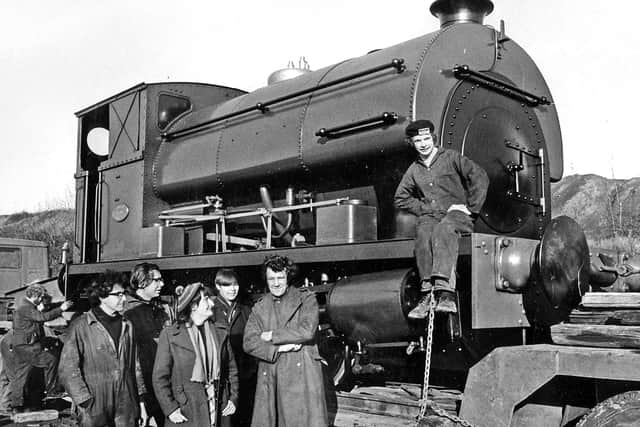
These were operated by the Middleton Railway Preservation Society which was formed in 1959 by students and staff of Leeds University led by Dr Fred Youell.
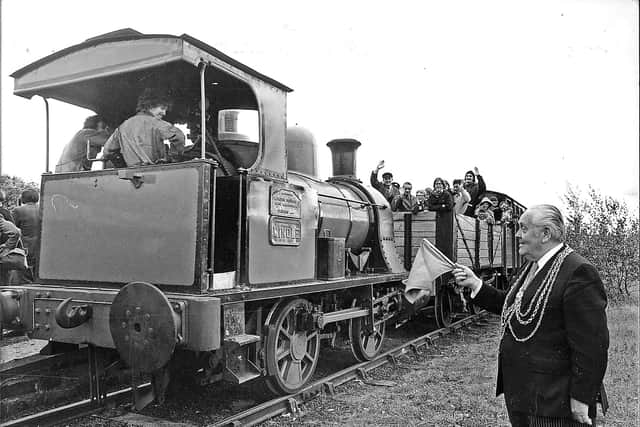
Before goods duties started in September 1960, lasting to the early 1980s, passenger services were offered during June 1960 as part of the University Rag Week.
Hiring a diesel shunter from the Hunslet Engine Co., around 7,500 people were conveyed in preserved double-deck tram from the Swansea and Mumbles Railway.
From these humble beginnings, the Middleton Railway prospered in the ensuing years, with many items of rolling stock arriving.
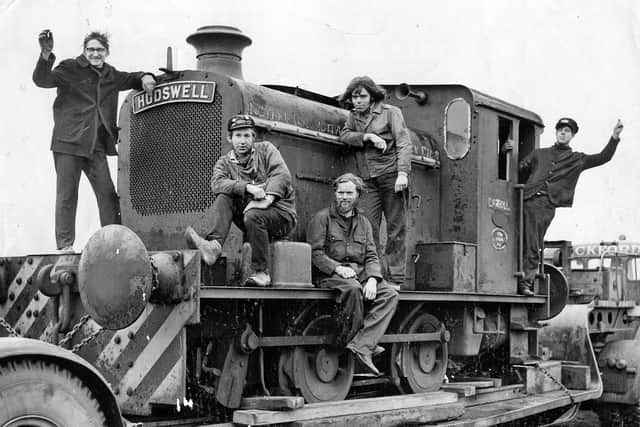
These included locomotives that had been erected locally at one of several world-renowned steam engine and diesel locomotive builders, such as Hudswell Clark, Hunslet Engine Co., Fowler & Co., Kitson & Co., etc.
The society was not just a ‘boys’ club’ as might have been expected. Dr Youell’s wife Susan was secretary of the railway and had been an enthusiast from an early age.
Sheila Young volunteered on the line and helped finance the purchase of a Peckett 0-4-0ST engine which cost £720 in 1972.
Also, Olive Chaplin assisted her husband John as sales manager in the late 1970s and early 1980s.
Two young girls answered an appeal for Santa’s assistant in December 1984 and handed out gifts as part of the railway’s Christmas special services.
Following the closure of firms needing the railway in the 1980s, the Middleton Railway Trust (from 1974) moved to their present location at Moor Road, Hunslet.
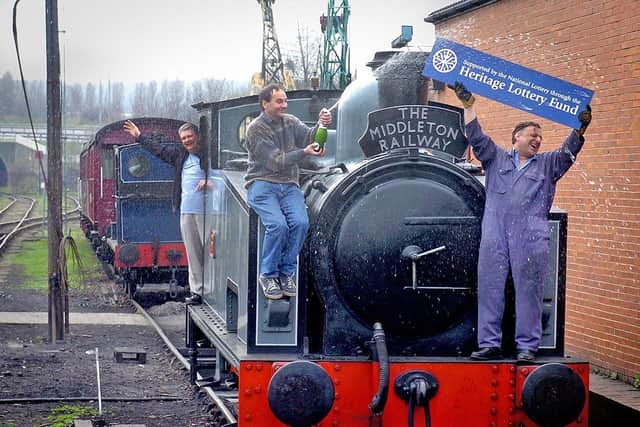
During the early 2000s, Heritage Lottery money helped with the cost of constructing new headquarters and museum for the display of items from the railway’s collection.
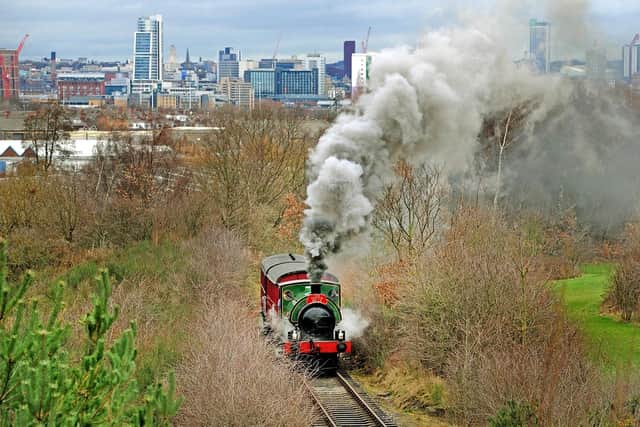
Open Saturday and Sunday between April and October, with Santa Specials in December, the Middleton Railway hosts several events and galas for families and enthusiasts.
Several milestones have been celebrated by the railway and the trust, with both on course to see 275 and 70 years of operations respectively in the near future.