
Midsummer: How ancient solstice traditions have inspired new event at Ryedale Folk Museum
Across much of Europe, Midsummer was once associated with the magical protection of fire. One of my favourite solstice stories comes from sixteenth-century Whitby, where mariners and fishermen processed through the streets each year in song, carrying aloft a smoking, blazing tar barrel for the extraordinary celebration.
One year, servants of wealthy Whitby Abbey set upon the revellers, doling out a severe beating. But the mariners would not give up their ancient custom – they claimed it had taken place since time ‘immemorial’. Given that fire customs first start to appear in the historical record around the twelfth century, it’s likely that Whitby’s tradition was very old indeed.
This Midsummer, we’re launching a new event at Ryedale Folk Museum, a weekend-long celebration of the solstice, with a range of activities across June 20 and 21, as part of our programming this year in response to a growing appetite for events rooted in seasonality and folklore.
The lovely word ‘immemorial’ helps us get to the heart of what folk customs were all about. Less important were the acts themselves, more so their method of transmission. Folk traditions passed through generations, being taught through experience by parents or grandparents, long after their origins were forgotten. Many were shaped around the seasons.

But with population movement that came with industrialisation, and the restraints of factory hours, many age-old traditions declined. The Victorian folklorists – crisscrossing fields and parish boundaries to gather stories – were only just in time to record the songs, superstitions and celebrations as they were slipping from living memory.
Today, folk celebrations seem to be enjoying another resurgence. Folk festivals and seasonal gatherings are drawing people not only for entertainment, but for community, place and a sense of connection to something older than ourselves.
This time, however, things are happening a little differently – particularly at Midsummer. For those of us who work in events management, the magical protection once found in fire feels a little ironic, summoning nightmares about risk assessments and health and safety policies. Gone are the days when landowners paid locals to circle their boundaries with Midsummer torches to guard the crops and ensure the harvest. Perhaps instead, what people are finding at Midsummer is the opportunity to feel part of something bigger.
Midsummer marks the moment when the Earth’s North Pole tilts closest towards the sun. Around the solstice, on the very longest days, the sun appears to hesitate, rising and setting in almost the same place on the horizon. This sense of stillness gives us the word itself, solstice – from the Latin meaning ‘sun stands still’. It’s almost as though the natural world pauses a moment.
Nowadays, a quick Google will tell us that the exact astronomical moment of the solstice is in fact 9.24am on June 21. With such precision it is easy for the magic to be lost. Yet if we put our devices down for a moment and step outside, we find people still seeking experiences that feel deeply rooted in time and place.
In a society where many of us feel increasingly detached from the seasons – and increasingly anxious about the changing climate – Midsummer offers a chance to do things differently. There remains something stubbornly physical about watching the sunrise on Midsummer’s Day, or feeling the light lingering late across the North York Moors that evening.
In those moments, it is easy to understand why, even within a medieval Christian society, the older magical associations persisted, and celebrations continued with bonfires and music. Across Britain, divination and love magic were also popular at Midsummer. In the North Riding, rituals were recorded by Victorian folklorist Richard Blakeborough. To discover if your love would be true to you – for example – all that was needed was a charm made from the hairs of a black cat and a red cow, leaves of deadly nightshade, and blood from a freshly killed white pigeon.
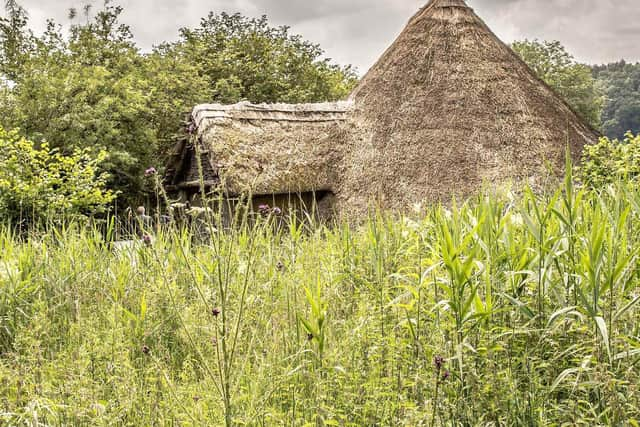
We won’t be replicating that particular ritual. At Ryedale Folk Museum, our own divination activities will be rather more playful, whilst remaining within that magical spirit of the solstice. One rather special element of the weekend takes place in our Iron-Age inspired roundhouse, where we are offering handfasting ceremonies – an ancient ritual symbolising a couple’s unity and commitment, involving the symbolic binding of hands with cords or ribbons.
Midsummer would not have been a traditional time for handfasting – most folk would have been otherwise occupied on this important day – but, in a lovely evolution, the solstice is finding new resonance for couples, feeling special and fitting for making a commitment. Many of the ways we mark Midsummer today are not what our ancestors would have recognised, and yet they feel deeply rooted in this ancient time for celebration.
Across the museum site, we’ll also welcome Pickering choir the Ryelarks and Celtic folk musician Olivia Graham. There’ll be solstice yoga and blessings, talks and a range of family-friendly activities to take part in. All will be responding to this special moment, not trying to recreate a past we can no longer fully inhabit. A new generation is reshaping Midsummer, taking the opportunity to pause, gather and feel part of something larger – though without any blazing tar barrels, brawling, or legal proceedings.
For more information, visit www.ryedalefolkmuseum.co.uk