
National Coal Mining Museum: The steel artwork in Yorkshire remembering the lives lost by miners
Nearly a decade ago a memorial garden to remember those who worked in the mining industry was opened by former Wakefield MP David Hinchcliffe.

The garden at the National Coal Mining Museum near Wakefield celebrates and commemorates the lives of the miners and the close-knit families and communities who supported them.
Its centrepiece is a steel artwork called “Lives Lived Lives Lost, which holds personal coal mining memories in the form of symbolic glass discs, supported inside a corten steel frame.
Standing almost 9ft (3m) high and curved round in a sweeping arc, it is designed to suggest a seam of coal pierced by mine workings.
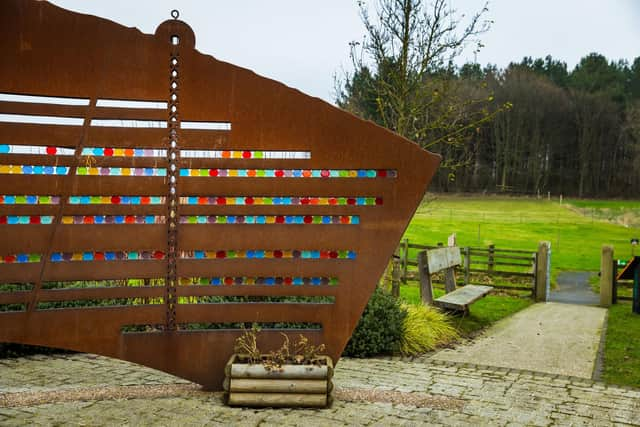

The glass discs are placed into channels representing the shafts and levels of a mine.
They represent the 'checks' which were used for pay identification and more importantly as a means of a safety check when miners went underground.
In the event of an underground accident, fire or inrush of water, ‘checks’ would be used to identify which miners were in that area of the pit.
Each year family, friends and loved ones of individuals commemorated through the purchase of a glass check that year are invited to a special ceremony.
However with the 10th anniversary coming up in May, all supporters over the decade are being invited to attend a celebration event.
It will honour all of those who are named in the artwork, and be “a wonderful day of remembrance”, the museum said. There will be tours, live music from a brass band and choir and refreshments.
Lynn Dunning, chief executive of the National Coal Mining Museum, said: “Purchasing a Memorial Glass Check is such a special way to honour the dedication, hard work and sacrifice of our coal miners.
"Each check not only serves as a lasting tribute to loved ones but also supports the preservation of our Miners’ Memorial Garden, ensuring that the legacy of our mining communities is remembered for generations to come.
"To be here at the museum, surrounded by the rich and precious history of coal mining is very poignant indeed.”
In 1984, Yorkshire had a total of 56 collieries – with 15 in Wakefield District alone.
Just over three decades later, in December 2015, the last 450 miners finished their final shift at Kellingley Colliery.
The closure signalled the end of deep coal mining, not only in Yorkshire, but in Britain as a whole.
The museum is located in the former Caphouse colliery, which was worked from the 18th century until 1985.
Caphouse Pit was sunk in the late 1770s or 1780s by James Milnes who sank a series of shafts down to the coal, later abandoning them when all the accessible coal was exhausted.
The museum offers free admission and underground tours led by former miners. Visitors can descend 140 meters underground to learn about the history of coal mining.
A registered charity, it receives core funding from the Department of Culture, Media and Sport.