
New book to provide rare insight into lives of Brontë family in Thornton
A new book about the birthplace of the Brontës has been written by Mark Davis and Steven Stanworth and provides a rare insight into their lives there. Here they talk about their book.
Even though the very last member of the Brontë family died in 1861, when Patrick passed away in early June of that year, the good reverend having witnessed his wife and all of his children being laid to rest in the family vault below the flagstones in St Michael and All Angels’ Church before him, the Brontë legacy lives and breathes on.
The story is by no way finished, pray, it’s still in its infancy, given the literary genius of the Brontë sisters and the worldwide interest by young and old alike in both them and their ill-fated yet well-meaning brother Branwell.
There has already been so much written about the family since their deaths and that will continue, long after we are all but dust.
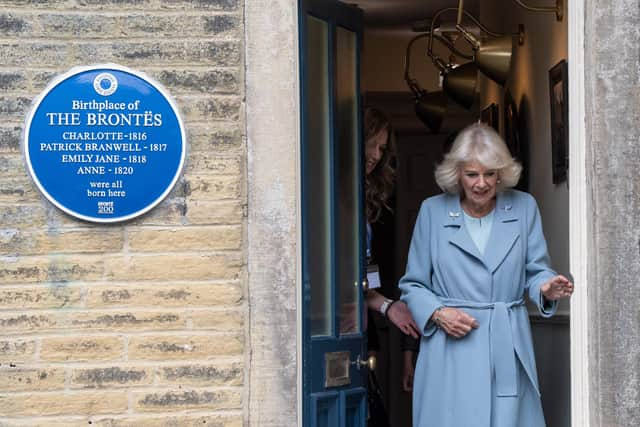

There are so many interpretations, both of their work and personalities. But yet, there always seemed to be something missing.
It is surprising just how many people hold the common misconception that the picturesque, rugged moorland village of Haworth with its quaint cobbles and pretty views, as the one-stop Brontë location and believe that Haworth Parsonage holds their literary lives completely, from the cradle to the grave.
Our new title, the Birthplace of Dreams, was borne out of us wanting to break that myth, our little book, filled to capacity, we believe is unique, in that the focus rests on the very place that saw the literary giants known today across the globe, Charlotte, Emily and Anne Brontë, first breathed in Yorkshire air as their divine literary spark entered the world, in front of the fireplace in the front parlour of the humble little house that is the former parsonage on Market Street, Thornton.
Although the Brontë family only spent five years in Thornton, they were incredibly important years. Patrick in later life would refer to his years there as being “his happiest time”.
Given the tragedy that followed just a year after the family left the village in 1820, it is a statement, no one could ever dispute.
The genteel social life the family enjoyed at Thornton was in stark contrast to the previous harsher life at Hartshead Moor, which was dominated then by the revolutionary Luddite movement.
The family met the young Elizabeth Firth, and her father within days of arriving in Thornton, after which a warm friendship blossomed.
Elizabeth was to become godmother to Elizabeth and Anne and invite the Brontë family to dinner regularly at Kipping House, her comfortable family residence she shared with her father, close by on Lower Kipping Lane.
Such was the relationship between the Brontë and Firth family, that Patrick, looking for a new wife and stepmother for his six motherless children after the tragic premature death of his wife Maria, felt comfortable enough to ask Elizabeth for her hand in marriage, of which she refused.
In 1815, the year in which the families first met, Elizabeth, who 17 years Patrick’s junior, was mourning the death of her mother the previous year and like her father a committed churchgoer.
We know much more about the inter-family relationship between the Brontës and Firths, than we would normally expect because Elizabeth kept a basic diary.
The entries were in essence no more than bullet points; however, they show a consistent mutual support structure in place throughout the time the Brontës were in Thornton.
When Elizabeth, died in 1837, it was the money she had left Anne, that financed her last tragic trip to Scarborough.
It is interesting to see how the family’s lives in Thornton, overlapped to nearby Haworth, certainly for the first few years in any event.
Through the pages of the book, we of course take in Haworth, the sister’s education, achievements and sadly their premature, in today’s terms, deaths.
Towards the end we return to Thornton to explore the birthplace history and evolution up to the present day in 2025.
The Birthplace of Dreams is so much more than just another Brontë book, through its written content, of which is enhanced by the inclusion of striking colour images, we bring the mostly unknown 72-74 Market Street, out of the shadows in literary form.
The very house, where three seemingly ordinary girls were born, three girls who dared to dream, who dared to reach for excellence beyond their wildest dreams and surpassed them all.
Three girls who would take on a male-dominated 19th century literary world and whose names two hundred years after they were born would continue to inspire people to dream beyond all their expectations.
Haworth may justifiably lay claim to the Brontë sister’s literary success, having penned some of the most groundbreaking novels in the history of English literature there, however there is no changing the fact that their first spark of life, quite rightly belongs to Thornton.
In the inspirational composed and written words of Queen Camilla, “Be More Brontë.”
Mark Davis is a keen Bradford-born 19th century social historian, professional photographer and author, who has up to present 16 published titles from Charles Dickens’ London to Voices from the Asylum.
Steven Stanworth is also from Bradford and he has devoted more than 25 years of his life to tending and caring for the ruined Bell Chapel and cemetery where Patrick Brontë was perpetual curate from 1815- 1820. He is a founder member and former vice chair of the Brontë Birthplace group that purchased and restored the property breathing back the Brontë legacy into the house.
The Birthplace of Dreams – The First Home of the Brontës by Mark Davies and Steven Stanworth is published by Amberley Books £15.99.