
NRM at 50: York's National Railway Museum turns 50 next weekend and we take a look at the newly refurbished £10m Station Hall
It is 200 years since the birth of the modern British railway system and 50 years since the opening of the National Railway Museum in York, which treasures all things rail. Phil Penfold reports.

In 1800, York was little more than a market town. It ranked as the sixteenth largest city in England, with Halifax, Huddersfield and Bradford well ahead of it in population.
It had a clearly defined commercial role, a city of shopkeepers, innkeepers, with a few chemists and a handful of little glassworks.
The city walls were in terrible disrepair after the earlier Civil War, and the community was little more than a convenient stop-off for the mail coaches using the Great North Road. The population was around 17,000.

If you were on one of those coaches, and travelling toward Newcastle, you’d have seen a huge thicket of woodland to your left, which went on for miles, and which only stopped at the banks of the River Ouse. It was dense, it was almost entirely flat land, and pretty much useless to anyone.
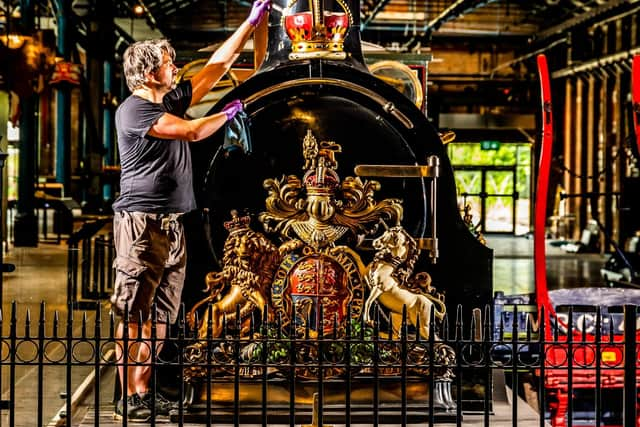
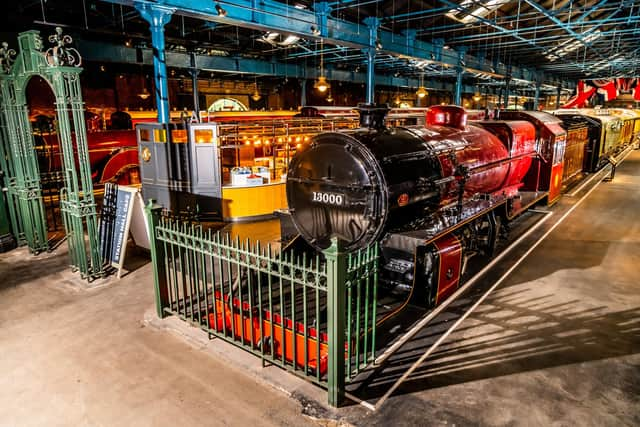
This, today, is the vast acreage on which the National Railway Museum sits, with its approach roads, parking, walkways, deftly-designed cycle paths and tracks – and the Museum itself – opened half a century ago. You can’t miss it – and neither would you wish to.
It is a modern metropolis in its own much-deserved right. Only a few decades after 1800 York was the capital of English railways, then it became pre-eminent in European transport, and now, with the NRM, it leads the world.
In that vibrant century, York grew and grew.
And then grew some more – there were over 83,000 people here by the census of 1901. Rail transport saved York from stagnation.
The history and potential of rail transport is a key element of York’s success today. The story goes on.
As a curious aside, it’s one of those oddities of fate that two men happened to meet by chance one evening in York – George Stephenson, and the entrepreneur George Hudson, “the railway King”.
Stephenson wanted to take his London line down from the North-East, and through Leeds.
Over several brandies and cigars, the free-wheeling Hudson persuaded him that the main line through York would be a far better route. Hudson won the day – interestingly, for York’s very first passenger station, those walls were breached to allow the lines into the city itself.
Hudson was triumphant – until his engineers pointed out that the locomotives and carriages went in forwards, and then had to back out again later to rejoin the main service.
York inner-city station didn’t last very long. At one time, the station which replaced it (it is still there today) was the largest in the country, with just under 300 trains arriving daily.
The rejuvenation of York, and the north, was well under way. Mass mobility had arrived.
But mass mobility also meant that people and goods had to be transported – so a huge carriage and engine works was developed, where that thicket of woodland had been. At one point, it covered 45 acres, and it employed some 6000 men.
This is the site of the world-beating NRM today.
York’s National Railway Museum is the biggest in the world, with an incredible 800,000 or so visitors a year, has so many highly-prized items in its vast storerooms that it is virtually unable to put a finite number on them, and it is entirely free to enjoy at your leisure.
Visitors are asked if they can make a contribution to costs and upkeep, and that’s about it. There’s everything from huge, gleaming locomotives to tiny silver menu-holders for the dining cars of yore. Carriages, trucks, ephemera of all kinds.
Railway lay-outs, maps, plans, signals, lanterns, lamps and full footbridges. It is the most-visited free attraction in the region, and one of the most popular in Europe.
There are more than 260 locos (many of them internationally famous and instantly recognisable icons in their own right) and rolling stock, and nearly two million documents, priceless photographs and artworks in the archives and on display. That number – because of donations – grows by the month.
In the new Central Hall (designed by UK -based architects Feilden Fowles) there’s a distinct reference to the old loco roundhouses, and these are the key to the transformed Museum, which has level access over the site.
New gallery spaces will be highlighting innovative technologies, and the impact that the railways have on each one of one of us. Re-cycling and sustainability have also been a large requirement in the NRM redevelopment.
Also part of the redevelopment is Railway Futures, a new permanent exhibition, co-developed alongside Porterbrook (and a £25 million partnership) which “reflects the Museum’s growing commitment to telling the story of rail’s past, present and future”.
There are items, sourced from a variety of donors, including start-ups, multinational rail companies, private and public sector businesses, academic institutions – and even space agencies.
Basically, it’s all about how changes, innovations and the future of rail. Porterbrook are a giant in the leasing of rolling stock.
Craig Bentley, Director of the National Railway Museum, and the man who has the privilege of being head of this amazing collection says that, in this one special place, we have the best introduction to “a product which we have given to the rest of the world – there is no other place like it in scale, ambition, or comprehensive coverage.
The NRM is Yorkshire, and the NRM is unique, and this is the story of the railway, more importantly, it is the story of the people of the railway.”
Craig wasn’t brought up in a rail, or engineering environment, and he grew up on the other side of the Pennines.
“If anything caught my young imagination at all, it was going on our own transport system across there, Merseyrail. It just felt like something different…..the smell of the grease, maybe?
"Some people talk of the fragrance of steam, some of the memorable views as they went past the carriage windows. What is it that unites us all in the love of rail? There are so many factors.”
With a thousand and one things to oversee, decisions to be made meetings to attend, is he still a “hands on” Director?
“Oh yes, absolutely”, he says, “there genuinely is nothing better than being out there on the floor, talking to our visitors, getting their feedback, hearing what they have to say. I love that wandering around, because it is instant contact.
"The best thing of all? Seeing a group of 30 youngsters, all in high-viz jackets, queueing in quiet excitement on the steps up to The Mallard’s footplate. Their faces, that expectation….. this is genuine access to heritage, first hand.”
Bentley also talks about outside influences – of the underpaid and overworked navvies who built beautiful structures such as the Ribblehead viaduct across Batty Moss, on the Settle to Carlisle Railway.
And the hideously inept memorial to other lads who died building tunnels – commemorated in Otley Churchyard.
The successes, the failures, every strand of human life is bound up in the story of the railways, and the NRM is a huge mirror reflecting the past, as well as being a lighthouse beam into the future.
When the last visitor figures were made public, they revealed that the NRM was one of the top attractions in the UK, and that the turnstiles had clicked around just a little bit short of a million times in the period before renovation began.
With the investment, vision, expertise and energy of the last couple of years, there has to be the expectation that records are just about to be broken.
If anyone deserves it, the entire NRM team, staff, volunteers, investors, visionaries, certainly do.