
Osmotherley: The Yorkshire village which is a mecca for hikers
With three long distance trails passing through the village, the nearby Cod Beck reservoir beauty spot, as well as the slopes of the Hambleton Hills, forming the western boundary of the North York Moors National Park, Osmotherley is a mecca for walkers.

It's the first night's stop on the Cleveland Way, forms part of the hardest day of the Coast to Coast walk and the starting point for the Lyke Wake Walk, a 24-hour challenge to walk the 40 miles across moorland to Ravenscar which is celebrating its 70th anniversary.
The walk's curious name is said to derive from a 17th century folk song about a departed soul travelling to purgatory.
Archaeologists have pointed towards evidence of human activity in the surrounding moorland from about 8,000BC.
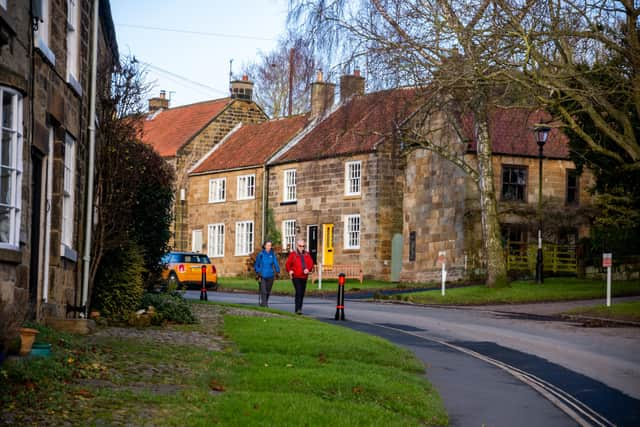

Named after a “clearing belonging to Asmund", Osmotherley is unusual in that it had one dominant entrance, from Northallerton and the nearby A19, which climbs to about 600ft to village.
Weekdays see rambling groups and weekends groups of Duke of Edinburgh Award walkers taking a break in the heart of the village before setting off to climb the massive Black Hambleton to the south.
Views from the village are expansive, across the flat plain of the Vale of Mowbray to the Yorkshire Dales, but those towards Osmotherley from the moors and inside the village are equally impressive as it has been built on undulating ground, emphasising the irregular pattern of terracotta and Welsh slate roofs.
Much of the village centre, around the junction where the road rising from the valley meets the traditional north-south route favoured by Scottish cattlemen, dates from the 18th and 19th centuries, but there's also a number of features dating from medieval to Edwardian eras.
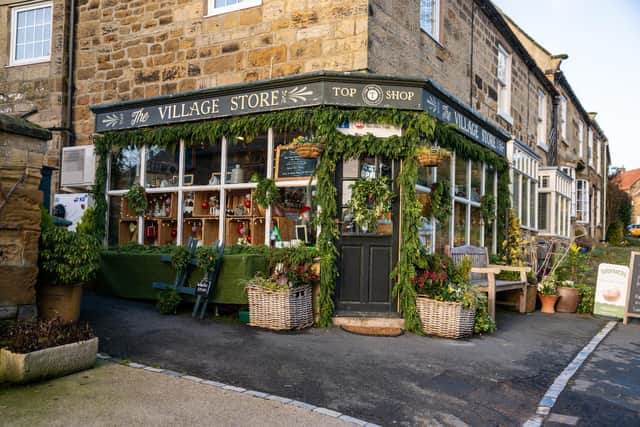
It's believed almost all the earlier buildings in the village were destroyed during repeated Scots raids during the 13th and 14th centuries.
Many properties were originally farmhouses with barns attached, but have long been adapted into terraced cottages, while others feature a small attic windows near the chinmney stack and on the gable end to enable weaving.
Communal weaving rooms on the upper floor of North Terrace properties were fitted with extra-large windows to allow more light in.
At the north end of the village the pinfold, where stray animals were held overnight and released in the morning in return for a payment or fine, still survives.
The launch of Cote Ghyll linen mill in the 19th century, now the site of an award-winning holiday park, and its associated bleaching mills saw a doubling of the village population, before foreign competition undermined the mills' viability.
Another key industry in the village was quarrying of alum, a mineral which was important in the textile industry as a means to fix vegetable dyes to fibres.
There are some two to three dozen disused alum works stretching across the northern fringe of the national park, including one just south of Osmotherley.
Worker’s housing, such as at Paradise Row, was provided for the mills and alum industries.
The golden sandstone Osmotherley sits on was used as the main building material for the largely terraced housing, which connected by a network of narrow cobbled and stone flagged paths and alleys which point to the village's medieval origins.
The vast majority of the 50-plus listed properties in the village are on its simply named main thoroughfares of South End, West End and North End, which centres on an 18th century market cross alongside a weather-worn stone table.
John Wesley preached from the market cross during some of his 18 visits to the village, leading Methodists to join Quakers in establishing congregations in Osmotherley at an early stage.
Set back behind houses on West End, stands a meeting house which Quakers have worshipped here since the 18th century and continue to do on the first, third and fifth Sunday of every month.
Its interior gallery illustrates the division of space typical of early Quaker meeting houses.
A Methodist Chapel was established in Osmotherley in 1754, nine years after John Wesley's first of 18 visits to the village, off an alley between North End and Back Lane.
Wesley stayed at the Old Hall, which has been used as a Benedictine monastery, as well as preaching in the parish church, outdoors in the village and later in the chapel, which was built in 1754.
The plain three-storey building on North End in which the chapel is housed is among the larger properties in the village and was given to Franciscan friars in 1665 by Lady Juliana Walmsley at the height of Catholic persecution.
It was used to hide recusants and monks fleeing the authorities.
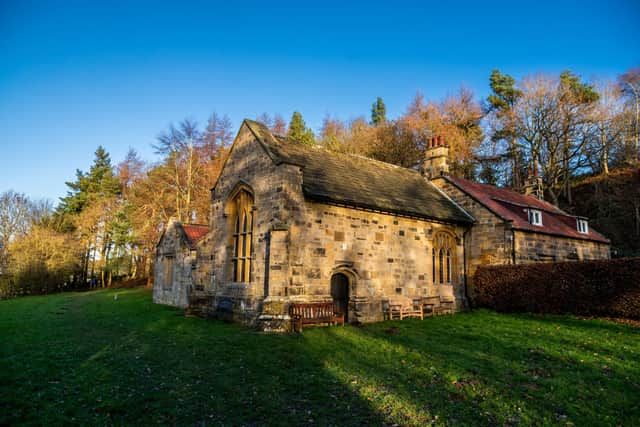
Lady Walmsley is said to have set out to provide a house "for performing duties for the benefit, devotion and comfort of pilgrims" to the 14th century Lady Chapel high on a hill to the north of the village.
While St Peter's Church is set behind properties on West End its tower serves as a landmark across the village.
The Grade II* structure, which has some eroded 17th century tombstones in the graveyard, has a memorial to 12 men from the village who died in the First World War.
The church is set behind the Queen Catherine pub, one of three that forms a traingle in the village centre that have survived since at least the 19th century.
Due to the number of visitors the relatively small village also supports a popular coffee shop.
Recent years have seen villagers raise concerns over the future of Thompsons, a grocery shop premises which overlooks the market cross and dates back to 1796.
Another beloved amenity, the village pre-school, that was on the verge of closure in 2023 due to a lack of funding, has bounced back, securing an outstanding rating from Ofsted, as has the village primary school, which has secured good ratings from the inspectors following being found to require improvements.