
People are to blame for Yorkshire's seagull 'menace', locals warn
Fish and chip wrappers are part of the problem, locals warn, after a new gull strategy was set out to tackle scavenging sea birds in Yorkshire's coastal towns.

A notorious taskforce was set up to tackle "gull mugging" in Scarborough in 2015, with a register recording 36 incidents in the space of nine months.
Now, delving deeper into new reports, plans look at how people in the resort - along with Whitby and Filey - can "co-exist" with the birds rather than cull them.
Part of the challenge, detailed reports to councillors warn, is the prevalence of empty fish and chip boxes which can fill bins very quickly - leaving bins overflowing with food.
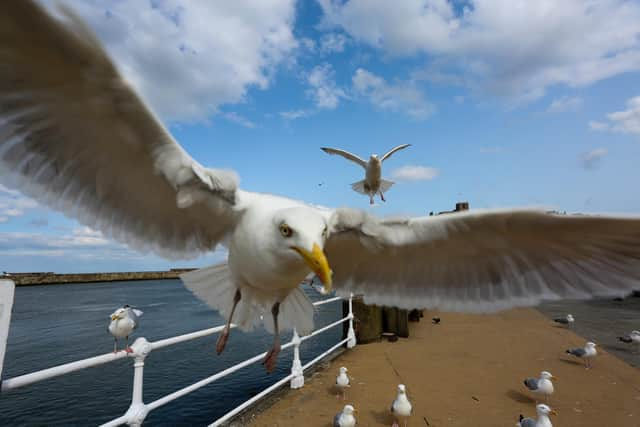

And there are warnings that it is humans - rather than birds - that are the problem.
Gulls are a "part of the seaside experience", one local business warns, while another said: "these birds are a pest".
All agree: "They are dependent on human food, and this should not be the case."
'Cull the gulls and broadcast gull noises over speaker instead'

A £119,000 plan is to be discussed at a meeting of North Yorkshire Council's (NYC) Scarborough and Whitby Area Committee on Friday, before a final decision in August.
The gulls are stealing food, sometimes aggressively, reports read, while around £50,000 is spent each year just jetwashing their droppings - and twice a day in some hotspots.
Now, more than 100 local businesses and groups have submitted suggestions, from Kittiwake hotels to fines for tourists who feed them.
Several said they had been attacked themselves by "menacing" gulls.
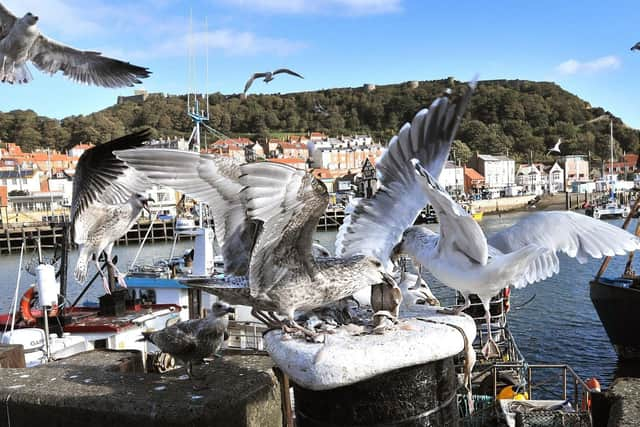
"The biggest cause of the problem is visitors and potentially locals feeding these birds," one business owner said.
Another said: "We had lot less of them in Covid when tourists where not feeding them."
And a third argued: "All gulls are a natural part of seaside towns. It is the waste of human beings that attracts them into creating litter.
"Better rubbish bins in greater quantity, littering fines and tax on takeaway outlets should all be explored," they added.
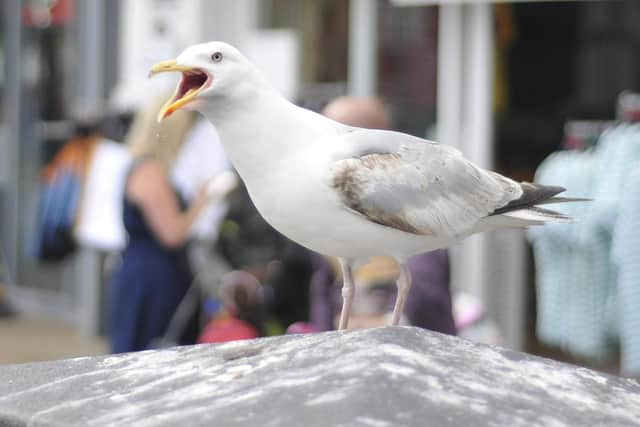
Some 68 per cent of survey respondents said they had negative interactions with gulls.
Takeaway food was the biggest problem, they said, with the gulls ripping open bin bags and more frequent collections needed.
A final submission, from a tourism business, said the sound of the gulls is still much loved.
"Some visitors actually enjoy the noise of gulls but rarely the consequences," they said, suggesting instead that speakers alone should broadcast their call.
What is the problem?
Some of Yorkshire's coastal towns - most notably Scarborough, Whitby and Filey, have high numbers of Herring Gulls and Kittiwakes.
These are red listed species, falling in number, but they are said to be flocking to more urban areas in search of food.
Declining fish stocks have been partly blamed, while urban areas are "free from predators" and filled with a new food source - human food waste.
"Gulls do pose real challenges, in particular around the mess they create from fouling, nesting and noise," the report reads. "In addition, from Herring gulls, there are often unwanted interactions with people."
'Random' and 'ineffective' measures
A series of moves have sparked controversy over recent years, from frightening the wild birds with fire gels to removing eggs from their nests.
Hawks were even brought in to scare them off.
Now, a new report from North Yorkshire Council (NYC) states these measures were "random" and "ineffective".
Some 889 nests were removed from Scarborough and Whitby over two years to 2019, but the gull numbers remained "abundant".
It followed earlier attempts in 1991, and even narcotic bait in 1977.
Then between £30,000 and £50,000 was spent on tubs of fire gel in 2023 after local businesses complained about the volume of dropping under Spa Bridge.
The number of breeding Kittiwake fell 30 per cent by 2024 - but has since risen again, with the gel having a "shelf life" of just two years.
And while netting and spikes have been partially successful, the report outlined, there is some evidence of the birds being harmed or trapped alive.
Warning signs 'portray gulls as the villain'
With the birds now protected under stricter laws, councillors must look again at ways for gulls and people to "co-exist without conflict".
Strategies revolve around cutting access to waste - removing food sources or investing in newly developed bins.
Older signs show the gulls in a "negative" light, the report warns, portraying them as "the villain". New signs will say simply that they must not be fed.
Councillors are also to look potentially at a man-made nest close to the Grand Hotel, which could cost anything between £100,000 and £2m.
"The provision of gull proof sacks must be seen as a priority," councillors have been told, with an audit needed to understand the present picture.
"It is recognised that the use of ordinary black plastic sacks provides an attraction to gulls."