
Redmire: The stunning Yorkshire village used as a set for 28 Years Later and Vera
On the north side of the Ure valley, better known as Wensleydale, Redmire lies directly on a route between Leyburn and Hawes.

However, as the A684, on the opposite side of the river, runs parallel and is less windy than the route passing through Redmire, it attracts most of the traffic in one of the most visited of Yorkshire's dales.
The route through Redmire is by and large only used by locals until the Ure floods or the A684 is closed for works.
While Redmire holds a prominent place in Wensleydale and can be seen from a numerous vantage points, approaches to the village from the west are particularly spectacular with Bolton Castle, one of the country's best preserved medieval fortifications and where Mary, Queen of Scots was imprisoned, just a couple of stone's throws from Redmire.
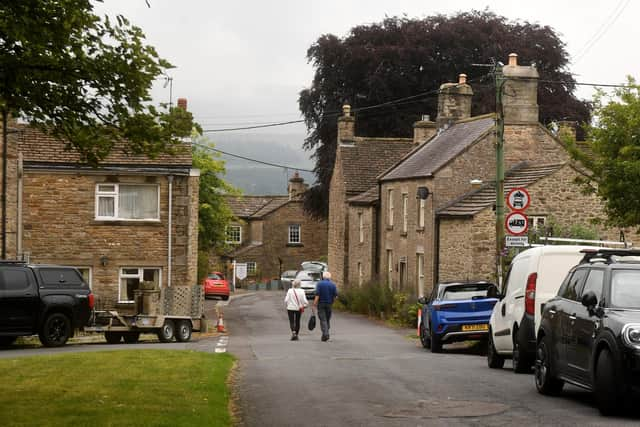

The village is said to have ancient origins and its rich heritage is immediately apparent due to the large number of stone properties with slate roofs dating from the 16th to 19th centuries.
Listed properties such as Pyra House and Priory House, stand alongside Manor House featuring a late 17th century stair turret and the early 18th century Hogra Farmhouse, which boasts a chamfered ashlar doorway and surrounds to some chamfered mullion windows. The 16th century Lightfoot Hall and Lightfoot House has external timber details.
There's a profusion of neat green spaces across the village, some of which are dominated by mature trees. On one of them stands an early 19th century stone water pump.
On another there's a monumental pillar and lamp, erected by subscription in 1887, to commemorate Queen Victoria's Golden Jubilee.
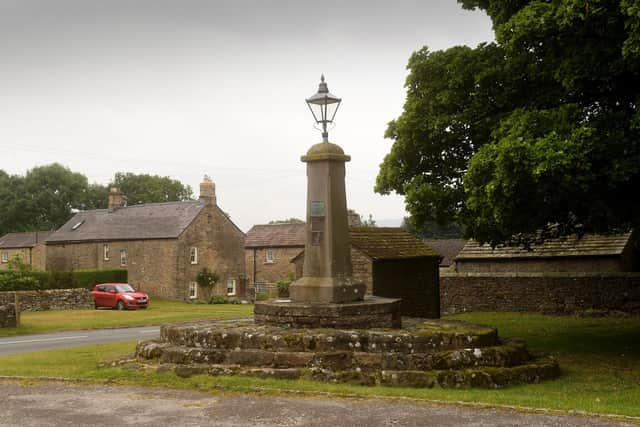
Such is the importance of the village’s trees to residents that consternation ensued in 2004 over a proposal to fell an oak tree believed to be around 500 years old and under which John Wesley is said to have preached under.
Along a leafy, narrow lane to the village's south-east and set in a copse of trees stands the 12th century St Mary's Church. On its east wall there's a tombstone to Hannah Hanson, who died in 1812 aged 105 years.
It's as picturesque as any village in the Yorkshire Dales National Park, but as it has remained excluded from the designated area since it was established in 1954, despite the national park's boundary being to the north, west and south of the Redmire, there has been a greater amount of development than in some neighbouring villages.
On Hargill Lane, beside the children's playground, plans to develop seven homes on a greenfield site have triggered concerns the development would strain the village's infrastructure.
The parish council acknowledges the need for affordable housing, but has questioned the affordability of the proposed properties, which include three to four bedroom executive homes.
Properties in village are arranged around an irregular village green, with four roads lead towards it. Despite the north-south axis of the village, many buildings in Redmire are oriented east-west, with their main facades out of public view, to take advantage of the spectacular views over Wensleydale, with the heart of the village centre about 160 metres above sea level.
The stunning scenery, including Redmire Force waterfalls, a trio of waterfalls deep in the trees, the terminus has attracted those wanting to explore Wensleydale.
In the summer months it's a popular, but no overly so, bathing spot, with people paddling in pools at the top of the falls as well as the deeper water below.
As such the scenic village serves as the terminus for the volunteer-led Wensleydale Railway, which was listed as one of Tripadvisor’s top attractions in the UK.
However, the 5.5-mile section of railway between Leyburn and Redmire has been closed to the public since 2020 due to the condition of the track.
The Return to Redmire project has involved raising £30,000 to cover the cost of contractors and materials.
A target was set to restore passenger services to the heritage line between Leyburn and Redmire stations by this month to coincide with the 200th anniversary celebrations of the world’s first passenger service on the Stockton and Darlington Railway in 1825.
The village's pretty inn, formerly known as the Bolton Arms and now called Redmire Village Pub, off the main thoroughfare on Hargill Lane, is also getting back on track after several years of uncertainty, after a community group was formed to save it and Geordie ex-pat business consultant from Oregon bought it to run in partnership with residents.
Diners can sample dishes such as black pudding and cauliflower bhajis or butternut squash and Yorkshire blue cheese pie.
Despite being left out of the national park, the limited and largely sympathetic development in the Redmire renders it simple to imagine life in the village a century or two ago.
It's easy to see why Redmire is so popular with TV and movie producers.
ITV crime series Vera filmed in the village for an investigation into the death of a young woman found near a remote rural railway crossing and Redmire was featured in the BBC television series All Creatures Great and Small.
Last summer Redmire was a location for the latest instalment of Oscar-winning director Danny Boyle's 28 Days Later horror franchise, with a temple fashioned from bones being built beside the Ure, leading to the public footpath popular for picnics being closed.
Looking north from the village, the economic origins of Redmire are apparent, with limestone quarrying and lead mining having scarred the landscape formed from layers of limestone, sandstone, shale, coal and millstone grit sandstone.
The Cobscar Vein of lead was discovered on Redmire Moor in the mid 17th century and the ruins of a lead smelting mill still remain, along with spoil heaps, and a chimney on the horizon, resulting from its exploitation on the moor, now used for sheep grazing and grouse shooting.