
Richmond through the ages: The fascinating history of one of Yorkshire’s oldest market towns
Items of historical significance abound from Richmond’s existence, stretching from the 11th century to the present one.
In 1071, the Anglo-Saxon area Hindrelag was given by William the Conqueror to his kinsman Alan Rufus, who subsequently established a castle there. The manor later became Richmond and was named as result of Rufus’ Breton heritage. Richmond translates as ‘strong hill’ in his native language, with Richmont, Normandy, also an influence.
A market was said to have been established in the outer keep of the castle by the end of the 11th century. Around 50 years later, Richmond was given a Royal Charter for a market by Henry II.
The church of St Mary was founded in the post-Norman period and mentioned in writing from the 12th century. Features that are contemporary to this, and survive at present, include two stone pillars near the entrance. The tower was added later at the end of the 14th century.

Holy Trinity church was originally noted in 1330 as a chapel of ease (a place of prayer which was constructed to reduce the burden on the main parish church). The building – completed between the 14th and 15th centuries – consisted of separate chapel and tower, which were later joined by a structure used as a shop.
A third religious establishment was the Franciscan friary, founded on land to the north of Richmond Castle. This was gifted to the order in the late 1250s by Ralph Fitz Randal, Lord of Middleham. The monks used timber and mud structures initially before wealthy patronage allowed stone buildings to be erected. In the 14th century, Richmond friary received gifts from the Barons Scrope of nearby Bolton Castle.
Despite improvements being carried out by Henry III and Edward I, by the late 1300s, the castle at Richmond was falling into disrepair. This was perhaps due to the Earldom of Richmond being held by French Dukes at the time of the Hundred Years’ War and the land taken by the crown as a result. Henry VI created the last Earl of Richmond in 1452 when bestowed on his half-brother Edmund Tudor. The title passed to Edmund’s son, Henry VII, and has not been used since.
Henry’s granddaughter, Elizabeth I, made an important contribution to Richmond’s history by granting the town a charter of incorporation in 1576. This allowed Richmond to be governed by aldermen and burgesses, land to be bought for the town and local laws and trading standards enforced. The long-running tradition of Mayor’s Audit Money was established where a ‘Richmond Shilling’ was distributed to the poor and elderly in December. Also, every seven years the town council and inhabitants were required to enforce the boundary of the settlement by walking the perimeter. From the mid-1580s, the town sent two MPs to Westminster and this lasted to the Reform Act, 1867, when reduced to one.
Whilst the Tudors viewed Richmond Castle with importance, the Stuarts had a weaker connection and during the English Civil War, the fortress was held by Parliamentarian forces. These also used St Nicholas House – the oldest surviving domestic structure in Richmond – as a base for operations across the North during the conflict.
Following the restoration, Charles II reissued Richmond’s government charter, allowing a mayor, 12 aldermen and 24 burgesses on the council. He also created the Dukedom of Richmond for his illegitimate son Charles Lennox and the peerage is still in use at present.
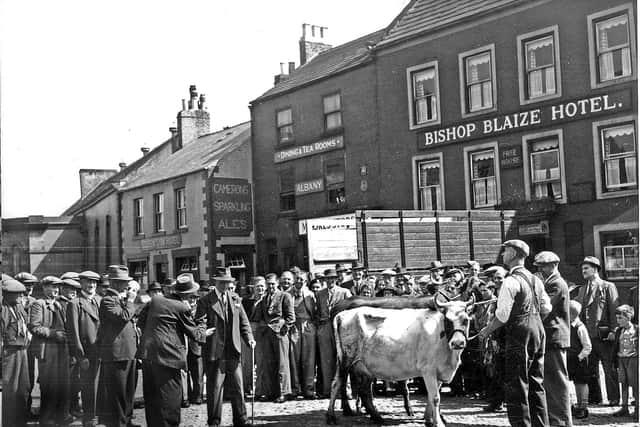
During the Georgian era, Richmond became a connecting hub for passenger and mail coaches travelling through the area on the Great North Road. The King’s Head was the most prominent inn at the time and was established as a house by a local mine owner around 1720 before being converted soon after. The inn is thought to be the first building completed using bricks in Richmond.
A famous coach of the era was the Richmond Courier, running from the Town Hall, Richmond, on Mondays, Wednesdays and Fridays to Bedale, Ripon and Harrogate before reaching the Rose and Crown Inn, Briggate, Leeds. Another inn operating in Richmond during this period was the Nag’s Head. This served secondary services, including a coach started in the late 1820s operating from Leeds to Richmond via Ripon.
The coaching era came to a sudden end in the mid-19th century with the rise of the railways. Richmond was connected to the network relatively early. The Great North of England Railway built a branch from the main line south of Darlington to the town via Moulton, Scorton and Catterick Bridge in the mid-1840s. The stations were designed by noted architect G.T. Andrews in a Tudor style. Richmond station was located south of the River Swale as crossing this into the settlement was deemed impossible. There were just two lines to the station, yet generous amenities were provided for passengers, goods and staff.
Both the railways and stage coaches brought prosperity to Richmond and supported improvements for the town. In the early 1770s, a 12,000-gallon reservoir was built under the Market Place and topped with a nearly 60-ft tall obelisk, which replaced the original market cross. The reservoir was fed from a nearby spring through lead pipes, though prior to this the water travelled through hollowed elm tree trunks.
During 1854, a new Market Hall was erected in stone, with three bays in the frontage and the roof was made with Welsh slate. This replaced the ‘old shambles’ containing the meat traders, all of them slaughtering animals on site, leading to concerns of health and hygiene. The hall continues to host a market, seven days a week.
In the late 18th century, Holy Trinity was again in use after a period of neglect and some restoration was carried out during the 19th century. Also undergoing significant restoration at this time was St Mary’s church which was surveyed in the late 1850s and found to have subsidence at the eastern end, crumbling walls and an unsafe roof. A committee led by the Earl of Zetland was formed and £3,000 raised for rebuilding and enlargement where possible. Sir George Gilbert Scott was engaged to oversee the work which eventually cost around £5,000, according to a contemporary report, with more outlay projected on addition fittings. Seating was for 1,300, but space for more could be found if necessary.
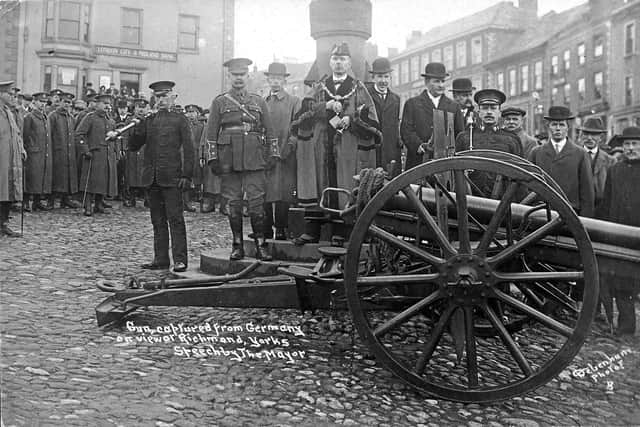
Though Richmond Castle had been derelict for around 300 years, in the 1850s, the 5th Duke of Richmond, Charles Gordon-Lennox, allowed the fortress to be the headquarters of the North York Militia and a barracks against the west curtain wall was built. In the early 20th century, the Northern Territorial Army was based there, then during the First World War the Non-Combatants Corps lived in the barracks. Sixteen men from the Corps, who refused to undertake any war work, were later sentenced to death by firing squad, but this was subsequently commuted to ten years’ hard labour.
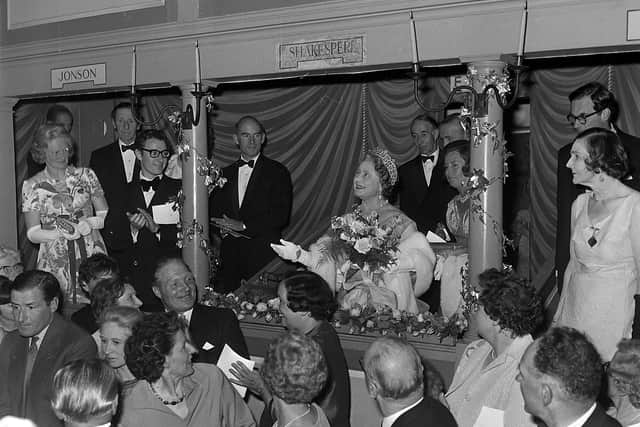
As the 20th century progressed, Richmond increasingly celebrated historical places in the town. This included the Georgian Theatre Royal which had been established in 1788 and used to the mid-19th century. During 1963, the building returned to theatrical use and in the late 1990s and early 2000s major refurbishments were carried out. A museum was added in 2016.
Originally located in Richmond Barracks from 1922, a museum dedicated to the Green Howards Regiment was established in Holy Trinity Church (deconsecrated in the 1960s) during 1973. Thanks to grants and private donations, the museum now occupies three floors where many prized and interesting exhibits are on display, including Victoria and George Crosses, uniforms, firearms, etc.
Locals attempted to protect the railway connection when closures abounded in the 1960s, yet they were ultimately unsuccessful as Richmond lost the passenger services on 3rd March 1969. Thankfully, the building was listed before this and has been repurposed to continue in service of the local community. By doing so, the station has joined an illustrious number of historical attractions in Richmond.