
Roos: The Yorkshire village which inspired JRR Tolkein as he wrote Lord of the Rings The Two Towers
Twelve miles east of Hull and two miles from Tunstall Beach, Roos stands on a mound of boulder clay up to 23m above sea level, marooned by a patchwork of mainly flat arable farm fields.

The population of the largely commuter village has ebbed and flowed since before plague decimated the community in 1589, which saw 45 burials in three months.
At the outset of the Industrial Revolution residents in the parish, which also includes some surrounding hamlets such as Owstwick, numbered less than 300, but by 1851 the number had doubled, only for the population to fall back to around 400 in the early 20th century.
The most recent census recorded some 1,201 residents following a significant amount of housebuilding over the past 60 years.

Nevertheless, the village's heritage which dates back to before William the Conqueror created the Barony de Ros, has been preserved through the relatively recent establishment of two conservation areas, one in the centre around Main Street and another to the south of the village, including the Queen Anne-style 18-bedroom Old Rectory on Rectory Road.
JRR Tolkien was billeted to the property after suffering trench fever during the First World War.
He spent 18 months in the area and it is believed the Passage of the Marshes in Lord of the Rings The Two Towers as well as the meeting of Beren and Luthien in Silmarillion were inspired by walks in nearby woods.
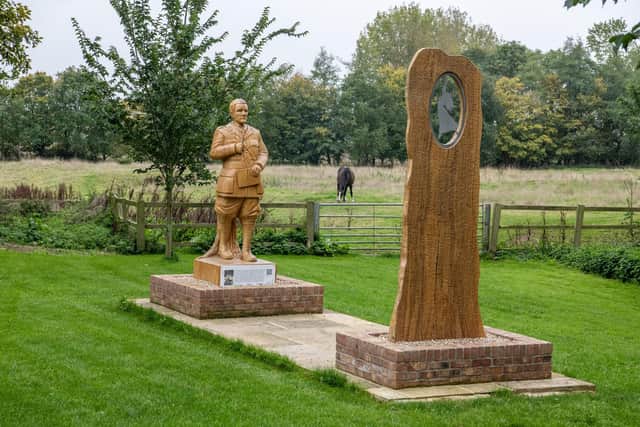
The village is proud of its links with the literary luminary and this summer saw two hand-carved sculptures unveiled, depicting Tolkein and a silhouette of his wife, Edith, dancing, in 1917, to form part of a Tolkien Triangle trail.

Weeks later, when cracks appeared in the statues East Riding of Yorkshire Council issued assurances to concerned villagers the artworks would "continue to season and acclimate” to the environment in the grounds of All Saints' Church.
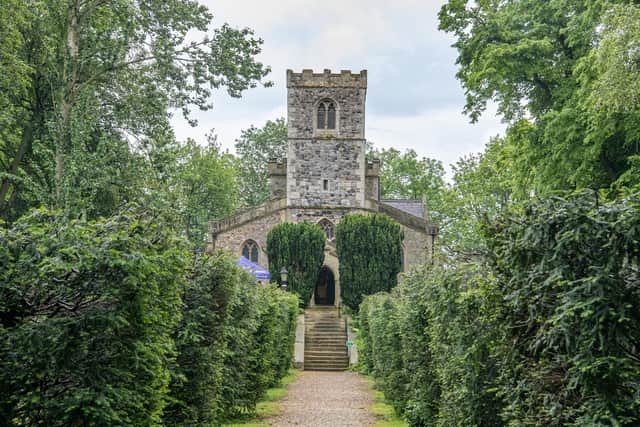
While there was a church at Roos by 1086, the earliest element of the existing cobble with stone dressings grade I listed building is its 13th century chancel.
The approach to the church, known for being surrounded by a carpet of snowdrops in early spring, is particularly striking with a row of mature Yew bushes on either side of the path.
Further south is the moated ancient monument Roos Castle, once a fortified manor house and home of the Ros family. It includes a 100m-long central island surrounded by a moat and two ponds.
With numerous active and former farmhouses in the village, Roos continues to be dominated by agriculture.
Last month saw plans lodged to house almost 100,000 chickens in an extended 110m-long free-range egg production unit at Greenacre Farm, south of the village.
Roos seems to materialise from its rural setting and, from most directions, wooded areas, providing habitats for a spectrum of flora and fauna which contribute to the village's bucolic character, which is further boosted by trees, verges, dykes and hedges into its central area.
Withstanding this from places such as Pilmar Lane there are views of wind turbines, which has led residents to complain about "the industrialisation of the East Riding".
However, others have pointed towards compensatory payments to the community, such as the annual £36,000 for social, educational and environment projects from the nine turbines at Roos Wind Farm.
For over a decade funds have streamed into projects such as the Roos Woodland Group, which has planted more trees and shrubs around the parish and is further funded by bottles of juice made from apples picked from community trees on Hilston Road.
Building in Roos appears to have been influenced by the drainage watercourse Roos Beck, which flows south through the village and is said to be seen at the North End and emerge south of the church, creating a thin linear settlement.
Roos is framed by two main thoroughfares, Rectory Road and Main Street, spanning two miles, from Furze Farm in the north to the The Elms, linked by numerous minor roads.
The elaborate shop fronts on Main Street, featuring Victorian timber detailing, underlines the strength of the local economy at periods in the village's history, but have in recent times led to controversy.
Earlier this year hundreds of residents signed a petition backing the owners of the village shop, saying it represented "a lifeline", over a new wheelchair-accessible doorway after they failed to seek planning permission for the work.
Council officers the automated sliding door entrance created a characterless frontage and harmed the conservation area.
Other key features of the conservation area at Main Street include two public houses, the Black Horse, a live music venue, and dog-friendly The Roos Arms, both of which offer food.
Other nearby shops include Melbourne Butchers and Bakery, which offers "baking just like gran used to", as well as Propa Butchers on Hilston Road, and there is a GP surgery on Hodgson Lane and hair and beauty salons on Main Street.
The northern extremity of Main Street is home to Roos Primary School, which was rated as good at its most recent Ofsted inspection, alongside playing fields which this July hosted Roos and District Horticultural Society's 83rd Summer Show, as well as a Spring Show in April.
There is an array of energetic community groups in Roos, such as Roos Crafty Crafters, which has recently completed making quilts for Yorkshire military veterans.
Many such groups are based at the unprepossessing Roos Memorial Institute, on South End Road, which the parish council as "a highly valued village asset".
It is fronted by ironwork palisades, in the middle of which are gates, pillars and plaques to honour villagers killed in wars.
The hub is regularly used by many local groups, such as the Roos and South Holderness Singers, which teamed up with the Roos Handbell Ringers to perform a recent concert.
Members of the village's church bell ringing team joined the Yorkshire Tykes at the National Youth Championships this year and came away with the overall title.