
Second World War: 'It shaped all my teenage years - we contributed as children in Yorkshire'
Eighty seven years ago, many children returned to school after the summer just as the Second World War began. Alma Williams reflects on education in Yorkshire during the conflict.
The war shaped all my teenage years – and my life. Irrevocably. It all started for me when we went back to school in Knaresborough in September 1939. I was eleven when war started, sixteen when it ended, after that long hot, hazy summer holiday in Bridlington - by the sea I wouldn’t see again for five years.
Things were going to be different. Immediately, the head told us so in our first assembly that fateful September, solemnly intoning in his ponderous prose the gravity of the prime minister’s declaration of war.
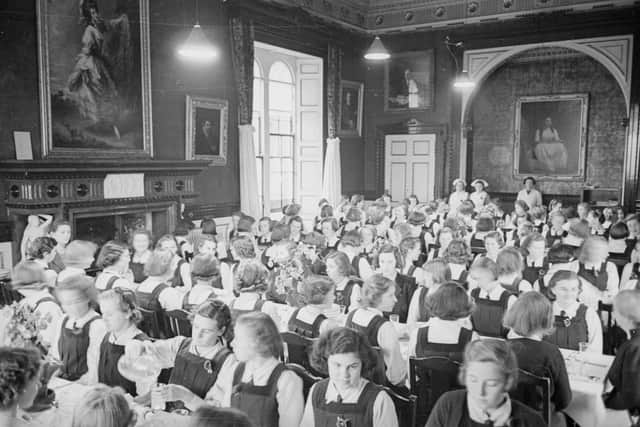
For a start we were going to have jobs to do to keep our school going. Albert, our much-loved caretaker had been forced to join the army. So in future we would be responsible for keeping our own classrooms clean and mopping up our messes with that stuff called Lysol.
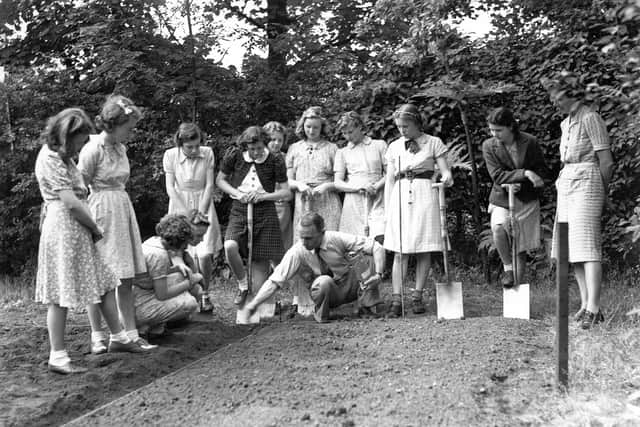

And we must also make a start with rotas for digging up the cricket pitch - Albert’s pride and joy - ready to grow potatoes, already “digging for victory”. Grave warning: in no way were our educational standards going to slip. Homework would still have to be completed on time. And those School Certificate exams would still take place next July, come what may.
At that stage the head could not know that the time would come all too soon when he would so very sombrely announce each Monday morning the names of old boys taken prisoner, wounded or killed. The former head boy – I’d had a bit of a crush on him – was killed. He was going to be a doctor.
Rules about compulsory conscription didn’t just apply to him but to all men over eighteen except for those in a special position such as the police, with those who objected having to work down t’pit as “bevvy boys”. These laws also applied to women without children having to go in the armed forces, the land army or work in a munitions factory.
And we youngsters had to sign up too to one of the junior cadet forces or an approved organisation like the Scouts or Guides. I joined the Guides. I did not realise that from now on the rest of my childhood had been abolished.
I couldn’t keep track of all the new – and increasingly enforced - rules and laws that so rapidly piled up – like having to wear a tangible national identity number at all times, not daring to show a glimmer of light after dark in the new black out scheme, or having to put things like potato peelings and old cauliflower stalk into food waste containers - pig bins - at every street corner.
But for me the most symbolic of all, daring to confront the possibility of enemy invasion, was when council workers took down all our sign posts to York and Leeds. The very worst, though, was the edict that all domestic dogs would have to be destroyed: it was going to be hard enough as a besieged island just to feed us let alone pets. My granny had a dog. He was called Rip. I had loved him.
So, it wasn’t just at school where our lives were going to change. It was everywhere. But this change gave us a purpose in life, a clear objective, an inspiration. And new responsibilities. We were going to win that war even if it was still the other side of the Channel. No doubt about it.
No time to be bored. No time just to hang around. No going out in the evening because of the blackout but actually doing things we might not have done without the war – learning new things like first aid, survival skills in case there was no water or electricity, how to deal with home emergencies and remembering always to keep the bath (if you had one) filled with five inches of water in case of fire bombs for which we learned how to use stirrup pumps.
We were doing grown-up things at home that our dads used to do, taking on unfamiliar responsibilities like what would later be called DIY and learning to look away as we wrung the chicken’s neck. Three of us, all girls, were chosen to be trained to a very high standard in Morse code signalling by a sergeant major from Catterick. He shouted at us, the same as he did to his recruits using words we weren’t supposed to know.
But we got very fast at deciphering some of the messages that came over on the BBC from France, now occupied by the Germans. If the war went on for a long time I decided I’d become good enough to be dropped by parachute to help my hero, General de Gaulle, with his underground Free French army in occupied France. In the meantime I would work at my French.
As war dragged on, my school in Knaresborough acquired new obligations. As we were in a rural area considered safe from being bombed – though Harrogate did actually have a bomb dropped on it, fortunately not exploding, through the roof of the Majestic Hotel’s distinctive dome – we were well away from targets in Leeds and York.
So our school was obliged to close for a fortnight every October so that we could all help bring in - whatever the weather - the potato harvest. For me, at a farm in Sicklinghall, that meant slithering in mud among the slugs. So many farm workers had been conscripted and we needed those potatoes – and anything else we could grow ourselves - to feed us, being an island dependent for food supplies on its merchant navy.
So every August too I helped with the harvest at a farm in Acaster, cutting, stooking, working even in the moonlight to get our sheaves of oats, rye and barley onto horsedrawn wagons before a storm broke. We were expected to work at the same intense high level as the landgirls and Italian prisoners of war. I really liked those prisoners with their broken English and the clever little wooden carvings they made for us. I couldn’t understand how they could have been the enemies we were fighting against – they didn’t look much older than some of the lads in our sixth form.
Nor could I understand why black soldiers coming from America lived in barracks in Harrogate separate from white soldiers and why they had to eat separately in their canteen in Knaresborough high street. I was “volunteered” there by my form teacher to peel potatoes – they ate lots of chips. I hadn’t seen a chip for ages as things like lard and other cooking fats were rationed, and now I could have as many as I wanted.
I was in the sixth form when the war ended, proud of my my School Certificate results – good enough to get me a university place to study French, still inspired by my hero, General de Gaulle. But I was much less aware then of the lifelong skills – and attitudes – I had acquired which would continue to serve me satisfyingly well, even now as a very old woman. The ability to solve problems, being able to find or create imaginative alternatives to things I can’t have or do, always asking myself “What else can be done?, learning to make the most of what I’ve got and resisting waste of any kind.
But above all I cherish the ongoing legacy of having an aim, a cause, something to fight for. Perhaps my father, a history teacher at Christ Church School in Harrogate, had foresight in christening me “Alma” named – like many of our streets and buildings - after that decisive battle in 1854 fought on the banks of the river Alma where the British and the French beat the Russians in the Crimean War.