
Semer Water: The Yorkshire lake immortalised in paint by JMW Turner
Despite the historic county of Yorkshire being the largest in the United Kingdom its three million acres contain just four natural lakes.
The largest of these by surface area is Hornsea Mere to the east of Hull, the smallest Gormire Lake at the foot of the North York Moors.
In the Yorkshire Dales there is that perennial of Yorkshire calendars, Malham Tarn, and lesser-known Semer Water.
Half a mile in length, Semer Water dominates a short glaciated limestone valley known as Raydale, an offshoot of Wensleydale, and is reached by minor roads leading south from the village of Bainbridge.
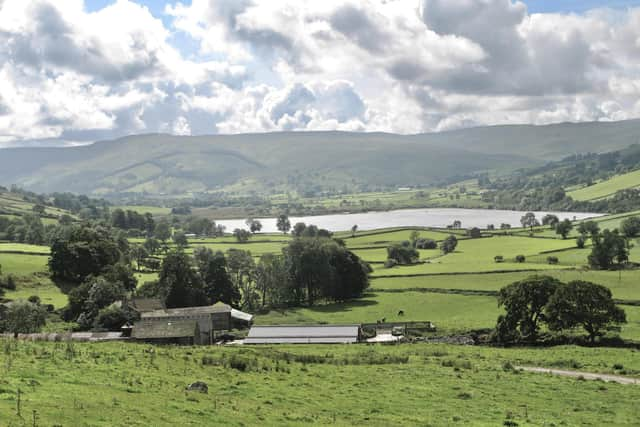

The entire lake and a range adjacent habitats that includes marshy grassland, willow carr and upland pastures, form a Site of Special Scientific Interest now managed as a nature reserve by the Yorkshire Wildlife Trust.
Semer Water is used for dinghy sailing and kayaking, while the dale is popular with walkers and lies on the route of the Pennine Way long-distance trail associated with the famous guidebook author Alfred Wainwright.
Set back from the shores of Semer Water are three small settlements, the largest of which is Countersett.
It has an early Quaker Meeting House, and nearby Counterstett Hall hosted the movement’s founder George Fox in 1652 and 1677.
According to local legend Mary, Queen of Scots stayed there in 1558.
At the head of Raydale is the small community of Stalling Busk, a traditional hill farming hamlet lying 1,080ft above sea level.
A ruined chapel dating from 1603 lies a short distance over fields, replaced in 1909 by St Matthew’s Church within Stalling Busk. On the other side of Raydale is the hamlet of Marsett.
In 1816 the great landscape artist J.M.W. Turner produced sketches of Semer Water used for his watercolour “Simmer Lake, near Askrigg” now in the British Museum.