
Simon’s Seat: The stunning Yorkshire spot which has mystery surrounding its name
“Who was Simon?” countless walkers have wondered when setting their day’s objective as this landmark outcrop of millstone grit above Wharfedale.
The answer is that no-one really knows, although some people living in the southern Yorkshire Dales have differing explanations.
One story has its origins in a folklore legend retold by Frederic Montagu of Sheffield, who wrote about travelling the Dales in the early 19th century and had heard a delightful tale about a shepherd tending his flock on the moors next to the crags and hearing the crying of a baby boy that had been abandoned there.
The child was christened Simon, which may have been the shepherd’s name.
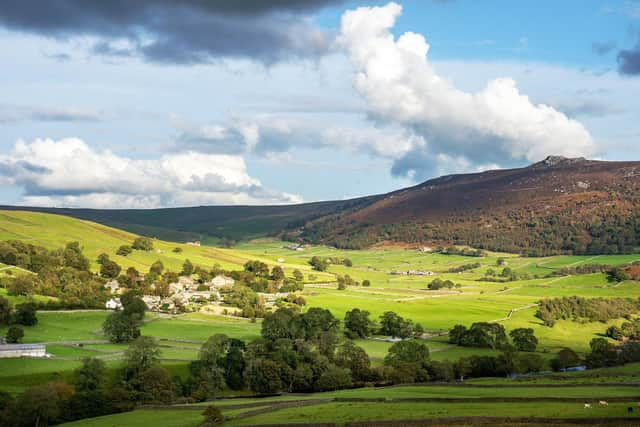

Another story has it that the rocks were named after an early owner of the estate or one of his sons, a theory said to be supported by the nearby presence of neighbouring landmarks known as Lord’s Seat and Earl Seat.
But perhaps the most authoritative explanation was provided by 19th century antiquarian Harry Speight, who in his 1892 book Craven and Northwest Yorkshire Highlands wrote that Simon’s Seat had been a place of Druidic worship in the Iron Age until the Druids were suppressed by the Romans.
As such, he believed, it was probable the rocks had been named after a famous Irish Druid, Simon Magus.
On top of the rocks, Speight found several cup marks - circular stone engravings thought to have some significance in rituals.
Today the most visible feature on Simon’s Seat is an Ordnance Survey triangulation column, where the height has been recorded as 1,591ft (485m) above sea level.
The rocks are visited by several thousand walkers each year as part of a popular circular route from Bolton Abbey, which passes through an area known as the Valley of Desolation and returns along the banks of the River Wharfe.