
Stainforth and Keadby Canal: The Yorkshire waterway which opened during the peak of 'canal-mania'
The UK’s golden age of canals began in the 1770s with the building of waterways like the Bridgewater and the Leeds-Liverpool.
This period - sometimes described as the years of “canal mania” - lasted until the 1830s, when the potential of using railways to transport goods for the Industrial Revolution became apparent.
The Stainforth and Keadby’s purpose was to provide a quicker route for taking South Yorkshire coal to the Humber Estuary and the North Sea than that offered by the River Don Navigation - part of the South Yorkshire Navigation - which in 1751 had connected Sheffield and Rotherham with Goole.
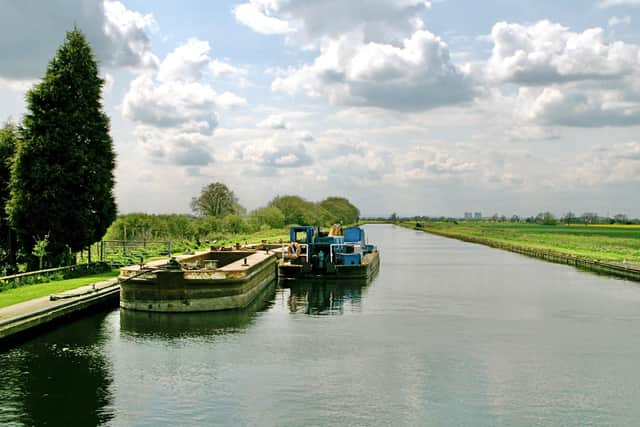
This new canal would run for 15 miles from Bramwith Lock, just north of Barnby Dun, to the tidal River Trent at Keadby.

Early plans were placed on hold until 1798 when the necessary funds of £24,000 were raised by the Stainforth and Keadby Canal Navigation Company.
The waterway finally opened in early 1802 “without ceremony”, it is said, and had an immediate impact on the development of the Doncaster coalfield as well as providing a conduit for the area’s agricultural products to wider markets.
Because the route passes through flat countryside there are just three locks: one at its junction with the River Don Navigation, one at the town of Thorne (where there was a boatyard) and the other where traffic joined the Trent.
As was the case with other major canals, in 1849 the Stainforth and Keadby was bought by a railway company.
But despite increasing competition from trains the canal continued to transport thousands of tons of goods, and a link to the Aire and Calder Navigation opened in 1905.
However, as freight traffic dwindled after WWII the canal and towpath were promoted for cruising, walking and fishing.
The last load of coal was transported in 1987.