
The Do Good Charity: 'We’ve been quietly doing good since 1880'
The death of João Duarte Cidade, patron saint of hospitals, nurses and the sick, in 1550 left a profound legacy, still felt over 1,500 miles away in North Yorkshire, as Ann Chadwick reports.
As with many enduring tales through time, the life of João Duarte Cidade has a classic - heroic - story arc. The selfless act that led to his death was just one of many leading to his sainthood.
Saint John of God (as he became) is the patron saint of hospitals, nurses, the sick, booksellers and firefighters. A Portuguese soldier with a reckless past, his life was far from the world of serene theology.
Historic accounts say he was an orphan on the streets of Spain, before being taken in by a shepherd. He tended flocks before entering 16th-century warfare, becoming a mercenary soldier for nearly two decades fighting against the French and the Turks. Marked by the brutality of war, violence and moral ambiguity, at 40, he travelled to Africa to find meaning. But disillusioned by colonial rulers, he returned to Spain where he settled in Granada, working as a bookseller.

He then had a spell in a hospital for the mentally ill, where he received the therapy of the day: chains, flogging and starvation. Experiencing stigma, stripped of dignity, his experience went on to change the course of healthcare history in the modern world.
Upon release, he was a ‘man on fire with purpose’, establishing his own hospital in Granada. His approach to care challenged the practices of the age, placing love, compassion, dignity and hospitality at its heart. His stature grew after a fire at the Royal Hospital in Granada which saw him rush in to rescue patients, miraculously unscathed by the flames.
In 1886, Pope Leo XIII declared him the patron of hospitals and the sick. In 1930, Pius XI named him patron of nurses. Because of the fire, he is also considered the patron of firefighters, while a brief career selling religious books made him the patron of booksellers. His work inspired disciples - in 1572 the Hospitaller Order of Saint John of God was formally recognised, or the Brothers Hospitallers. Their work spread across the globe – including the UK, and today in 54 countries, 70,000 co-workers and 40,000 volunteers continue the work.
In 1880, the French Province of the Order accepted an invitation to take possession of buildings at Scorton, near Richmond. Four Brothers travelled from Sandymount in Dublin to establish a home and hospital for people who, in the uncompromising language of the Victorian age, were described as “unwanted”, “cripples” and “incurables”.
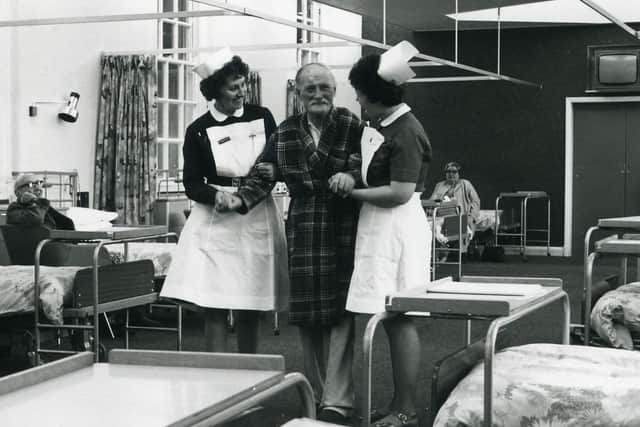
It began a Yorkshire story spanning 146 years and profound changes in medicine and social care. The hospital cared for 15 patients by the end of its first year; by 1912 there were 135. Scorton became a largely self-contained community, with a farm, dairy, laundry and workshops, but it depended on fundraising. “Brother collectors” travelled across the North seeking donations.
A new hospital for 200 patients opened in 1912. After the creation of the NHS, Scorton gained general hospital status. Women joined the nursing staff in 1968 and, in 1977, the Queen Mother laid the foundation stone for a £500,000 rehabilitation unit bearing her name.
By the 1990s, the Order was moving away from large institutional settings towards services that gave people greater independence and control over their lives, opening new provision across North Yorkshire, County Durham and Tyneside. In 2005, after 125 years, Saint John of God Hospital at Scorton closed. The Brothers established Saint John of God Hospitaller Services as a separate charity to continue their work, and the charity’s headquarters moved to Darlington.
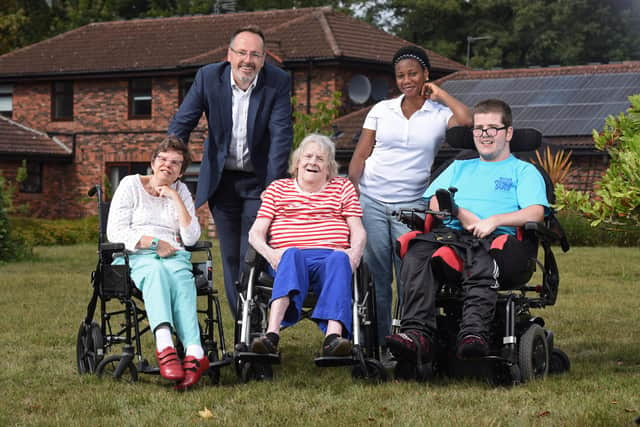
Today, the charity in North Yorkshire continues to support people in Scorton, Catterick and Leyburn with housing, care and specialist support, while reaching more than 1,800 people every month in 60 communities across the UK.
On September 15, the trading name for Saint John of God Hospitaller Services became The Do Good Charity. In Italy, the Brothers became known as the Fatebenefratelli – the “Do Good Brothers” – and it is this centuries-old description that has inspired the new name, reaching directly back into the charity’s 500-year heritage.
The charity is acutely aware that it is one of the oldest and largest social care charities in the UK that many people have never heard of. Like other British institutions that grew from religious foundations – The Samaritans, St John’s Ambulance, YMCA - it now works with people of all faiths and none.
Chief Executive Paul Bott says: “It’s a new name, but the same heart since 1880. The 500-year-old philosophy of hospitality is still the bedrock of our work. It’s still mission-led, and underpinned by Catholic social teaching. Doing good has been at the heart of this organisation for generations.”
Hospitality is an unusual word in the social care sector, but it is central to the charity’s approach. Staff describe themselves as “guests in people’s lives”, tailoring support to the individual rather than fitting people into a prescribed model. “Dignity, quality of life, independence are all things we value for those we support, to live life meaningfully and with purpose,” Bott says.
The charity’s strategy to 2030 is built around three commitments: Do Good, Do More Good and Do It Well. “We’ve been quietly doing good since 1880 following the example of our founder. Now we need people to know who we are because we want to share our learning, partner with others and do more good in the communities where we work,” Bott says.
Much has changed since 1880, but from the Do Good Brothers to The Do Good Charity, the idea at its heart remains strikingly simple and, perhaps, something of a tonic in troubled times: see a need, offer a welcome and do something good about it.