
The Royal Pump Room, Harrogate: Why royal families came from across Europe to drink from this Yorkshire fountain
Harrogate’s story as a fashionable health resort began in 1571 when one William Slingsby stopped to drink from a pool while out riding and found it reminded him of the spa waters he had tasted in Belgium.
Named Tewit Well, it was the first of many mineral springs discovered in Harrogate, which through the Georgian and Victorian periods would bring wealthy visitors flocking to the town.
Taking the waters was thought to alleviate many ailments from gout, rheumatism and digestive disorders to skin diseases, epilepsy and depression.
An important development in Harrogate’s popularity as a spa came in 1841-2 with the construction of this octagonal, colonnaded stone rotunda as an all-weather facility for drinking sulphur water.
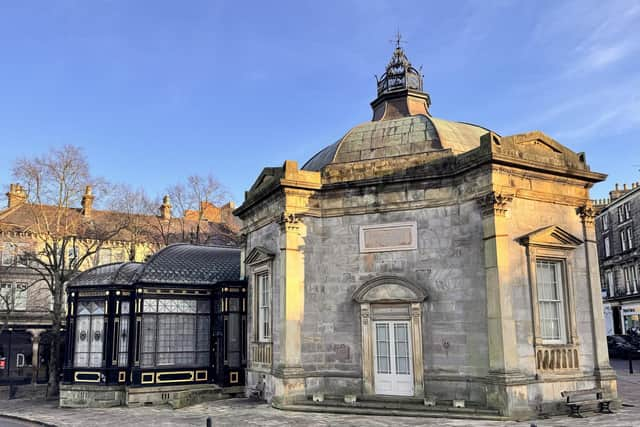

Designed to accommodate 150 people, it drew from a nearby spring known officially as the Old Sulphur Well although some locals called the “the Stinking Spaw”.
One of the walls bears Harrogate’s latin motto Arx celebrity fontibus meaning “a citadel noted for its springs”.
The building was eventually named the Royal Pump Room because some of its clientele came from royal families, including a granddaughter of Queen Victoria, Alexandra, who married Tsar Nicholas II of Russia and was a carrier of haemophilia.
Customers would arrive before breakfast to drink glasses of the water.
The treatment was said to cost one shilling a week, but a tap outside the building was provided for those people who required the perceived medical benefits but were unable to pay.
By the early years of the 20th century the pump room was in such high demand that overcrowding led to the construction of an elegant glazed annexe.
After WWI, however, demand dropped dramatically and in the 1940s the pump was finally decommissioned.
Since 1953 the building has been used as a museum telling the story of Harrogate’s spa history.