
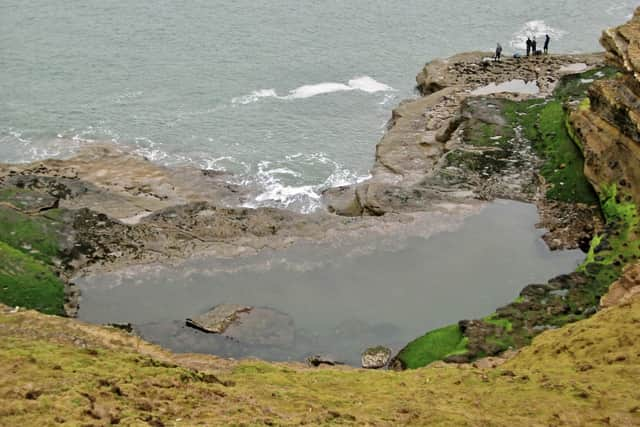
The Yorkshire tidal rock pool ‘bathed in by Roman emperors’
The Romans invaded Britain in AD 43 on the orders of Emperor Claudius, but their legions did not march north to occupy the area we now call Yorkshire until AD 71.
More than 300 years later, when the then-Emperor Honorius ordered his troops back to Rome, Britain had been governed by no fewer than 70 different Roman emperors, but which of them - according to legend - liked to bathe in this large tidal rock pool on the Yorkshire coast?
What is known with certainty is that around 375 AD the Romans built a signal station on a clifftop called Carr Naze which overlooks both Filey Brigg and the pool.
There were four similar stations along the coast, the nearest on Scarborough’s Castle Hill, each with beacons which when lit were part of a chain ready to warn the important garrison city Eboracum of invasion from the sea.

There are several potential candidates for the emperor who took a liking to the Yorkshire seaside. Among those recorded as visiting Eboracum while emperor was Septimius Severus, who is said to have died there in AD 211.
Constantius Chlorus also drew his last breath there in AD 306, and the name most often associated with the pool was the latter’s son, Constantine the Great, who was proclaimed Roman Emperor at Eboracum in AD 306 and ruled for 30 years.
Historians are unable to back up the legend, however, and it has been suggested the pool might have resulted from quarrying on the Filey Brigg headland in medieval times. But geologists believe the Emperor’s Bath is a natural sea pool carved by constant marine erosion.
It is fully submerged at high tide, and when the water recedes it leaves behind small fish like blennies. From nearby rocks anglers catch cod, mackerel, pollack and wrasse.