
'This instrument is the Voice of Hull' says new Hull City Hall organist
Hull City Hall has the third-largest concert organ in the country. New organist Dr Carol Williams tells Catherine Scott about her plans to attract a new worldwide audience.

Plans to build Hull City Hall date back to 1900, when the Hull Corporation included proposals for the venue within a wider scheme to create a central location for city trams to meet.
The project was called the Junction Street Scheme, better known to us now as Queen Victoria Square.
Work commenced in 1903. Theatrical architect Frank Matcham, who designed the London Palladium and the Hackney Empire, was closely involved, but it was city architect Joseph Henry Hirst who was in charge.

Hirst was Hull’s first city architect and the first to be given such a position in the country.
The hall’s striking copper dome is said to be based on that of St Paul’s in London, and there are four hand-carved female figures around it, each representing one of the arts.
In 1911, the organ, designed by J.A. Meale and built by Forster and Andrews of Hull, was installed in the main hall.
This was controversial, as some considered it too big for the space, and it was only allowed to go ahead after a government inquiry. The organ was officially opened with a recital by Edwin Lemare on 30 March.
The hall could not escape the widespread bombing of Hull during the Second World War and suffered damage in 1941 that forced it to close, and the organ was badly damaged.
Such was the destruction that organist Philip Chignell, who had attended a concert the night before the air raid that all but destroyed it, believed he had seen the “last concert in that hall”.
Fortunately, he was proved wrong; the hall reopened in 1950, and the following year, the John Compton Organ Company restored and enhanced the organ while preserving much of the original Forster and Andrews work.
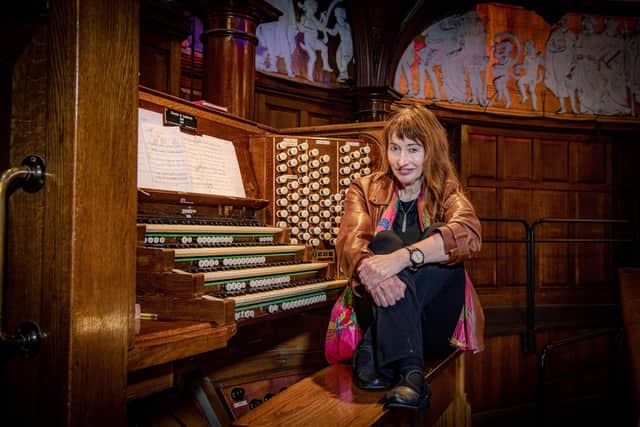
From 1985 to 1991, Rushworth and Dreaper carried out further restoration work, rebuilding the console, introducing modern switching systems, re-leathering the bellows, and restoring the soundboards.
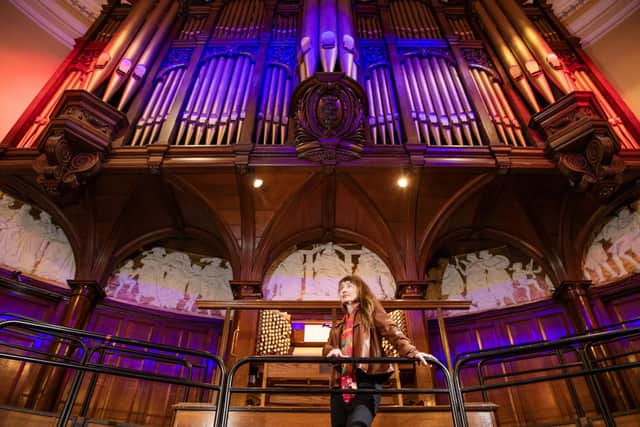
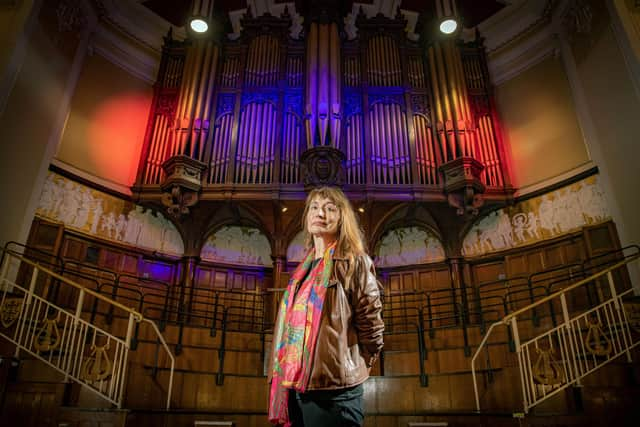
Today it remains one of the largest working organs in use in the country and features more than 6,000 pipes, roughly 140 stops, percussion instruments, and a massive 64-foot Gravissima.
Dr Carol Williams was recently appointed organist at Hull City Hall, taking over from John Scott Whitely. Born into a musical Welsh family, Dr Williams was performing public organ recitals by the age of eight.
“I could read music before I could read books and was sent for piano lessons. My grandmother and my aunt played the organ, and it just connected to me.
"It just felt that it was my instrument, and it’s all I ever wanted to do – to travel playing the organ.”
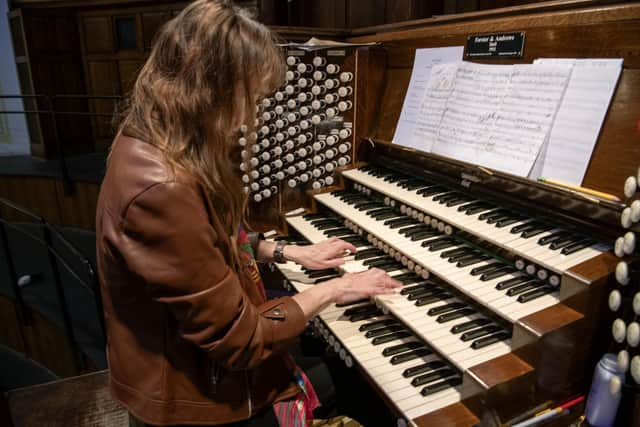
She went on to study at the Royal Academy of Music in London, winning every major organ performance prize before continuing her studies at Yale University and the Manhattan School of Music.
In 2001, she made history when she became the first woman appointed San Diego Civic Organist, a prestigious role she held alongside her position as Artistic Director of the Spreckels International Organ Concert Series, North America’s largest organ concert series.
She is married to a New Yorker, and they decided they wanted to live somewhere in the UK that neither of them knew.
“We wanted to live somewhere where we could make memories together. I’d watched All Creatures Great and Small, both the original series and the new one, and just loved the Yorkshire countryside,” says Dr Williams.
They had already moved to the countryside on the outskirts of Beverley when the job as Hull City Hall organist became available.
“I’d played the organ with the Hull Philharmonic in November, and I remember thinking this is a gorgeous instrument – and we made friends.
"Every organ you play is different – some you get on with and some you don’t. This one just talked to me.
“Then I played another concert there in January, and they let it be known they were starting to look for a new organist, and so I threw my hat in the ring and was offered the job.”
Dr Williams plans to continue with the programme of monthly lunchtime organ showcases but also has big plans to broaden the appeal.
“I want to expand the organ’s awareness not just in this country but in America via live concerts on my Facebook page.”
She also has an active international performing schedule across the United States and beyond. In her new role as Hull City Hall Organist, she will collaborate on the development of the much-loved Organ Concert Series, helping to introduce new audiences to the instrument’s remarkable power and versatility.
A prolific recording artist, composer and educator, she has released 23 recordings, published 42 original compositions and appeared in films, documentaries, television productions and international broadcasts.
Through her concerts, recordings and digital platforms, she continues to inspire audiences and promote the organ to new generations around the world.
“The organ is magnificent, and the acoustics sublime. I am delighted to be a part of this great musical heritage, and I look forward to making many significant, meaningful memories.
“To me, this instrument is the Voice of Hull and beyond,” says Dr Williams, who is also working with Hull Minster “to bring the two venues into the light”.
Claire Elsdon, Theatres and Halls Manager, said: “The City Hall Organ is of huge importance to the city both as a historical asset and an integral part of the City Hall.
"It attracts admirers from all over the world and is highly regarded as a world-class instrument, capable of great range and versatility.
"Music and live performance of all genres are central to what the City Hall is all about, so we are pleased to be collaborating with Carol on plans to expand and diversify the organ repertoire and to engage with and build new audiences.
"I would also like to take this opportunity to thank our two Volunteer Organ Curators, Adrian Crawford and Graham Smales, who both work tirelessly to keep the organ in good working order and sounding fabulous.”