
'Whitby's best kept secret' - Treasure trove of Whitby archives opened up to the public

From school and family records, to Captain Cook, whalers and queens, Whitby Museum is digitising more of its archives so the public can see rare artefacts. Ruby Kitchen reports.
Deep in the archives of Whitby Museum is a treasure trove of artefacts that paint a rich picture of its past. Now this rare bounty of documents and photographs has been opened up to the public.
Last year, the museum got support from The National Lottery Heritage Fund to digitise more of its archives and extend its access reach, so it could show a snapshot of hidden history, with many items unseen by the public for decades or more.
“This is Whitby’s best kept secret,” said archive development officer Claire Marris.
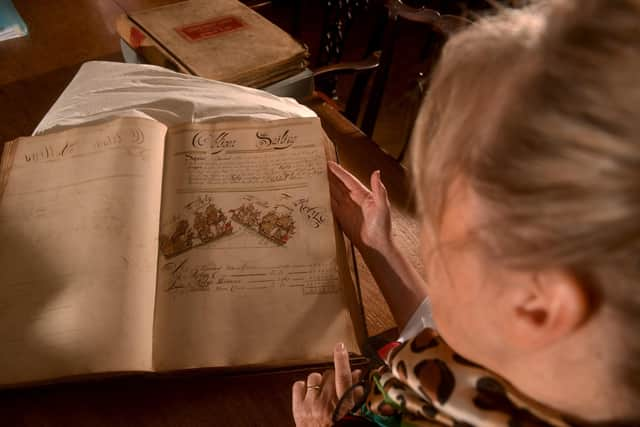

“It’s been quite a closed door for years. Now that door is open.
"It shows a glimpse into the history of the area, and not just in Whitby but in all the surrounding communities. It’s a real treasure trove of historical memorabilia.”
Thanks to lottery funding, a new archivist has been appointed, Charles Graffius, who is organising the archive and putting it into some semblance of order.
And Ms Marris is sharing its secrets through outreach events, going into care homes or community events and hosting school tours. There are hundreds of boxes to be explored, lining shelf after shelf with tens of thousands of items – ration books, photographs, old postcards, circus posters, school registers, the ‘muster rolls’ from Whitby’s seafaring past.
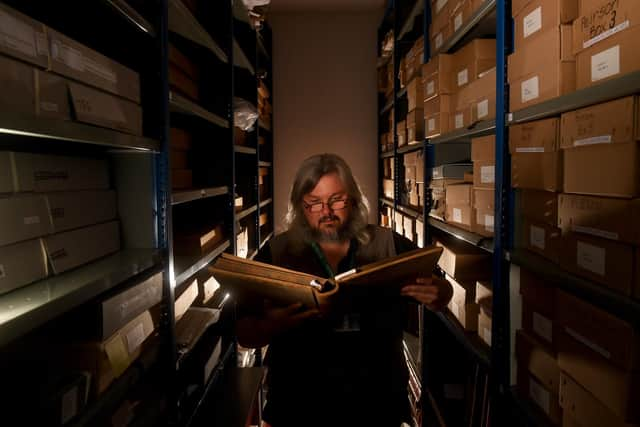
There are digital copies of the Whitby Gazette, dating back to 1854, and access logs to Ancestry and FindMyPast, with volunteers on hand to help explore family history.
There are also documents relating to Whitby’s industries, from fishing to mining and jet; shipping registers for whalers and the muster rolls for ships’ companies from 1747, with names and details for everyone on board, their ages and service.
There are also audio files from some of the fishermen and women from Whitby.
Volunteers know their way around every nook and cranny of the archives, and what is revealed to the public now is a series of fascinating facts.
The first lifeboat arrived in Whitby on September 15, 1802. The first successful shooting down of an enemy aircraft on English soil was in Whitby on February 3, 1940. The first Regatta Queen was Mary Barringer in 1930.
And there are fascinating documents relating to some of Whitby’s most famous sons, from Arctic explorer William Scoresby to Captain Cook.
One treasure is an illustrated Apprentice Book, penned by seafarer Henry Simpson and dated 1715.
Even today, 300 years after the seafarer first filled it with his illustrations, his meticulous geometry calculations and calligraphy is still perfectly legible. The museum holds the archives of the Whitby Literary and Philosophical Society, which dates back close to 200 years, while much of the material in the museum comes from a councillor, Percy Burnett, who wrote everything down that happened in Whitby.
“It’s just fascinating,” said Ms Marris. “Somebody has taken the time to collect and save all these documents. Some of them go back over 300 years.
“It’s so important. Everything is digisited now, we have the physical copies. There’s nothing nicer than holding it in your own hands, it’s amazing really.
“It’s the writing as well, seeing how neat and tidy it all is, how precise. The time that people have taken to write these documents is amazing.”
The Whitby Museum is in the process of cataloguing as much as it can so that documents can be shared around the world, while Ms Marris takes findings into the community.
Volunteers are also on hand to help people explore, to book an appointment or to find out more visit whitbymuseum.org.uk.
Volunteering opportunities are available.