
Winston Churchill: Remembering the day the world stood still for funeral of Churchill - 60 years ago
Almost 60 years ago, on a bleak and ice-cold January morning in London, the world stood still.

It was said to be the largest funeral in world history, with representatives from 112 countries descending on the capital of what was the Capital of the British Empire to pay respects to Britain’s wartime leader, Sir Winston Churchill.
It had been 30 years since the last non-royal state funeral - of Lord Carson in Belfast - and there has only been one state funeral since - for Queen Elizabeth II in 2022.
But even with the latter still fresh in people’s memory, the scale of Churchill’s funeral is almost unimaginable.
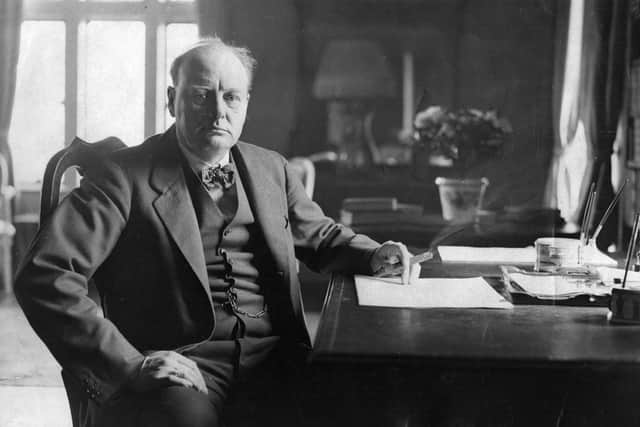

Planning for Operation Hope Not, as it was code named, began in 1953, twelve years before his death after Churchill suffered a major stroke while in Downing Street.
The incident was kept hushed up at the time, with the Queen among a small number informed.
It was the late Queen who then decreed planning should start for when the day came, and in 1958, detailed plans were agreed by the Duke of Norfolk, as Earl Marshall.
Four years later, in 1962, part of the plan was put through its paces.
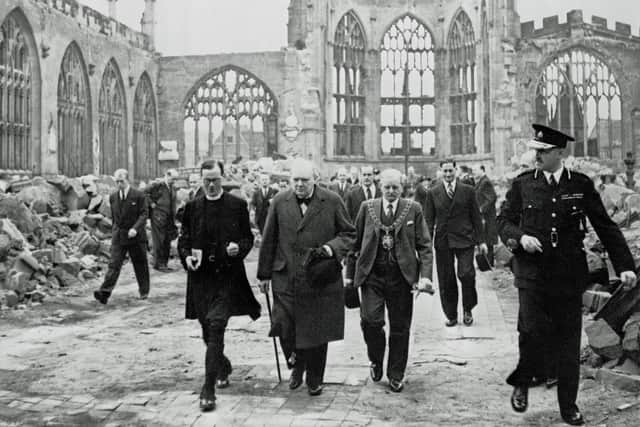
Churchill, staying at the Hotel de Paris in Mote Carlo, fell and broke his hip.
Fearing the injury to be worse than it actually was, he told his private secretary Montague Browne: "Remember, I want to die in England. Promise me that you will see to it."
Montague Browne immediately called then Prime Minister Harold Macmillan who activated part of Operation Hope Not, with the Royal Air Force returning Churchill to London, against the advice of French doctors.
After a two month spell in hospital he recovered, and the operation was put back on ice.
But finally, on January 24 1965, the final plan - State Funeral of the Late Sir Winston Leonard Spencer Churchill, K.G., O.M., C.H. had to be put into practice.
During the funeral his body lay in state in Westminster Hall, before the main funeral service was held at St Paul's Cathedral.
From the cathedral, he was taken to the Thames to board the MV Havengore from Tower Pier to Festival Pier as mourners lined the river.
Gun salutes were given on the boat for exactly two minutes and 35 seconds, as laid out in the plans, while music including pipers faded out at exactly two minutes and 45 seconds, before 16 English Electric Lightning fighter jets of the Royal Air Force flew over the procession route.
The funeral involved more than 1,000 police and security personnel, nine military bands, and 18 military battalions.
Outside of the cathedral and along the route, authorities said 321,360 people paid homage, while events were witnessed on television by more than 350 million people around the world, making it a record for any TV event at the time.
The coffin was then taken to London Waterloo station, before being transported in a special train hauled by his namesake locomotive, the Winston Churchill, to St Martin’s Church in Bladon, in Oxfordshire, his final resting place alongside his ancestors and brother.