
York Christmas Trees, York: How Yorkshire farmer is helping to pioneer sustainably-grown Christmas trees
Climate change is increasingly affecting agriculture, including the production of Christmas trees. Stuart Minting reports.

Like much of the environment, Christmas trees are not adapting fast enough to the changes, so Yorkshire grower Oliver Combe, owner of York Christmas Trees near York, is taking matters into his own hands.
His farm, which sees about 20,000 trees planted a year, is helping pioneer the development of sustainably grown Christmas trees designed to withstand the increase in extremes of weather.
Oliver is part of an international group of experts working to create Christmas tree saplings capable of adapting to drought, frost and flooding.
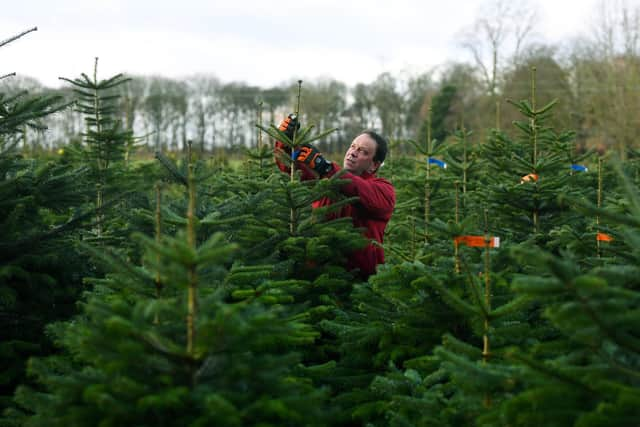

As Christmas trees are not irrigated, they rely on the weather. This year Yorkshire saw its driest spring in 132 years, leading to a drought declaration in June. May had 22 days with almost no recorded rainfall.
Extended periods of little to no rain can cause stress to the trees, making them more prone to attract insects and diseases.
It can also stunt tree growth and trigger the loss and browning of needles, while deluges of rain can result in the rotting of roots. Extreme cold could lead to frost damage, drying out buds and shoots.
While more than six million trees, grown on about 300 farms, will be sold in the UK in the coming weeks, the lack of rainfall this year has led to a shortening in growth and there will be fewer 6ft and 7ft trees available.
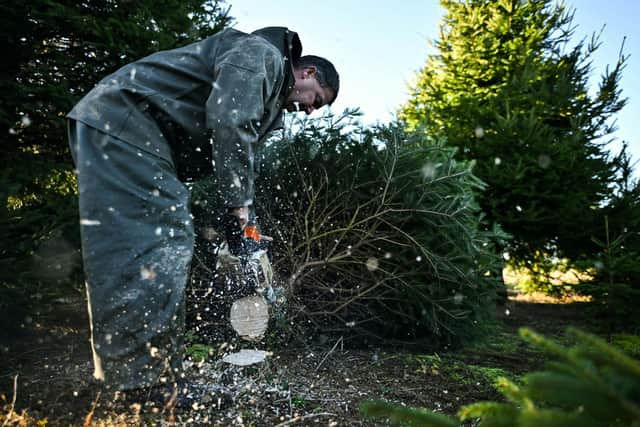
Although the market is dominated by non-needle-drop trees such as the Nordmann Fir, the drought has led to less bushy specimens.
Over concerns that springs are becoming increasingly dry, some growers have changed the time of year they transplant the trees to early autumn, giving the plants a chance to settle with more water as the opportunity to fully shut down before winter.
Meanwhile, warmer winters and longer growing seasons are leading to a greater prevalence of pests, such as aphids, mites, and adelgids, in Christmas trees.
Warmer temperatures can also affect needle retention on Christmas trees, as they require cold temperatures to remain dormant.
Extreme events can affect any Christmas tree, but young seedlings are often the most vulnerable.
Oliver said: "Last year was really wet – the worst I can remember. That created a lot of problems with nutrient uptake and damage to roots because the trees were sitting in continuously waterlogged soil.
"This year it has been exceptionally dry, certainly in the east of the country. We had no appreciable rain from Easter until the middle of July – the time when trees put their maximum growth on.
"There was no rain to wash the nutrients in, so that's why we are getting restricted growth."
In the face of these pressures, Oliver believes innovative growing remains the key to the industry’s resilience.
Oliver said: “Christmas tree production is still in its early stages of development compared with crops like wheat, but that means the potential for sustainable innovation is huge.
“If you compare Christmas tree production to wheat growing then we are still in the Iron Age in terms of development while the wheat growers are on generation 180.
“For us it’s really exciting because the potential gains are fantastic and this is not about gene engineering - it’s about natural selection and continuous improvement where we identify the healthiest trees that can thrive in a changing climate.”
By selecting saplings with traits such as needle retention, branching structure, bud density and timing of growth, Oliver and his fellow growers are improving both tree quality and environmental performance.
The approach aims to reduce waste, limit chemical inputs, improve soil health and produce trees that are more resilient and much better quality.
“What we’re planting now is really exciting and we’re moving towards trees that are hardier, more efficient to grow and better for the environment,” said Oliver, who has been growing Christmas trees in North Yorkshire since 1998. “It’s about building resilience into the whole system.”
Prolonged rain in the UK last year led to waterlogged soils and damaged roots, while this year’s protracted drought slowed growth and increased stress on young trees.
“To grow Christmas trees sustainably, you’ve got to be committed,” added Oliver. “Anyone can plant them, but growing and selling them responsibly, with the future environment in mind, takes long-term planning and care.”
Oliver said he is confident his work with the growing group is helping to future-proof Christmas tree production in a way that supports biodiversity, soil health and the wider environment.