
Foursquare rum, Barbados: 'I visited a rum distillery in Barbados - the smell was intoxicating'
It was a first visit to Barbados for Christine Austin and she could not miss a visit to the Foursquare rum distillery which is run by the Seale family and can trace its roots to the early 1700s.

This article contains affiliate links. We may earn a small commission on items purchased through this article, but that does not affect our editorial judgement.
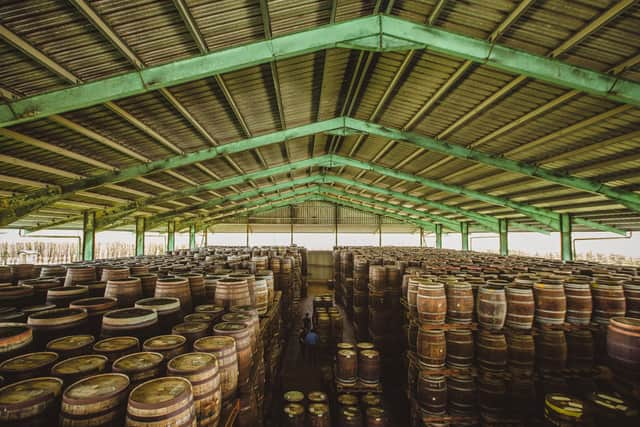
There was a wonderful aroma in the ageing sheds at the Foursquare Distillery on Barbados when I visited.
Even though there was a large gap between the barrels and the roof to allow ventilation, the hundreds of old barrels, stacked five high, all full of rum, provided a delicious slightly sweet, spicy background scent. It was enough to make me yearn for another rum cocktail.
This was my first visit to the island of Barbados, and it was a well-deserved holiday, catching up with my vitamin D quota.

But the temptation to tour a rum distiller proved too much to resist so I was fortunate that Richard Seale, a fourth-generation rum producer was at home at Foursquare, the only family-owned major distillery on the island and that he was available to show me round.
The Foursquare distillery is based on a former sugar plantation, dating back to the early 1700s.
The Seale family bought this run-down estate in 1994 and since then have renovated buildings, brought new techniques into the distillery and re-introduced the use of sugar cane into the rum-making process.
There are parts of this estate that take you right back in history. The beautiful Distill House, constructed in 1737 was derelict when the Seale family bought the estate 30 years ago.
Now restored, it has been designated by the Barbados National Trust as a building of historical and architectural interest.
The estate is free to enter which can pose its own problems. “I am sometimes sitting in my office,” said Richard, “and tourists wander in.”
Around the working parts of the estate, safety is the main concern.
“We have a few signs asking people not to get too close to the stills, and now more people are signing up for guided tours that include a tasting which work quite well.”
Surrounding the estate are sugar cane plantations, but only a small amount. There is not enough to supply all that the distillery needs but this is a step towards using sugar cane as a crop in Barbados.
Like other rum distilleries, molasses is the main source of raw material, but Richard is keen to re-introduce the use of fresh sugar cane juice.
“This year we will be using a new mechanical harvester which mimics the handcut process and so prevents oxidation of the juice. The cut cane is crushed chopped and pressed to extract the juice.”
Fermentation of the juice and the molasses is done separately, and the juice has particular characteristics which transfer into the final rum.
“We ferment the sugar cane juice with natural yeast which allows flavouring elements to develop. Sugar cane also has a high natural acidity, which transforms into aromatic esters’, said Richard as we walked past large fermentation vats.
“We are the only people in Barbados using a natural fermentation method in rum production.”
There is another reason to encourage the use of locally grown sugar cane juice.
“It is important to keep growing sugar cane on the island because this was the start of the whole industry, and it provides employment. Also, it adds an element of terroir to the final product.”
Fermentation of molasses is done gradually by controlling temperature using commercial yeasts.
“A quick fermentation loses too many subtle flavours.” Surprisingly all the carbon dioxide produced during fermentation is collected, liquified and sold on.
But it is in the distillery where the most change has happened. Distillation takes place in a column still and two pot stills, with a few modifications to the standard process.
The small column still was shut down on the day of my visit, undergoing maintenance ahead of the up-coming sugar-cane harvest. This usually runs continuously, under vacuum, allowing distillation at lower temperatures and produces a lighter style of sprit.
The two copper pot stills feed into retort chambers, which have the effect of triple distilling the spirit as they pass through the retorts, giving a rounded, fuller style of spirit.
Most Foursquare rums are blends of spirit from the two processes, aged in barrels for years, sometimes decades in the large maturation sheds.
“We use American oak barrels, which have been used for many years before we get them, but we don’t regard these casks as ‘finishes’ to add flavour notes to the rum. These are quality casks that will be used for rum for years.”
As I walked around, I could see old sherry barrels from Jerez, some Madeira barrels, and some from Cognac.
Richard is keen to point out that Foursquare rums are aged in Barbados, which is not always the case for other brands.
Along with some other major producers on the island he is keen to see Barbados rum be given protected GI (geographical indication) status which could stipulate local ageing, bottling and other production standards.
“This would protect the integrity and quality of Barbados rum”, said Richard.
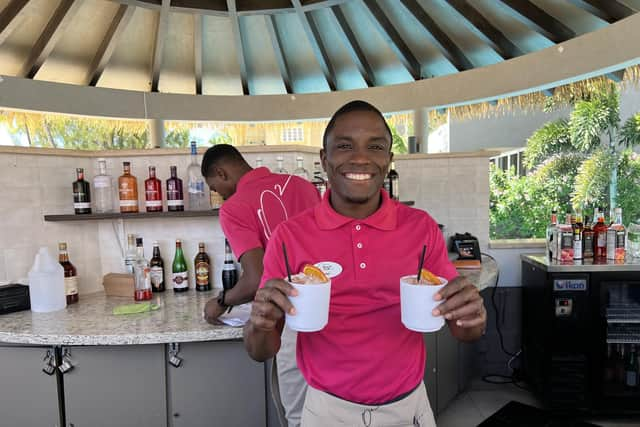
Bearing in mind that I was on holiday, I had already tasted quite a lot of rum, mainly as cocktails before heading to Foursquare.
This visit provided an opportunity to taste a range of quality rums, to appreciate the nuances of flavour as the spirit ages.
The main export brand from Foursquare is Doorly’s, which is sold in many Yorkshire retailers.
Doorly’s 5-Year-old Barbados Rum, Waitrose down from £35 to £28 until 3 June: When the offer expires Roberts and Speight in Beverley have the best price at £29.99. This was the regular pouring rum in my hotel on the island, so I was already acquainted with its soft, honeyed and vanilla notes with ginger and spice. Good on its own over ice and terrific in a rum punch.
Doorly’s 12-Year-Old Barbados Rum, Field and Fawcett £52.65: Aged in ex-Bourbon and Madeira wine barrels this is a big step up in depth, complexity and silky style. Toasted apricots on the nose and dried fruits on the palate, rounded spice and barley sugar on the plate with a long, aromatic finish.
Doorly’s 14-year-old Barbados Rum, Harrogate Wine £76: A higher alcohol rum at 48% with a harmonious style, layered with raisin and ginger notes wrapped in hints of Bual Madeira, presumably from the casks it was aged in.