
Georgia: The best wines from a forward-looking country with ancient traditions
Georgia has been making wine for 8,000 years, but its ancient traditions sit comfortably alongside a forward-looking industry. Christine Austin explores its native grapes and distinctive bottles.

This article contains affiliate links. We may earn a small commission on items purchased through this article, but that does not affect our editorial judgement.
It was 5.30am when I flew into Tbilisi Airport, and despite my body clock telling me it was still only 2.30am, there was a big sign shining through the darkness saying, ‘Welcome to Georgia’, and I just had to smile.
This is a country that has so much history you could spend years unravelling it, but it is so forward-looking that it seems the whole population just wants to welcome visitors.
Generosity is hard-wired into everyone you meet, with plenty of smiles, food, wine and song, in particular the traditional songs of this region that were banned in the Soviet era but are now flourishing, sung by local groups.
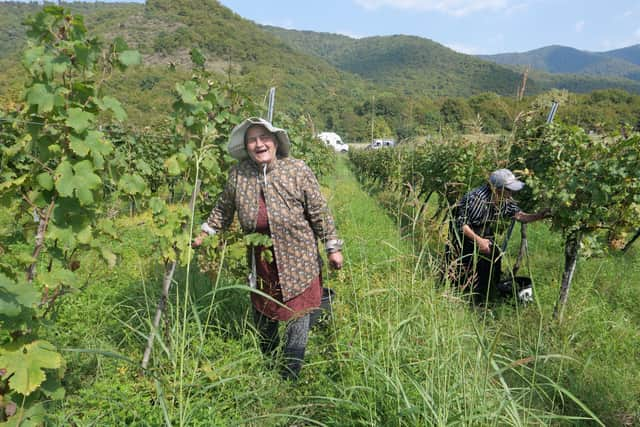

Georgia is the cradle of wine and winemaking.
No one knows exactly when man started to cultivate vines instead of just gathering grapes from wild vines, but archaeological evidence shows that 8,000 years ago the people living south of the Caucasus Mountains in the area now known as Georgia were planting vines and making wine.
From the pottery discovered, it seems likely that these ancient people were using terracotta pots, buried up to their necks in the ground as fermentation vessels, and this method is still in use today.
These are qvevri (pronounced like that delivery company, with ‘kw’ at the front), and many families still have some to make their own wine.
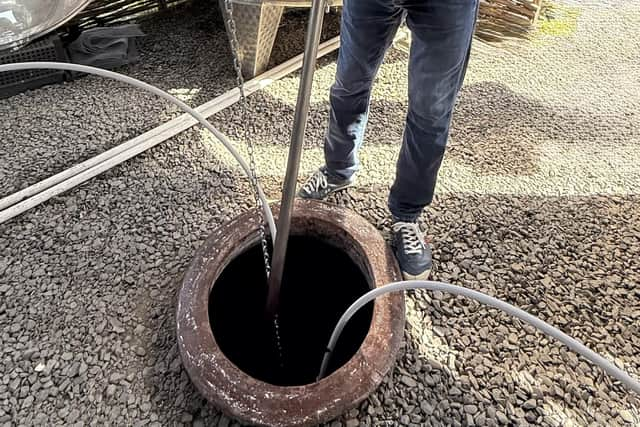
Wine companies also have rooms full of qvevri, although you have to be careful when walking around them. No one wants to fall into a deep terracotta pot buried in the ground.
But Georgia is not just a lesson in historical winemaking.
Qvevri wines are vitally important for making wines that need long skin contact time and for ageing some wines, but Georgia has plenty of modern stainless steel, wooden vats and barrels too.
Georgia is a land that loves its food and drink. It is at the crossroads of the world, and over the centuries it has battled and been invaded by most of the surrounding populations.
Romans, Persians, Mongols and the Ottomans have all swept through this small country, leaving traces of their culture and cuisine.
The nation was annexed by Russia 200 years ago, and so it remained until 1991, when it regained its independence.
The phrase ‘post-Soviet era’ is regularly used in conversation, not with anger, but more as an expression of how quickly and how confidently this country is moving forward.
Independence means that the regular market for Georgian wine has diminished. Georgia was the vineyard for Russia, producing all kinds of wine for this thirsty nation, much of it low quality.
Now the producers of Georgia are rebuilding their industry, and they are making the most of this chance to go back to the quality that Georgia has always been famous for.
Georgia has a natural climate for vines.
Kakheti in the east of the country is the main region, with around 70 per cent of production, but there are also vineyards around the capital Tbilisi and in the west of the country close to the Black Sea.
The grapes grown are mainly local, indigenous varieties, of which there are hundreds, but a handful are becoming most popular in export markets.
Whites such as Rkatsiteli are widely planted, giving good, crisp wines, but there are several grapes, including Mtsvane, Chinuri and Tsitska, which have their own aromatic, fruity styles, adding personality to the wines.
Kisi has an exotic, tropical fruit character and is a perfect lunchtime wine.
The main red grape is Saperavi, which produces delicious, deep-coloured, blackberry and raspberry-edged fruity wines. It has rounded freshness and ages well.
Some European vines, such as Cabernet Sauvignon, Merlot, Pinot Noir, Chardonnay and Sauvignon Blanc, are also planted – some on an experimental scale and others in small commercial quantities – but with a treasure chest of its own grapes, it seems a shame for Georgia to dilute the impact of its own characterful varieties.
If you are new to the wines of Georgia, we are fortunate in Yorkshire to have two major importers of these wines.
They are Transylvania Wines (www.transylvaniawine.co.uk) and Hidden Wines (www.hiddenwines.co.uk). Also, most retailers have a few Georgian wines.
Here are some to start with.
Georgian Valleys Rkatsiteli White Dry 2025, Tesco £9.50: A great value introduction to Georgian wine. Made from 100% Rkatsiteli grapes grown on the southern slopes of the Caucasus Mountains, in the famous Tsinandali microzone.
Fermented and aged in stainless steel to retain the vibrant freshness of the grapes, it has crunchy apple, pear and stone fruit flavours, and it shows that Georgia can add a whole new set of flavours to its repertoire as well as aged qvevri wines.
Dugladze Rkatsiteli Qvevri 2021, Georgia, Transylvania Wines £17.95: Ripe Rkatsiteli grapes maintain their bright fresh acidity, and these are crushed, then fermented in qvevri, then aged until spring to give a wine with flavours of dried apricots, almond and baking spices, with a gentle tannic grip.
Team with cheese and grilled chicken.
Gourmet Wine Series, Goruli Mtsvane 2022, Kartli, Georgia, Hidden Wines £21.50: Confusingly, the Goruli Mtsvane grape is different from regular Mtsvane, with fresh flavours and a light aromatic style.
For this wine, the grapes are fermented and aged in stainless steel, giving a wine with crunchy apple, peach and citrus flavours. Perfect to pour alongside grilled fish.
Tbilvino Saperavi 2024, Georgia, Majestic £13 on a Mix Six deal: Partly fermented and aged in qvevri, this is a deliciously dark fruity wine, with damsons, blackberry and just a hint of cherry around the edges. It has a silky, rounded texture that goes so well with grilled meats or perhaps the last barbecue of the season.
Bedoba Saperavi 2023, Kakheti, Georgia, Roberts and Speight, £17.69: Old vines and high altitude give these red grapes deep, concentrated flavours, then some are left to dry on the vines to add richness and complexity. Fermentation takes place in a qvevri, then a portion goes to regular tanks and wood.
The result is a dark, flavourful wine full of juicy cherry and blackberry fruit, with hints of spice, black pepper and coffee. Pair with a winter-weight beef casserole.
Also available at Field and Fawcett and Hic!