
'I run a vineyard in Yorkshire - it's hard work but I wouldn't change it for the world'
Thinking of buying or creating a vineyard in the UK? Christine Austin spoke to the people who have done just that and they say it is far more than just watching the vines grow with a glass of wine in hand.

It is tempting to think that growing grapes and making wine is the gateway to an easy life.
Surely there can be nothing better than sitting on your patio sipping a glass of wine and watching your grapes grow?
There are now over 50 hectares of vineyards in Yorkshire, spread across 21 or so commercial vineyards, plus plenty of ‘hobby’ vineyards where owners are testing the idea of growing grapes.
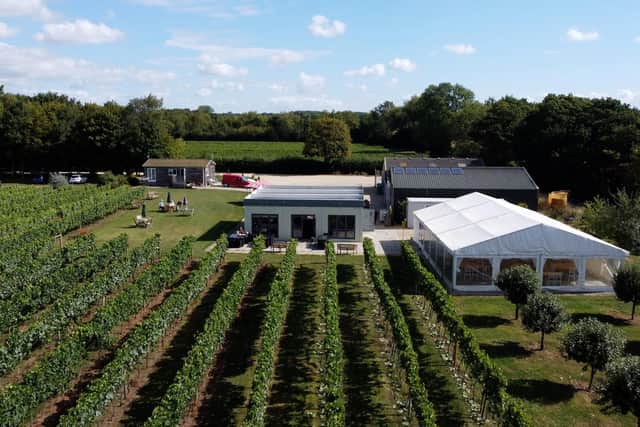

Yorkshire Heart is famous for its tours, tastings and afternoon teas as well as their music festivals.
Just two weeks ago they hosted the Great Yorkshire Wine and Fizz festival when 400 people turned up to taste their way through the many fabulous wines from 12 Yorkshire vineyards.
So, was it really a mad idea to plant vines in Yorkshire?
“20 years down the line, we all love working in the vineyard, showing people around, and occasionally relaxing with a glass of wine,” sad Tim. “It is a lot of hard work, but I wouldn’t change it for anything.”
Is it really an easy option if you have few spare hectares of land?
I talked first to Jon Fletcher of Ryedale Vineyards, who was busy amongst his vines when I called him.
“Do you mind if I just carry on watering?” he asked. “There is just so much to do in this hot weather.”
That was fine with me, so as we chatted, I could hear him walking up and down the rows of vines, making sure that the new vines, which had been planted in spring to fill gaps in the established rows, had enough water to survive the heatwave.
Jon does not just look after his own vineyard. Through his company The Vinehouse, he imports and supplies vines to people who are going into the vineyard business.
“I get lots of people contacting me about planting a vineyard. There is a big knowledge gap for those who think they might get into the industry, but they need more confidence to do it.”
He doesn’t just supply the vines; Jon will come out to your land and give advice about the site.
“We look at soil, slopes, sun exposure and potential for frost pockets,” he said, “and then if the client wants, and depending on the size of the site to we can plant up the vineyard for them.”
“Do you use the hi-tech laser method to make sure all the vineyard rows are in straight lines?” I asked.
“Well, we can do that, and we have all the equipment, but I like to make sure the look of the vineyard fits in with the surrounding countryside.”
Jon works across the UK and so has a lot of experience in selecting the right vines for each site.
“With the climate as it is now, southern counties can grow the classic grapes for sparkling wines such as Chardonnay, Pinot Noir and Meunier while anywhere north of Birmingham should be looking at PIWI types for the majority of their vines.”
PIWI vines? The letters stand for a very long word in German, but essentially this means that the vines are more resistant to fungal diseases and so they require fewer sprays and are more environmentally friendly.
It is worth saying that PIWI vines have been developed over many years by crossing plants in the usual horticultural way. They are not genetically modified.
“Grapes such as Rondo and Solaris have been around for many years, and produce excellent wines, but now other varieties such as Cabernet Cortis, Sauvignac and Souvignier Gros are becoming more popular,” said Jon.
Over at Bilton-in-Ainsty, at Goose Beck Vineyard, the Chesney family have planted over 15,000 vines on their land and there is plenty of space to expand the vineyard year by year.
“This was really a lock-down project for my parents Paul and Lisa Chesney,” said their daughter Antonia, who has now given up her regular job and taken several courses at Plumpton College to learn about viticulture and winemaking.
“We took advice from Jon at The VInehouse and have planted 15 varieties, most of them PIWI but we have also planted some Pinot Noir, just to see how it does on our site.”
They have also built their own winery and converted an old granary and barn on their farm into holiday cottages.
“We have just started selling our wines and have some sparkling wine going through its secondary fermentation which is really exciting,” said Antonia.
After 15 years in the grape growing business which was started as a distraction from his regular work, Ian Sargent of Laurel Vines is chairman of Wine GB’s Midland and northern section.
This gives him an overview of the way new vineyards are being established across the region.
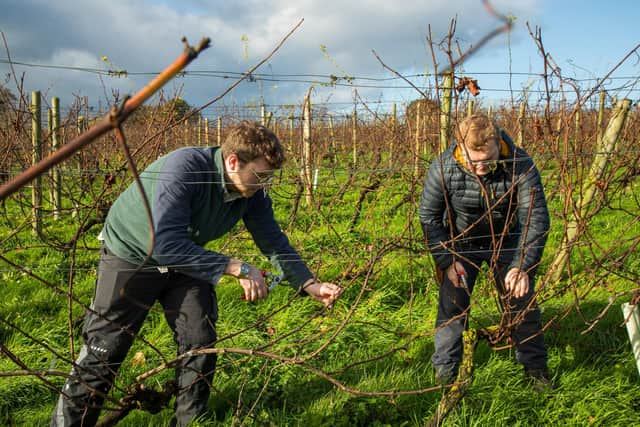
“It is important to go into this business with your eyes open,” he said. “While you may think that working in a vineyard is fine when the sun is shining, imagine setting out to prune vines on a cold February morning.
" Add the stress off dealing with insects, parasites, birds and the weather and you may start to think differently. Growing grapes is essentially farming with a lot of manual work.
“It is also very important to make sure you have a route to market. It is not enough just to grow the grapes and make the wine. It has to be sold too.”
Yorkshire Heart Vineyard, situated between York and Harrogate, is one of the success stories of Yorkshire wine.
In 1999 Chris and Gillian Spakouskas started by planting a few vines in their family garden, just to see if they would survive Yorkshire weather, then followed up with a much bigger planting in 2006.
I thought they were mad, a point I expressed to Tim Spakouskas who is now Managing Director of Yorkshire Heart.
“You are not the only one,” he said with a grin. “Everyone we knew thought the same, but with a lot of hard work and our lovely customers, we have made it through two decades of making Yorkshire wine.
"Now we have over 30,000 vines and we make still and sparkling wines. We are even experimenting with a small number of Merlot vines, just to see how they will ripen in Yorkshire.