
Jad Youssef: 'My family's Lebanese recipes have warmth, generosity and soul'
In Lebnani, his debut cookbook, chef Jad Youssef invites people to experience the warmth, generosity and soul of Lebanese cooking through recipes passed down through generations of his family.

Bazella b’lahmé
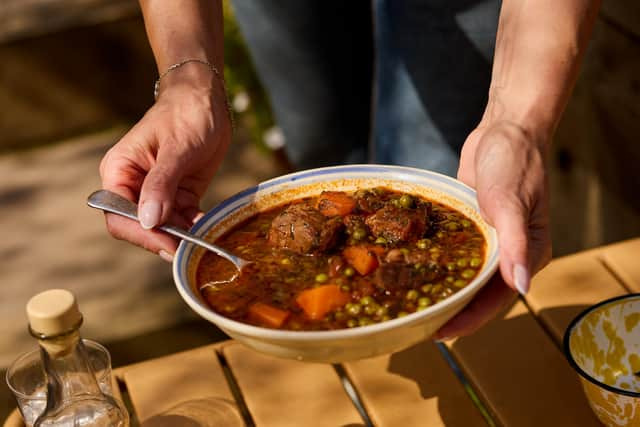
“Bazella b’lahmé is one of the most loved and familiar tabkha across all of Lebanon,” says chef Jad Youssef.
“It is a true family dish, often the first stew children learn to eat. In the South, in Beirut, in the mountains, every home makes its own version, but the essentials remain the same: tender lamb or beef, a rich tomato broth, sweet peas, and soft carrots.


“Some families like a lighter broth, others a thicker one to spoon over rice. In our house, my mother always added plenty of coriander which gave the dish a bright, unmistakable flavour.
“In season, she used fresh peas from the market but for everyday cooking, good-quality frozen peas make it an easy and delicious dish all-year round.”
Serves 4-5. Ingredients: 60–80ml olive oil; 600g lamb shoulder or beef shin, cut into large cubes; 1 medium brown onion (about 200g), finely chopped; 8 garlic cloves, finely grated; 3tbsp tomato paste; 5 large ripe tomatoes (about 750g), peeled and finely chopped or grated; 1 large bunch fresh coriander, washed and finely chopped; 1tbsp fine sea salt, or to taste; ½tsp freshly ground black pepper; 1tbsp Baharat (Lebanese 7 spices); 1.5–2L water; 4 large carrots (about 300g), peeled and diced or sliced into thin rounds; 600g frozen peas (or 800g shelled fresh peas when in season)
Heat the olive oil in a large pot over medium heat. Add the lamb or beef and brown well on all sides. Add the finely chopped onion and sauté until soft and golden, then add the garlic and sauté gently for a minute until fragrant.
Add the tomato paste and stir well for two minutes, coating the meat and onions. Now add the fresh tomatoes. Cook gently for about five to seven minutes, until the tomatoes have softened and the sauce begins to come together.
Add the chopped coriander directly into the pot. Stir to combine it with the tomato mixture and cook gently for a minute or two, allowing the coriander to release its aroma into the sauce.
Add the salt, black pepper, and Baharat, then pour in the water. Stir and bring to a gentle boil, skimming off any foam if needed.
Lower the heat and simmer gently, covered, for about one-and-a-half to two hours, stirring occasionally. The meat should be tender and the broth rich and well-flavoured.
Add the diced carrots to the pot and simmer for about 15 minutes. Then add the peas and simmer for a further 15–20 minutes, until both the carrots and peas are tender and have absorbed the flavour of the sauce.
Taste and adjust the seasoning as needed. The sauce should be balanced, rich with tomato and coriander, and just loose enough to coat the rice beautifully. Serve hot alongside Lebanese rice, warm khobez, radishes, pickles, and lemon wedges.
Lebanese pancakes with fresh clotted cream and orange blossom syrup
“Atayef were always a treat we looked forward to – especially around Ramadan or on Sunday afternoons when visitors dropped by unannounced,” says Lebanese chef Jad Youssef.
“The smell of the hot saj (pan) as the batter bubbles and sets, the sight of the ashta filling being spooned in generously, the syrup dripping slowly over the soft folds – it’s simple, sweet Lebanese hospitality in a bite.
“We couldn’t resist pinching some from the tray before they made it to the guests. My mother always knew, but she let us get away with it.”
Serves 6-8, makes about 18-20. Ingredients. For the syrup: 200g caster sugar; 120ml water; 1tbsp lemon juice; 1tbsp rose water; 1tbsp orange blossom water
For the ashta: 1.2L whole milk; 4tbsp white vinegar or lemon juice; 1½tbsp cornflour; 1tbsp caster sugar; 1tbsp rose water; 2tbsp orange blossom water; 200g ricotta cheese (optional but recommended)
For the atayef: 300g plain flour; 1tsp dried instant yeast; 1tsp caster sugar; 1tsp bicarbonate of soda; Pinch of fine sea salt; 100ml whole milk; 350–400ml lukewarm water
For the garnish: 80g finely chopped pistachios; 1tbsp rose petal jam
To prepare the syrup: Combine the sugar and water in a small saucepan. Bring to a boil, then add the lemon juice. Lower the heat and simmer for eight to 10 minutes until slightly thickened. Add the rose and orange blossom waters, stir, and then remove from the heat. Cool to room temperature.
To prepare the ashta: In a saucepan, bring one litre of the milk to a simmer. Add the vinegar or lemon juice and stir gently until the milk curdles and separates. Strain and discard the whey, keeping the curds. In a clean saucepan, mix the remaining 200 millilitres of milk with the cornflour and sugar. Stir over medium heat until it thickens to a soft custard. Add the rose and orange blossom waters. Now mix the custard with the curds and ricotta (if using). Let the ashta cool completely and chill for at least an hour.
To prepare the atayef: In a large bowl, whisk together the flour, yeast, sugar, bicarbonate of soda, and salt. Slowly whisk in the milk and water, adjusting the quantity to get a smooth, pourable batter. Cover and leave to rest for 30–45 minutes until slightly bubbly.
Heat a non-stick pan over medium heat. Stir the batter gently and pour or ladle small rounds (about eight centimetres diameter) into the dry pan. Cook on one side without flipping them – bubbles will appear on top, and the surface will set. Set aside on a clean towel and keep covered so they don’t dry out.
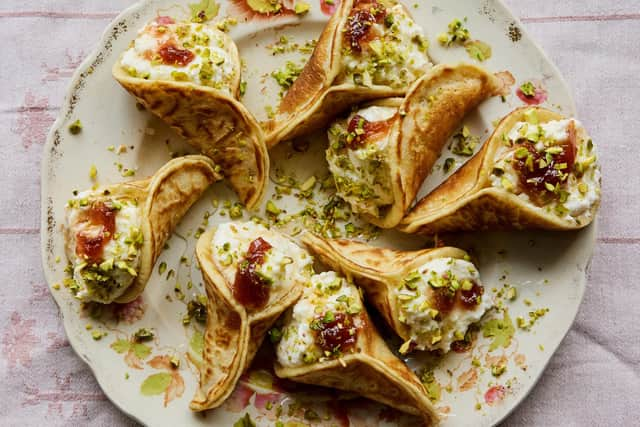
Place about a spoonful of ashta in the centre of each pancake. Fold them into half-moons and pinch one edge firmly to seal, leaving the other edge open so the cream peeks out.
Arrange the atayef on a platter, drizzle with the syrup and sprinkle with crushed pistachios and rose petal jam. Serve immediately or chill lightly before serving.