
Jeremy Pang: How creating a 'wok clock' can help you make tastier food at home
British-born Chinese TV chef Jeremy Pang says the food of Hong Kong was a ‘massive influence’ in his household growing up. Grace Hammond tucks into some delightful dishes.
Mung bean vermicelli with shiitake and mangetout
Serves 4. Ingredients; 2 dried shiitake mushrooms; 100g dried mung bean; vermicelli (or glass noodles); 1 garlic clove; 6 mangetout; ½ carrot; 1 spring onion; 50g or approx 2 large handfuls of beansprouts; 1tbsp vegetable oil
For the sauce: 1tsp chilli bean sauce; 1tbsp vegetarian stir-fry sauce (swapsies: oyster sauce); ½tbsp light soy sauce; 100ml vegetable stock; ½tsp pure sesame oil
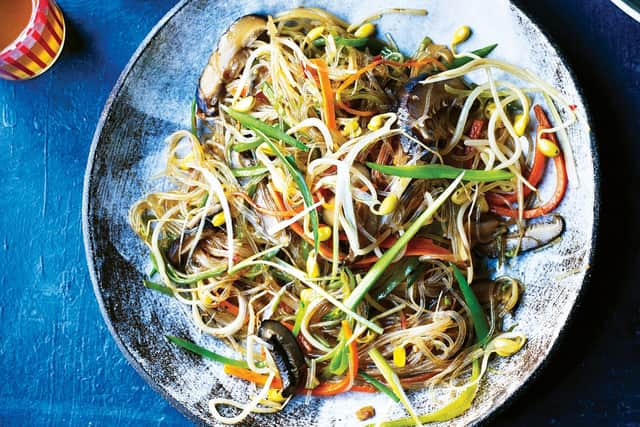

Soak the dried shiitake mushrooms for at least 1 hour, or overnight for best results.
Soak the mung bean vermicelli in hot water for 3–4 minutes, then drain in a sieve and run cold water from the tap through the noodles to prevent them overcooking.
Finely slice the garlic, and finely matchstick the presoaked and drained mushrooms, mangetout, carrot and spring onion. Pick the ends off the beansprouts and wash the sprouts well by soaking in cold water, running your fingers through them a few times, rinsing, then soaking once more in cold water.
Mix the sauce ingredients together in a small bowl or ramekin.
Now build your ‘wok clock’: Place the garlic at 12 o’clock, followed by the carrot, mangetout, mushrooms, beansprouts, soaked vermicelli and then finally your sauce, clockwise around the plate.
Heat 1 tablespoon of vegetable oil in a wok to a high heat. Once smoking hot, add the garlic and stir-fry for 30 seconds, then add the carrot and stir-fry for another 30 seconds. Next, add the mangetout, shiitake mushrooms and the beansprouts and continue stir-frying for 1 minute more, then add the vermicelli, immediately followed by the sauce. Bring the sauce to a vigorous boil, then start to fold the noodles and vegetables through the sauce.
Once all the sauce is evenly coating both the veg and vermicelli, remove from the heat, scatter with the spring onion and serve.
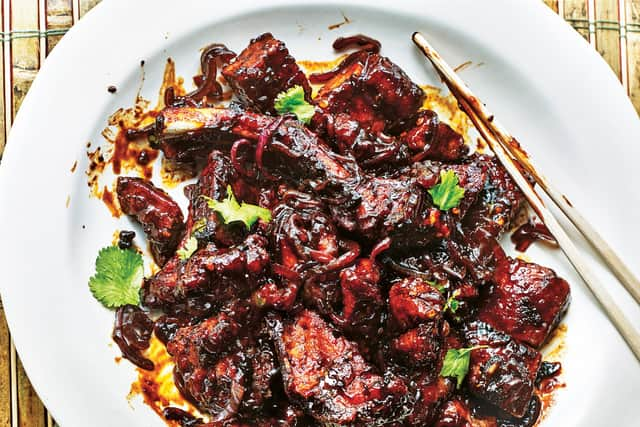
Cantonese pork chops
Serves 4. Ingredients: 4 x 200-250g pork chops; 1 red onion; Vegetable oil, for frying; Fresh coriander leaves, to garnish
For the marinade: 2 cloves of garlic; ½ a thumb-size piece of ginger; 1 spring onion; 1tsp sugar; ½tsp salt; ¼tsp white pepper; 1tsp pure sesame oil; 1tbsp Shaoxing rice wine; 1tbsp light soy sauce; 2tbsp cornflour
For the sauce: 1½tbsp dark soy sauce; 3tbsp Worcestershire sauce; 3tbsp tomato ketchup; 4½tbsp Chinkiang black rice vinegar; 4½tbsp sugar; 1½tsp Chiu Chow chilli oil
Slice the pork chop meat off each bone in one long sweep, keeping each chop as one whole piece of meat and reserving the bones, as they are great to cook too.
Turn your cleaver upside down and, using the blunt end (careful not to hold the blade!), bash across the meat as many times as possible to flatten it out, making indentations along the pork and creating as much of a surface area as possible. This will begin to tenderise the chop and allow the marinade to really flavour the meat. Keep each pork chop in one large piece at this stage.
Once the pork is flattened, a similar thickness to an escalope, mix the marinade ingredients in a bowl and massage them into the bashed-out meat and the bones until they are completely coated. Leave to marinate in the fridge, ideally overnight, and for a minimum of 1 hour.
When ready to make the dish, finely slice the red onion and set aside. Mix the sauce ingredients together in a bowl and stir well until the sugar has fully dissolved.
Half-fill a medium pot, wok or deep-fryer with vegetable oil and heat to 180°C, or use a wooden skewer or wooden chopstick to test by placing the tip in the oil: if the wood starts to fizz after a second or so, the oil is hot enough. Using a slotted spoon or a Chinese frying skimmer, first lay the marinated pork chop bones in the oil and deep-fry them for 5 minutes.
Remove the bones and drain well on kitchen paper, then lay the marinated pieces of pork in the fryer one by one, so they don’t stick together. Deep-fry the pork for 2–3 minutes on a high heat, until crispy and brown on the outside, then remove and drain with the bones.
At this point, roughly chop the fried pork meat into bite-size portions (roughly 3cm squares). Heat 1 tablespoon of vegetable oil in a wok to a high heat. Once smoking hot, add the finely sliced red onion and stir-fry for 30 seconds or so. Pour in the sauce and bring to a vigorous boil, then add the bones and the pieces of fried pork meat and toss 2 or 3 times. Serve immediately, garnished with coriander leaves.
Black pepper glazed short rib bao
Serves 4. Ingredients: 4 beef short ribs, separated ½ a portion of bao dough, ready to make 8-10 steamed hirata buns or burger baos
For the poaching liquid: 1 star anise; 1 small cinnamon stick; 2 cloves; 2 bay leaves; 1tsp black peppercorns; ½tsp salt; 1 litre water
For the glaze: 3tbsp jarred Chinese black pepper sauce (available in Chinese supermarkets); 2tbsp light soy sauce; 4tsp sugar
Place the short ribs in a large saucepan and add all the poaching liquid ingredients. Bring to the boil on a high heat, then lower to a gentle simmer. Poach the beef ribs on a low heat for 3 hours, until the meat starts to fall off the bone but still keeps its shape.
While the meat is cooking, make your bao buns if you haven’t made them beforehand.
Mix the glaze ingredients together in a large mixing bowl. Once the ribs have been poached, remove them from the poaching liquid and carefully remove the bones, leaving the meat itself whole and intact as much as possible.
Cut each long piece of meat in half vertically, in order to make more reasonably sized portions that will fit well into the steamed buns. Put the pieces of meat into the bowl of glaze and gently coat the pieces of meat, using a spoon to baste on all surfaces and sides.
Just before you finish glazing the meat, start steaming your bao buns. Char each side of the meat under a hot grill (minimum 230°C) on a lined baking tray or unlined rack, or finish directly on the barbecue.
Serve one piece of short rib to one steamed bun for ease of eating (with only moderate gluttony), along with some pickles or salad and condiments on the side.
Hong Kong Kitchen by Jeremy Pang is published by Hamlyn, priced £25. Photography by Kris Kirkham. Available now.