
'My new cookbook will help you eat like a Sardinian - and hopefully live as long as them'
Sardinians are known for living long and healthy lives with food being a pastime and a lifestyle. Chef Francesco Mattana’s latest cookbook, Eat Like a Sardinian, provides recipes that can help us too.

Minestrone soup
“Minestrone is a big deal all over Italy, but the most famous minestrone comes from Sardinia,” says chef Francesco Mattana.
“For many years, this comforting and delicious dish was the main meal in Sardinian households, and our grandparents ate it almost every day.

"This might sound boring, but actually the recipe would vary, depending on what was available and what was in season.”
Serves 4. Ingredients: 100g dried borlotti (cranberry) beans; 100g dried chickpeas (garbanzo beans); 1 onion, roughly diced; 2 celery sticks, chopped into 1cm cubes; 1 large carrot, peeled and chopped into 1cm cubes; 2tbsp extra virgin olive oil, plus extra for drizzling; 2 garlic cloves, finely chopped; 3 sun-dried tomatoes, finely chopped; 15g basil; 15g parsley, finely chopped; 3 large tomatoes, roughly chopped (or halved if using small tomatoes); 1 large potato, peeled and chopped into 2cm cubes; 4 large Savoy cabbage leaves, tough stalks removed and roughly chopped; 40g pecorino, grated, or 4tbsp pangrattato (see below); Fine sea salt and freshly ground black pepper
The night before, wash the beans and chickpeas in cold water.
Place them in a large bowl and cover them with fresh cold water; they will expand as they soak, so make sure the container is large enough and there is plenty of water.
Cover the bowl and leave them to soak for at least 12 hours (or longer – check the packet).
The next day, drain and then rinse the beans and chickpeas thoroughly with fresh water. Set aside. Place a large casserole dish (Dutch oven) or ceramic pan over a medium heat.
Add the onion, celery, carrots and olive oil and cook for 8–10 minutes, stirring occasionally.
Now add the garlic and sun-dried tomatoes and cook for a further 2 minutes. Tear the basil leaves and stir them in, along with the chopped parsley and cook for another minute.

Next, add the tomatoes and potato, give everything a stir and cook for a further 2 minutes, or until the tomatoes are starting to soften.
Add the drained beans and chickpeas and a good pinch of salt and pepper. Cover with water and bring it to the boil.
Once boiling, reduce the heat back to medium, cover and cook for 1–1 ½ hours, or until the beans and chickpeas are soft. If needed, top up with water so that the vegetables are always submerged.
Once the beans and chickpeas are cooked, add the cabbage, cover and cook for a final 10 minutes. Taste and adjust the seasoning before serving.
To serve, use a slotted ladle to divide the vegetables, beans and chickpeas equally between serving bowls, then pour over the warm broth.
Sprinkle with cheese or pangrattato and drizzle over some olive oil.
Top tips: If you want to save time or you are making this at the last minute, you can swap out the dried pulses for 250g tinned borlotti beans and 250g tinned chickpeas.
If using tinned, add them along with the cabbage. Sometimes we also add fregula or small pasta shapes towards the end of the cooking time, along with some extra water.
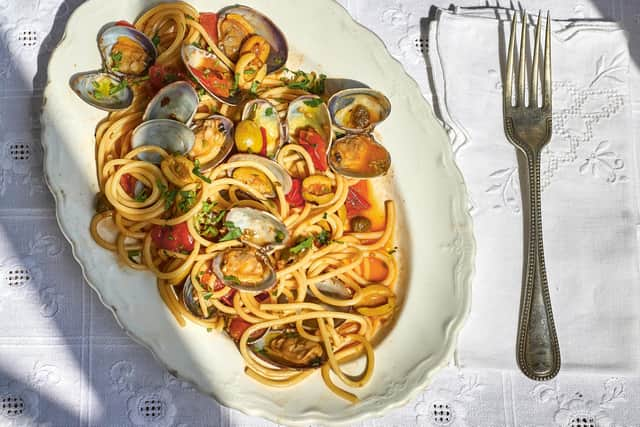
Spaghetti all’Algherese – spaghetti from Alghero
“I eat this dish every time I go to the beautiful city of Alghero in the north of Sardinia – it’s almost like a puttanesca, but better!”
Serves 2. Ingredients: 200g spaghetti; 3tbsp extra virgin; Olive oil, plus extra for drizzling; 1 garlic clove, halved; 1 small dried chilli; 200g sweet cherry tomatoes, quartered; 30g pitted green olives, halved; 2tsp capers; 1tsp dried oregano; 400g small clams, soaked in salted cold water for 1 hour; 100ml white wine; 10g parsley, finely chopped, plus extra to serve; Fine sea salt
Bring a large saucepan of salted water to the boil and cook the spaghetti according to the packet instructions.
Meanwhile, place a large frying pan over a medium-high heat. Add the olive oil and drop in the garlic and chilli, then cook for 1–2 minutes, or until the ingredients start to sizzle.
Stir in the tomatoes, olives, capers and oregano and cook for about 5 minutes, then pour in the clams and wine.
Quickly cover with a tightly fitting lid and cook for a further 5 minutes, or until all of the clams open. Remove the lid and discard any unopened clams, the garlic and the chilli, then stir in most of the parsley.
Both the clams and the cherry tomatoes should have released a bit of their own juices to create a delicious sauce.
If needed, you can squeeze a few cherry tomatoes to get more of the juice out. Taste and adjust the seasoning if needed.
Use tongs to transfer the cooked spaghetti straight into the sauce. Keep the pan over a medium heat and stir it all together for about a minute.
Add a drizzle of olive oil, then turn the heat off, give it a final stir and serve with a pinch of fresh parsley over each plate.
Ricotta and saffron cheesecakes
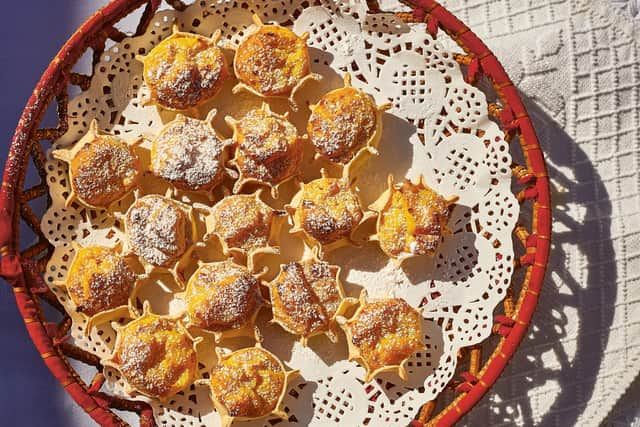
“Pardulas are like small cheesecakes or tarts. They were originally prepared for Easter but nowadays can be enjoyed in Sardinia all-year round.
Makes 18–20 pardulas. Ingredients. For the pastry: 25g plain (all-purpose) flour, plus extra for dusting; 100g semolina flour (semola rimacinata); 50ml water; 15g lard or unsalted butter
For the filling: 400g ricotta, well drained; 100g caster (superfine) sugar; 2 medium egg yolks; Generous pinch of ground saffron; 60g plain (all-purpose) flour; Zest of ½ orange; Zest of ½ lemon; 1tsp baking powder; Icing (confectioners’) sugar, for dusting
Start by making the pastry dough. Put the flour, semolina and water into a large bowl and mix together until the water has been fully absorbed by the flour.
Add the lard or butter and knead well until it’s fully incorporated and you have a soft dough.
Cover and set aside to rest while you make the filling.
Put the ricotta into a large bowl, add the sugar and mix well until the sugar has completely dissolved. Stir in the egg yolks and the saffron, then sift in the flour and mix again until well incorporated.
Now add the orange zest, lemon zest and the baking powder. Give it a really good mix, cover with clingfilm or a cloth and leave to rest in the refrigerator for at least 1 hour.
This helps to firm up the filling a little, which make it much easier to work with later on.
Preheat the oven to 160°C fan (350°F/gas mark 4) and line a baking sheet with baking parchment.
Meanwhile, on a surface lightly dusted with flour, roll out the pastry using a rolling pin or a pasta machine. Working with half of the dough at a time, roll it out to 1mm thick, or slightly thicker than a sheet of paper.
Using an 8cm cutter, cut as many rounds as you can.
Working with one round at a time, place a heaped tablespoon of the chilled filling in the centre, then pinch the sides around the filling at even intervals to form six or eight points.
Transfer the tarts to the prepared baking sheet and bake in the oven for 30–40 minutes, or until lightly golden but not dried out.
Halfway through baking, rotate the sheet to ensure even baking.
Remove the tarts from the oven and leave to cool for 30 minutes, then dust with icing sugar just before serving.