
Pignut & The Hare, Scawton: 'We run one of Yorkshire's best new restaurants - here are two of our favourite recipes'
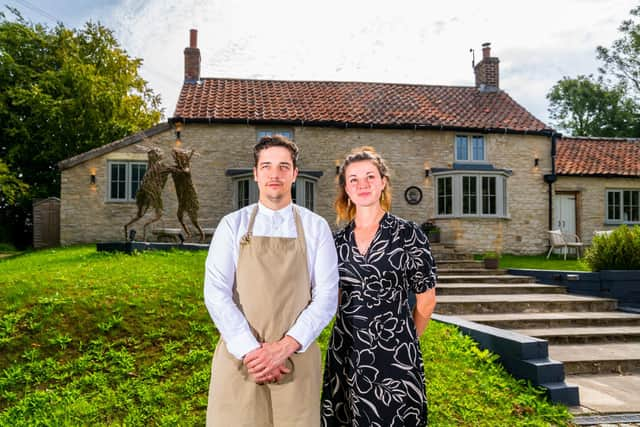
Tom and Laurissa Heywood run Pignut & The Hare restaurant in Scawton, North Yorkshire, and they have created a cookery book, The Forager’s Table, which celebrates the wild pantry on their doorstep.

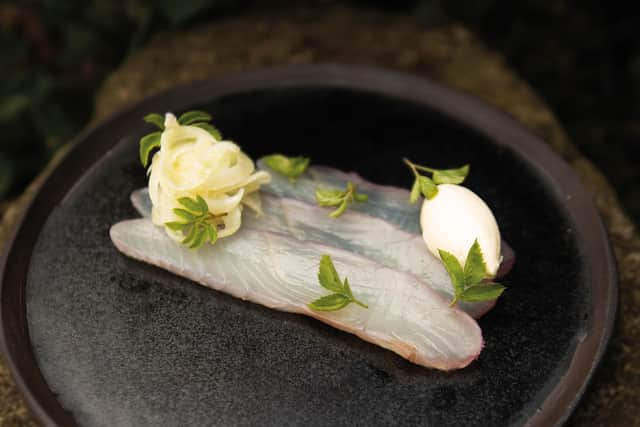
Blackberry-cured halibut with shaved fennel and whipped crème fraîche
The striking deep-purple cure transforms the halibut into something special, creating beautiful contrast on the plate.
Paired with a crispy aromatic fennel salad and a whipped crème fraîche infused with fresh horseradish, this dish is elegant yet achievable.

Prep time: 12 hours. Cook time: 30 minutes. Serves 4. Ingredients. For the blackberry-cured halibut: 1kg skinless halibut loin; 300g Maldon sea salt; 200g sugar; 100g blackberries; 25ml blackberry vodka. For the shaved fennel salad: 1 fennel bulb; 50ml sweet cicely vinegar; 50ml rapeseed oil; pinch of salt. For the whipped crème fraîche: 100g crème fraîche; 80ml double cream; 20g fresh horseradish, grated; pinch of salt. To garnish: Sweet cicely leaves; sweet cicely flowers; soda bread (to serve)
To cure the halibut: Blend the sea salt, sugar, blackberries, and blackberry vodka together until you have a coarse, even mix. Spread one-third of the cure in a tray, lay the halibut loin on top, then cover completely with the remaining cure. Wrap tightly with cling film and refrigerate for 8 hours.
After curing, rinse the halibut thoroughly under cold water to remove the salt mix. Pat dry and place on a tray lined with a clean tea towel. Leave uncovered in the fridge for at least 4 hours to dry and firm up.
To prepare the shaved fennel salad: Trim the fennel bulb, reserving any green fronds. Using a Japanese mandoline or a sharp knife, shave the fennel as thinly as possible.
Place in a bowl with the sweet cicely vinegar, rapeseed oil, and a pinch of salt. Mix well and leave to marinate for 5 minutes.
Finely chop the fennel fronds and stir them through. Taste and adjust seasoning as needed, then chill in the fridge until ready to serve.
To make the whipped crème fraîche: Place the crème fraîche and double cream in a mixing bowl. Finely grate in the fresh horseradish and add a pinch of salt. Whisk until thick and light. Cover and refrigerate until serving.
To serve: Thinly slice the cured halibut and arrange it on plates to showcase the beautiful purple edges against the white flesh. Drain the fennel salad well and place alongside the halibut. Add a generous scoop of the whipped crème fraîche. Garnish with sweet cicely leaves and flowers, and serve with slices of good-quality soda bread.
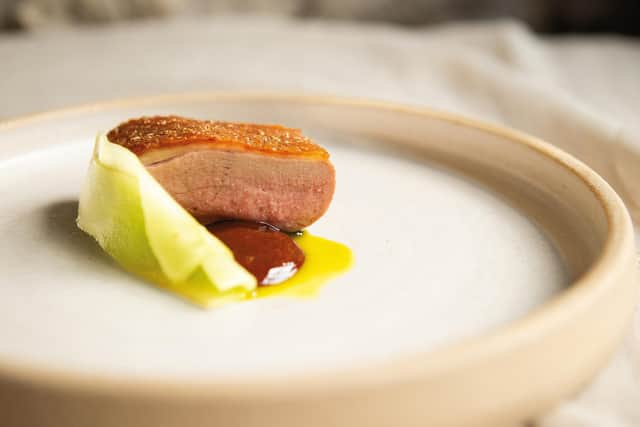
Honey-glazed duck breast with wild plum hoisin, pickled cucumber and chive oil
This dish is my take on the classic Chinese crispy duck with hoisin sauce, inspired by childhood memories of sharing duck pancakes at family dinners. The wild plum hoisin delivers a rich, tart-sweet complexity, paired beautifully with honey-glazed duck breast, lightly pickled cucumber, and a drizzle of vibrant chive oil.
Prep time: 2 hours. Cook time: 4 hours. Serves 4. Ingredients. For the duck: 1 duck crown; hogweed honey, for glazing; pinch of Maldon sea salt
For the plum purée: 1kg wild plums, stones in; 100g sugar
For the wild plum hoisin: 220g wild plum purée; 120g brown sugar; 100ml light soy sauce; 10g cider vinegar; 2 tbsp hogweed; 1 tbsp hogweed tomato ketchup
For the pickled cucumber: 1 cucumber; 100ml cider vinegar; 50g sugar
For the cucumber ketchup: 150g sugar; 150g cider vinegar; 1 cucumber trim, skins and seeds; 2.5g agar agar
For the chive oil: 100g chives; 100g rapeseed oil; 5g salt
To make the plum purée: Place the whole plums, stones in, into a large pan. Cook gently over medium heat until they break down. Add the sugar and continue cooking until thick and glossy. Leave the stones in while cooking for an almond-like note. Remove from the heat, cool slightly, then carefully remove the stones. Blend until smooth and set aside.
To make the wild plum hoisin: Place 220g of the prepared plum purée into a pan with the brown sugar, light soy sauce, cider vinegar, hogweed, and hogweed tomato ketchup.
Cook over a medium-low heat, stirring often, until reduced to a thick, glossy paste. Blend until very smooth and pass through a fine sieve. Cool completely. The ideal consistency is similar to yoghurt.
To prepare the pickled cucumber: Peel, deseed and trim the cucumber (put aside for the ketchup), cut into thirds, and slice on a mandoline to about the thickness of a penny. Reserve 2 slices per portion.
Bring the cider vinegar and sugar to the boil in a small pan. Stir until dissolved, then remove from the heat and leave to cool. Store the pickling liquid for later.
To make the cucumber ketchup: Bring the sugar and cider vinegar to the boil in a pan, then allow to cool completely. Once cooled, measure out 200ml of the pickling liquid and pour into a blender.
Add the cucumber trim (skins and seeds) and blend on high for 1 minute until smooth. Pass through a fine sieve.
Pour a quarter of this liquid into a pan with the agar agar. Bring to the boil, whisking well. Add the remaining cucumber liquid and whisk to combine.
Pour into a container and chill in the fridge until set. Once set firm, blend until smooth to create a ketchup consistency. Transfer to a squeezy bottle and refrigerate.
To make the chive oil: Blend the chives, rapeseed oil, and salt on high speed for 1 minute until bright green. Pour into a small pan and bring just to a simmer. You’ll see the oil begin to separate.
Strain through muslin or a fine sieve into a bowl. Leave to drip through slowly for several hours to extract the clear, vibrant oil. Store in a clean container.
■ To cook the duck: Remove the duck crown from the fridge at least 2 hours before cooking to come to room temperature. Lightly score the skin and season generously with salt.
Place skin-side down in a cold, dry pan. Slowly heat to medium, allowing the fat to render out while moving the crown occasionally to colour evenly. Spoon off excess fat as it collects.
Once the skin is a deep golden brown, transfer the duck to an oven preheated to 160°C. Roast for about 12 minutes, checking with a probe thermometer – the thickest part should reach 58°C. Remove from the oven and rest in a warm place for at least 25 minutes before carving.
To finish and serve: About 10 minutes before serving, pour the cooled pickling liquid over the cucumber slices to quick-pickle them. After resting, carve the duck breast from the crown, cutting each breast in half. Lightly brush with hogweed honey and season with sea salt. Place the breast in the centre of the plate. Add a generous dot of the wild plum hoisin sauce and the cucumber ketchup.
Lay 2 slices of the pickled cucumber over the duck and finish with chive oil. Serve immediately.