
Stark Farm Bakery: Meet the baker making bread in a wood-fired oven he built himself
Tucked down a hedge-hidden lane, Stark Farm would be easy to miss. “That’s the way we like it,” says baker Dan Barrow, happy in his relative seclusion. Many people start somewhere only to end up somewhere else.
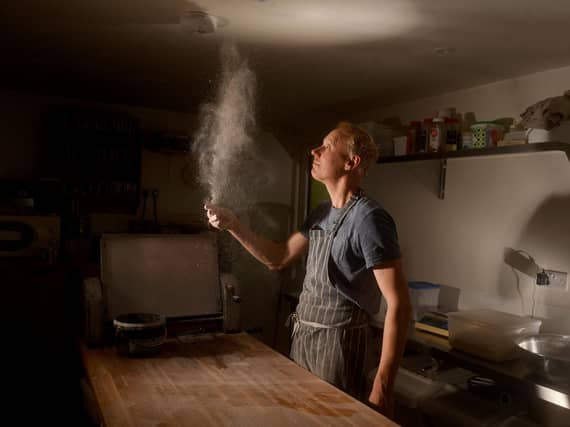

Dan grew up in the Midlands, attended Liverpool University, globe-trotted for a while, then rolled to a halt in this peaceful but busy place off the A19 near Easingwold.
Here many loaves of bread are made, along with other baked goods, although it wasn’t exactly a plan.
“I did a degree in history and philosophy which doesn’t really push you in any direction,” says Dan, who met his partner Matilda Bucknill at university.
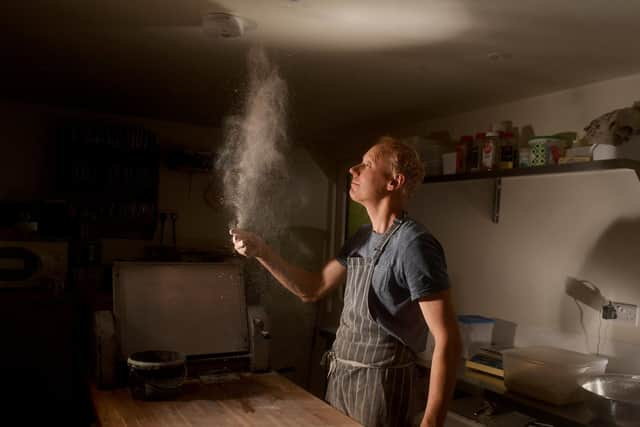
Dan and Matilda wanted to travel and went first to Japan teaching English and later worked in New Zealand and Australia.
“At some point the idea got in my head that I wanted to work in kitchens,” says Dan, 48, who was a pastry chef before setting up his own bakery.
Matilda’s father Greg established Stark Farm as a self-sufficient produce business.
The family lived off-grid and sold produce from the farm gate but had to give up after 15 or so years when Greg developed back problems.

Dan and Matilda returned to help out, intending to stay a year or two before travelling again.
And here they still are, now with two teenage children.
For ten years they lived off-grid in the old house, farmed it a bit, “grew things but not massively”, and now live in a newer house next door to Matilda’s parents.
The bakery is across from the main house, next to Dan’s ‘shop’: the Stark Farm Bakery trailer he takes twice a week to markets in Ripon and Easingwold.

"It’s fantastic when people come back to the stall and let us know how much they’ve enjoyed the result,” says Dan.
As you step into the bakery the wood-fired masonry oven is bang in front of the door, blasting out heat.
Dan spends long hot hours before that oven or in the kneading and shaping room next door. Beyond that is the family music room.
Phil Clayton of the Haxby Bakehouse is encouraging him, says Dan, and he is also good at social media, which where they diverge.

“I avoid social media I’ve got no interest in doing it whatsoever. I’m too busy and I think people spend too much time on it. If people want to follow me, I say come and buy something from the market,” says Dan.
The oven was built by Dan and a builder friend. It’s a retaining heat oven, all very traditional, but fitted with probes connected to a gauge that displays the temperature in its different corners.
He was inspired by reading an American book called The Bread Builders, co-written by Alan Scott, a guru of bread ovens.
“At the end of each chapter was a small section on a wood-fired bakery. We were already heating our house with wood, we had the trees, so it wasn’t too much of a leap to think why don’t we build a woodfired oven.”
A tree surgeon friend supplies more wood, helpful as with each bake Dan burns enough wood to fill a wheelbarrow.
As we talk he moves around, busy with different doughs, checking the gauge on the oven, poking in more wood.

“Bread is about half of what I do," he says.
“I have an order of baking and obviously the oven starts hot. The highest temperature is crucial for bread, that’s how you get good crust formation. About 100 loaves is what I get through.
“The first loaves in are the flatbreads, about five minutes, I need something to soak up that initial blast of heat so it’s not too hot when the sourdoughs go in. Then focaccias, and that’s my hardest point as to have the oven hot enough for the bread the focaccias tend to over-colour a bit, but that’s just how it is.
"And then my first batch of loaves, a mix of the white sourdoughs and the bloomer yeasted loaves. They’re in for about 20 minutes.
“Then a full batch of sourdoughs get about half an hour, then the bigger sourdoughs go in at the end for about 45 minutes. So that’s the bread and that takes about three and a half hours of baking. And after that I am on to everything else.”
On his main bake days he works flat out for about 18 hours.
“I start at half-seven or eight and finish between one and half one in the morning and then get to bed about two or half-two and get up at half-six. That’s a baker’s life.
"On a Saturday I’m fairly done in,” he says.
There is an art to the oven. As the wood burns to ash, the heat soaks into the brick and the concrete. From that point the oven cannot get hotter, so the challenge lies in hitting the right temperature. That’s why the gauge is useful.
“The whole idea is to be as sustainable as possible,” says Dan, turning out a mass of dough from a plastic box. This is for the Stark Farm sourdough, his largest loaf, 50 per cent white and wholemeal with some local spelt flour.
Away from sourdough, Dan also makes a yeasted bloomer, his standard crusty white loaf.
“Whatever I do I try to slow ferment. It’s far better for flavour and texture,” he says. He uses only a small amount of dried yeast, 6grms, for 17 loaves and some rolls. Home bakers in a hurry might use a similar amount in one loaf.
Dan sometimes teaches breadmaking at Taste The Wild near Helperby, using small woodfired cob ovens.
“It’s a tactile thing, you can read as many books as you want but your hands have to learn the process, it’s about touch and feel. That comes with practice. It’s not complicated to make decent bread.”
And if you can make bread in a woodland kitchen, you can make it anywhere, he says.
Like home bakers, the professionals also have problem loaves. Dan once threw away his starter and began a new one, only to discover later that the problem lay in the low gluten content of the flour he was using.
“It’s so frustrating as a baker when something goes wrong with a whole batch of bread. It happens to all of us, but the really bad ones don’t make it to market, so we pretend it doesn’t happen.”
The farm still has the greenhouses and fruit trees from its earlier life.
“Now we grow what we can for the bakery,” says Dan. “We’re dedicated to taking a whole system approach to what we bake and see the breads and pastries as the end result of a process from the ground up. Our market garden produce flavours the pies and pastries and the changing seasons bring different opportunities and tastes.”
He uses courgettes a lot, roasts tomatoes to make passata, soft fruits too, and on a Monday as the oven begins to heat up he preserves fruit.
Does he make a living from the bakery?
“I do but that’s because I am doing the work of two people. When I am working it’s full on, but when I am off, I am off.”
Shortly after that the writer of this article was off, carrying a bag of tomatoes. No bread as Dan hadn’t started baking, but the toms were lovely.
Stark Farm Bakery visits Ripon market on Thursdays and Easingwold Market Place on Saturday mornings or visit starkfarmbakery.co.uk