
Gardening: Best time for cutbacks in the garden
People tend prune plants more or less when they feel like - often without doing any damage - but sometimes it pays to be a bit more considerate.
So, it’s usually best to leave buddleias (davidii, the butterfly bush) until towards the end of March when you can take off last year’s growth (although some gardeners hack theirs in October), but shrubs to tackle earlier include the hardy fuchsias, which can be given a short back and sides to two buds of last year’s growth.
And, if you have a late-flowering clematis, such as ‘Lady Betty Balfour’, ‘Madame Baron Veilard’, ‘Madame Edouard Andre’, ‘Madame Julia Correvon’, etc, cut them back at the same time as buddleia, to about 30cm from the ground, leaving two sets of healthy buds.
Prune - and prune hard. It will mean removing a great mass of foliage, but nothing is lost as none of it will produce a single flower the following summer.
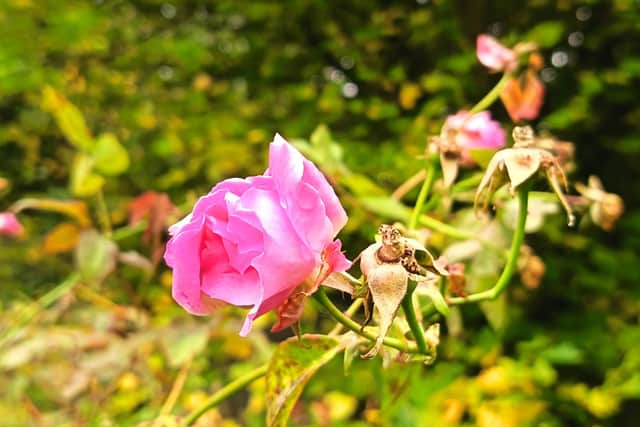

And anyone who still grows roses can also prune them in late autumn or early winter, removing dead and damaged growth and any thin stems which could get blown about by winter winds, loosening the rose’s roots.
Then, come the following March, get the secateurs again and cut out dead and damaged wood and any weak growth. What’s left should be trimmed back to a healthy bud. The idea is to create an open framework where air and sun can penetrate to help produce new growth and superb flowers.
If the problem is overgrown and poorly-maintained evergreen shrubs, some, such as spotted laurel (Aucuba), box (Buxus), camellias, Choisya, Euonymus, hollies, Pieris, Viburnum tinus and yew all tolerate severe pruning. But rather than carry out such drastic work in winter, wait until spring.
Lawn
When frost coats the leaves of grass you can be sure that the stems are pretty much frozen through. This means the lawn is vulnerable to physical damage if you walk over the area – so keep off and encourage all the family to do the same.
Treading on frozen grass will crush the leaves and they are likely to turn brown when they warm up, so you could have footprints marking the lawn for weeks.
But if the weather remains really wet and puddles are forming on the lawn surface, you should go for a walk on the lawn - and take a garden fork with you so that you can spike the wet areas down to a depth of at least 15cm (6ins).
The holes created will improve drainage slightly and should help the sitting water to drain away. As an added incentive, fill the holes with sharp river sand or fine compost.
If the puddles are forming in slight depressions in the lawn it may be worth also adding some riddled soil or compost to level the hollows. But do it gradually – don’t tip a foot of soil onto the grass unless you want to kill it.
Lawns don’t usually fair badly in wet weather, although they do need extra nutrients throughout the year if they are to look a rich green and remain thick and lush.
Feeding isn’t recommended during winter; best to apply a weed-and-feed mixture when the weather turns milder.
It’s not a great idea to mow the lawn during winter, but you can keep it looking reasonably tidy by keeping the edges trimmed.
And finally, ensure the mower is clean or, if necessary, get it serviced so it’s fit for purpose when the grass starts growing again.
Flowers
Pulmonaria, the lungwort, which normally blooms as the days grow longer and there’s a hint of warmth in the air, has begun to flower.
And it’s not alone – Bergenia and Iberis are also braving the weather by producing late flowers.
It’s unusual, but not too unusual, for certain perennials to take advantage of warm winters, but to see little pockets of colour (early bulbs excluded) dotted around the garden is akin to receiving an early Christmas present.
Normally, lungworts keep their heads low to the ground, producing plenty of long, spotty leaves to be topped, in early spring, with clusters of tiny trumpet-like, mainly-blue flowers.
Plant them in a shady spot, or beneath deciduous trees or hedges, and they will thrive. Give them a decent, water-retentive but not waterlogged soil, and they should flourish for years.
Bergenia cordifolia (aka elephant’s ears) often shines in late winter, producing flowers above its leathery leaves. If it’s really cold, those leaves may well turn almost purple while the blooms remain a vibrant pink.
These are plants which like sun, but they will settle for partial shade. Most are evergreen perennials with leaves which can sometimes measure as much as a foot across.
Iberis commutate, the perennial candytuft also called I sempervirens, is quite small but remarkably hardy and will often flower on and off throughout the year.
It’s a spreading evergreen whose flowers tend to be pure white and which start out almost flat before gradually fattening out on top of short stems. If it gets out of control, pull it up; otherwise, prune it lightly after the flowers have faded.