
Gardening: Enjoy the fading scents of late summer
In many places, the lovely but rampant Clematis Montana is still throwing out blooms. When it first finished flowering months ago, most people left it well alone. Only if it threatened to engulf other plants, or even small buildings, with its masses of foliage, was it normally hacked back.
Which is great because left unpruned, C montana will bloom again in late summer and early autumn. Perhaps not as prolific, but certainly a bonus
Clematis x aromatica is the most fragrant of all, with an orange and vanilla scent, while armandii, triternata and montana clematis all have wonderfully scented blooms.
And when other, less-invasive clematis have done their blooming, what happens? Do you prune or do you forsake the secateurs and hope Nature will see that everything’s all right next year?
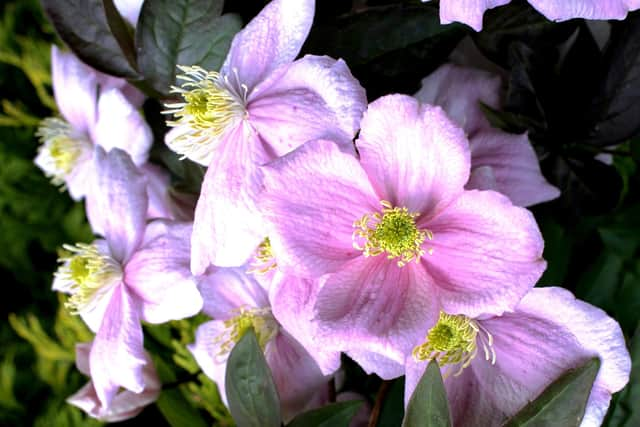

Because when to prune a clematis is a cyclical dilemma.
Montana is a relatively safe bet – it’s so tough and so energetic that it doesn’t seem to mind a short back and sides, but don’t try the same treatment with the early- and late-flowering varieties.
As a rule of thumb, if a clematis blooms before the end of June, prune it as soon as it has flowered by cutting back the sideshoots to 2-3 buds off the main framework. If it blooms after June, prune it back hard in February.
The late-summer bloomers flower on new wood, so that early-spring cut-back is essential for a good show later the same year.
So, just cut all the stems right down to the bottom pair of buds; in fact, almost to the ground.
The only time you serve up the same sort of treatment to the spring and early-summer bloomers is when they are newly-planted; by pruning them to shape, you encourage stronger growth and a sturdier framework for future years. But if in doubt, leave well alone.
Xhead Scents (pic of honeysuckle)
The fragrance of summer may be fading but plan ahead and you could almost imagine next year’s scent wafting through the window.
But just how many gardeners actually grow trees, shrubs and flowers for their perfume rather than for just their appearance? If looks are everything, you’re likely to be missing a lot.
Many plants produce scented flowers, but some are also renowned for their aromatic foliage rather than their showy blooms. It seems a shame to ignore them when, in their oh-so-subtle way, they can add so much to the garden.
There are surprisingly many from which to choose; in fact, far too many to list here, but if you want something sensory and eye-catching, look first at the firm favourites, those that rarely if ever fail to produce the goods year after year.
Honeysuckle (Lonicera) is a classic, scented climber whose fabulously fragrant and fascinating flowers can keep on appearing for months, even into October and early November.
Then there are the other big favourites - lilac and several viburnums and mahonias, the butterfly bush, Buddleia davidii, Clethra ainifolia, Choisya ternata, beautiful broom (Cytisus), the unusually-perfumed ornamental currant, Ribes odoratum (definitely not to everyone’s taste or scent buds but a striking shrub when in flower), lavenders and, of course, roses.
And those shrubs which rely on foliage rather than flowers include Laurus nobilis, Caryopteris clandonensis and Phlomis fruticosa.
There are quite a lot of herbs which would be more than happy to be offered a home in a south-facing spot where they can mingle without feeling overawed by their neighbours.
Xhead Containers (pic of heuchera)
Meanwhile, as autumn approaches, don’t abandon your tubs, troughs or hanging-baskets – keep them vibrant by filling with plants to provide interest and colour in some of the dullest months of the year.
Containers shouldn’t be spring- and summer-only bits of the garden; with a modicum of thought and judicious planning, they can become an important year-round essential.
The secret of good growth is to fill your containers with fresh compost which contains slow-release plant food - and to buy or use only the best plants that will provide leaf texture and flowers in the most difficult of times.
Some compost will release some of the nutrients just after planting but keep the rest until the temperature rises and the plants can absorb the food easily.
Another positive benefit of this compost is that as it contains no added lime, it can be used for planting mixed groups which include heathers, which never seem to thrive in your average compost.
Small shrubs such as hebe, skimmia and euonymus will provide a central point of interest, or you can provide bright red foliage using Leucothoe ‘Scarletta’ or evergreen Coprosma ‘Fireburst’.
Many members of the fast-expanding Heuchera family will also give fascinating leaf colours and markings to brighten a container. The flowers may be insignificant, but the foliage more than makes up for the lack of in-your-face floral power.
Small-leaved ivies were traditionally used to soften the harsh outlines of containers, although nowadays, garden centres also offer arching sprays of decorative grasses such as Carex comens or Carex buchanii to do a similar job.
Other new edging plants also include tumbling pansies and violas which will grow over the edges and provide plenty of attractive flower colour in winter.