
Gardening: The plants that defy the cold months
Any plants that flower at the coldest time of the year deserve extra attention, but the hellebore is a special case even among this select group.
Perky, plucky and stylish, they would stand out at any time of year. To enjoy them in context, to understand the kind of impact they can have, Google hellebore and find a garden near you where they been allowed to naturalise.
Any gardens that are still open to the public are all worth checking to see if they can give you that experience of drifts of hellebores under a canopy of trees.
Once you’ve enjoyed them in all their glory, you'll be hooked. But remember, you don’t need acres of woodland to get the stress-busting, feel-good benefits of flowers.
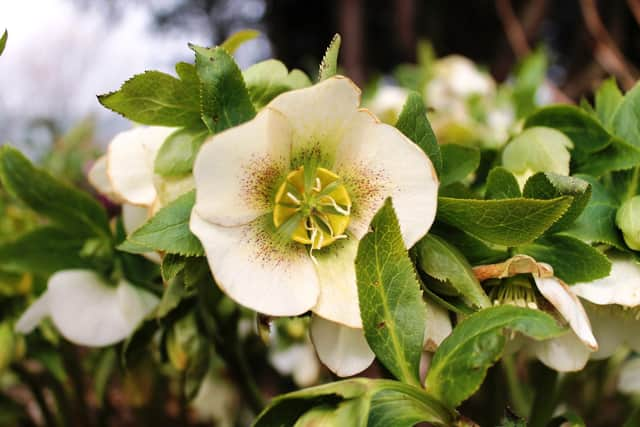

The smaller species are ideal in rock gardens or containers and they’re a great way of bringing colour and life to areas under trees.
The family favourite, the Christmas rose, Helleborus niger, is the classic hellebore. It bears white flowers, which are in some cases strongly pink-flushed with greenish-white centres.
Moist, fertile, soil with a good crumbly structure is perfect (dig in plenty of compost, if necessary).
Exact requirements vary depending on species and situation, but dry or waterlogged soils must be avoided and plants need to be sheltered from strong or cold winds. Hellebores are easy to maintain – simply apply a leaf mould or organic mulch in autumn.
Paeony
Anyone who still reads gardening books as opposed to browsing the internet, will find one word that is almost welded to the paeony – aristocratic. It’s also tagged the king of flowers and even the queen of herbs. So, it’s a flower held in high regard.
Which is hardly surprising when you see one in its prime – great big, blowsy, beautiful, richly-coloured blooms which stand out from the crowd of run-of-the-mill herbaceous plants.
So, as spring beckons, perhaps it’s worth considering planting one or more members of what can only be described as a spectacular family of plants.
While any rich, well-drained soil is acceptable, paeonies need plenty of sun and some protection from wind and rain. A few days of a normal English summer will see their delicate blooms battered and blown apart.
But given the right conditions, paeonies will make the most of them – in June and July their magnificent flowers, in an amazing array of colours, put all else to shame.
Planting requires a bit of preparation. Dig a deep hole when the soil is warm and damp, and mix in bonemeal and well-rotted manure. Place you paeony – bare-rooted specimens are preferable to those sold in containers (you can see just what you’re getting) – so that the buds on the plant are just a couple of inches below the soil. Water well and apply a mulch of organic matter.
Once planted, leave well alone. Paeonies hate to be disturbed.
Dahlia
February isn’t normally the time you’d expect to be talking about dahlias, but if you stored any away last autumn, it’s worthwhile waking them from their slumbers now to encourage them to put on a spurt of early growth so you can take a few cuttings.
The old, cleaned tubers, hidden away in a dark, frost-free spot, should be shown the light. Pop them into trays and cover them with fresh compost so the tops of last year’s stems are just peeping through, then add just a hint of water. New shoots should appear soon.
Select strong, healthy shoots about 3in long and remove them with a small sliver of the parent tuber. Use a clean, sharp knife to remove the lower leaves flush with the stem. Trim the base of the cutting to remove untidy ends that could rot in the compost.
Dip the bottom of each cutting into hormone rooting powder and pop three cuttings, about an inch deep, into a pot. Put a clear plastic bag over the pot and in about three weeks the cuttings will have formed roots.
Split the root-ball apart and pop each cutting into a 3in pot. Feed weekly and plant out after the last frosts.
You can grow giant dahlias, tiny dahlias, dahlias with huge blooms and dahlias with miniature blooms; single-flowered, anemone-flowered, collerettes, paeony-flowered, decorative, ball, pompon, cactus, semi-cactus and those which are best called miscellaneous.
From the end of July till the first frosts, they flower long and hard, overshadowing everything. They love the sun but can grow well in shade; they like a rich soil, are stunning in herbaceous borders but are equally at home in containers.
Once planted, in late spring, there is little to do except provide support to stop their flower-heads dragging them down to soil-level and to feed and water.
When the first frost blackens the leaves, cut the stems to 8-10 inches and dig up the tubers and pop them away in a shady, frost-free spot for a few days.
Prepare a shallow box with a mixture of garden soil and sand. Clean the tubers and put them in the box, just up to the stem. Then cut back the stems to an inch or two and store the boxes somewhere frost free and out of direct light – between 35 and 50F. Come February, start the cutting regime all over again.