
How Yorkshire homeowners are unlocking hidden housing in their back gardens
With housing costs rising and land increasingly scarce, Yorkshire homeowners are discovering that the solution to their housing needs may already be in their own back garden.

According to architects, many people don’t realise it is even an option, but for families in the know, carving off land from their gardens to build new homes for themselves, relatives or, in some cases, to sell on and fund their future, can be a practical, flexible and increasingly attractive way to ease both housing and financial pressures.
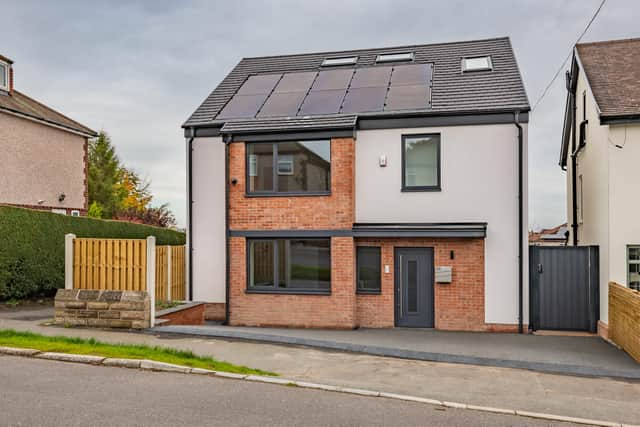
In Crosspool, Sheffield, former nurse Marie Delaney-Moore and her husband Randolph McDonald, both in their 60s, demolished a poorly built side extension and used their generous side garden to create a new futureproof home designed for later life.
“We love where we live and we didn’t want to move,” says Marie. “We were quoted about £100,000 just to alter the existing house but then the architect suggested it was probably more beneficial to knock the side extension and use the large plot to build a new property.”
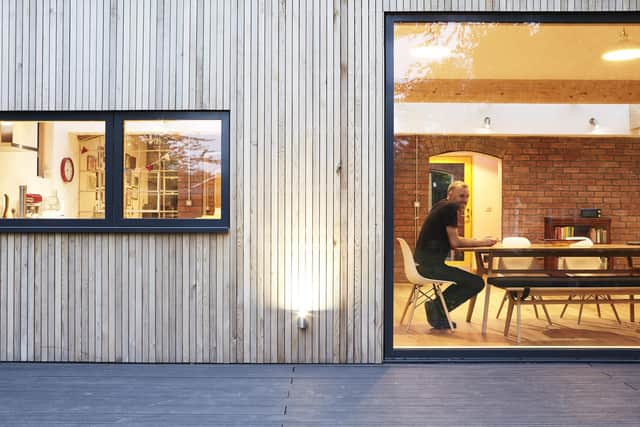

Sheffield-based HEM Architects designed a fully accessible, near-Passive House. The new property is level throughout, with a lift, underfloor heating and triple glazing. “It’s like living in a hotel,” Marie says. “It’s warm, cosy and quiet and our bills are about a third of what they were next door.”
The couple now live in the new home and have sold the original property. “We’ll never have to move again,” she says.
Architect Paul Testa of HEM Architects, inset, who worked on the project, says this kind of development is becoming increasingly attractive.
“The hardest part of a self-build journey is finding land,” he says. “So one of the routes has always been looking at the land you already own. As land has become more difficult to find - and planning is more pro-development than it probably ever has been -people are going further than they would have done in the past.”
Across the city in Chapeltown, Jonny Briggs, 50, lives with his wife, Sarah, and their two children, now aged 18, and 16, in a four-bedroom detached home built within his father’s former garden.
It was originally a small Victorian coach house, only the length of two garages. In around 2015, Jonny asked his father if he could “have a go converting it”.
The project, designed by Gagarin Studio in Halifax, restored the original structure and wrapped it with new glass and timber elements. The build took between 18 months and two years.
"We liked the idea of being close to family and doing something unique with an existing building,” says Jonny.
The house sits beside the large former home of Jonny’s father, where relatives and close friends had chosen to live together after selling their own properties. Jonny’s father passed away two years ago, but the coach house remains a lasting legacy.
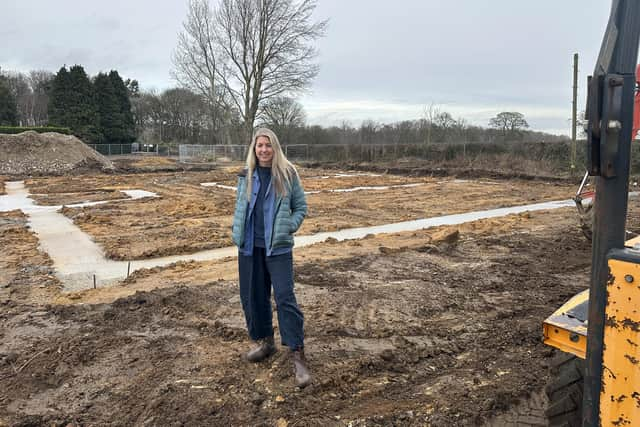
Meanwhile, interior designer Catherine Borse and her husband Vishal are currently building a new home in their garden near Eccup Reservoir in Leeds. The couple, who have two children aged 12 and 10, bought their current house in 2021 along with the former kennels next door, planning from the outset to build their long-term home on the footprint of the outbuildings.
Rather than a conventional development, Catherine aims to create a certified Passive House, designed by Gagarin Studio. “If you’re going to build something, you should make it as healthy and sustainable as you possibly can,” she says.
The black timber-clad, U-shaped, five-bedroom home will sit within a rewilded landscape, alongside a substantial vegetable garden and a one-bedroom annex for parents, children or guests. The family expects to move in by February 2027.
Architect Gayle Appleyard, director of Gagarin Studio, says many homeowners don’t think about building on land they already own.
“I don’t think enough people know about it. They just kind of rule it out,” she says. “But architects are really good at unlocking potential. There might be an outbuilding or just volume in a garden where you think, actually, we could do something here.”
She adds that rising house prices and the housing shortage are driving the trend. “Because of the housing crisis, we’re starting to say to clients, well, there’s potential actually to get two properties on this site - you could maybe get planning and sell, and that could fund your project.”
Paul Testa says the financial logic can be compelling. “If you already own the land and spend, say, £20,000 on fees to get planning, you now have an asset that could be worth £180,000 more than you spent on it. Even if you decide not to build, you still have that asset.”
While not every garden is suitable, both believe the approach offers a humane and practical way to increase housing supply.
“This isn’t about simply making money,” Gayle says. “It’s about getting housing that we desperately need, for people in a range of different circumstances.”
As Marie puts it, standing in her new Crosspool home: “We loved the area. We just needed the house to fit our lives.”