
'I thought I had 10 minutes to live': Yorkshire developer describes terrifying Everest escape
Steve Davis accepted that his life was very likely coming to an end when he found himself stuck coming down Mount Everest with dwindling oxygen supply.
Aiming to achieve one of the greatest feats known to man in summiting earth’s highest peak, 350 climbers were moving together step by step up the mountain and across a 10 centimetre rock ledge just as Steve, inset, needed to descend.
“Because they couldn’t see that we were trying to come down, when one person took a step forward all 350 took a step forward and there was only room on this gap for one person. We couldn’t stop them coming up.”
Getting the people train to back up one by one was simply impossible to get a pause in the momentum. So close to the summit there's only one thing on their mind


“My oxygen bottle was running out and there was a dead body next to me,” Steve says. “At that point I kind of thought I am going to die in the next 10 minutes.”
“That was almost a spiritual turning point. I thought ok, I’ve climbed Everest and I had told my family that this could happen. I had no regrets. This feeling came over me and I leant against the side and watched people coming though. Then someone’s crampon came off as they were coming up and stepping into this gap. Because he paused it gave me the tiniest gap to step through.”
Steve and his sherpa guide managed to descend far enough to reach some fresh oxygen tanks and to safety.
He says that moment in 2022 made him very purposeful in everything he has done since. He took on the challenge of scaling the highest summit in each of the world’s continents and trek to the South Pole because he wanted his children to see him differently and not just for being financially successful.
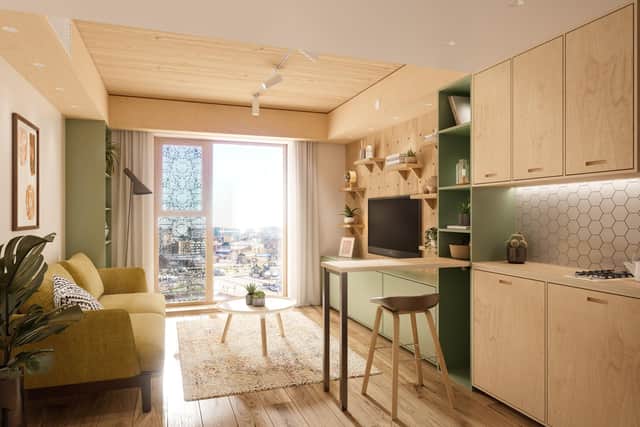
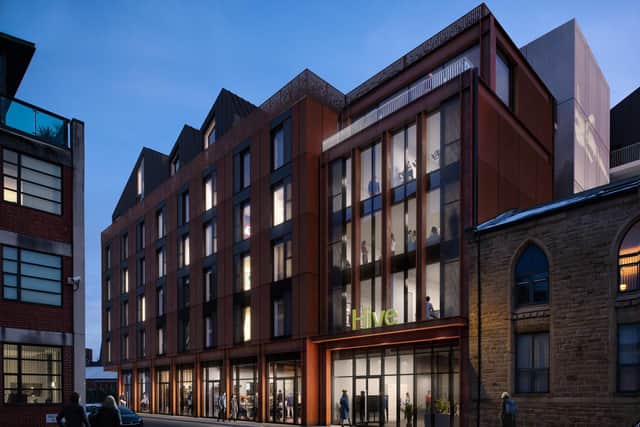
Being on the mountains and seeing first hand the ravages of climate change also gave him a new purpose. Now, he is back in the property game and looking to roll out a series of co-living developments, where renters share amenities such as kitchens and lounges.
The first under the Hive brand is in Sheffield’s Kelham Island area. Residents to the 100 studios will be able to move in from early 2027.
Steve says: “To relaunch the business I wanted to be known for this type of product and that will be my legacy. It is not an average building that we are delivering, we really try to push the sustainability credentials. It is fundamental and not up for discussion because it’s a cost. We must find another way and in some cases that means less profits.”
Hive is currently looking for sites in several cities. Steve believes we are moving into a rentalised market era and co-living offers a different proposition to Build To Rent (BTR) schemes.
“In BTR you get the full-sized serviced apartment, whereas with co-living it is a smaller studio and you are encouraged to cook a meal with other people or book a dining room and sit and watch TV together. In BTR there is a passive allocation of facilities and amenities that you can use or not.
“A lot of post graduates are used to living in shared facilities but at the moment there isn't a lot of opportunity after that. It’s either go to BTR, a shared house or back with your parents.”
Steve is also building a new 19,500 sq ft office in the centre of Sheffield at 190 Norfolk Street.
Sheffield offers a lot of potential, Steve says: “It feels exciting and like it is just getting going. It has more space to grow in terms of rents and residential incomes as opposed to Leeds which doesn’t.”
Steve spent a lot of his childhood moving between countries including South Africa, Australia and New Zealand but he attended school in Pocklington, East Yorkshire, and has been York based for many years.
After school, he joined his stepfather Graham Taylor’s construction business. The two of them then set up Grantside and were introduced to an enterprise zone job in Dundee. When the scheme’s developer went bust the bank asked Grantside to finish the scheme.
Further enterprise zone work rolled in. With 40 per cent tax relief and banks lending to 60 per cent of a scheme they effectively didn’t cost the investor any money. For the next 15 years every one of Grantside’s schemes, usually in Scotland or the North East, was paid in advance.
Business parks offered new facilities such as multi-use games areas, extensive concierge services or a creche.
After the 2008 financial crash Grantside started to do satellite schemes in logistics or offices and then began to look at more residential schemes. It bought and later sold the former Terry’s chocolate factory site in York after prolonged planning wrangles. And it won awards for its work restoring the city’s flood prone Bonding Warehouse which created offices and York’s first £1m apartments.
Reflecting on his career Steve says: “Our biggest learning was being true to ourselves and having managed risk, not zero risk.
"We can do a deal or walk away. Almost weekly, I get developers want to do joint ventures and when I look at their business plan, 90 per cent are rubbish. The skill level and people’s attention to detail is really poor.”