
Leeds apartments owner says ‘unsaleable’ homes expose flaw in non-qualifying leaseholder rules
Rosalyne Sharp had expected her property investments to provide financial security in later life. Instead, she says a change in leaseholder rules has left her unable to sell and locked out of funds she had planned to rely on.

Rosalyne, who lives in Roundhay and also owns three flats in Leeds city centre, became what is known as a “non-qualifying leaseholder” in perpetuity under the Building Safety Act 2022 due to the number of properties she holds and the height of those buildings.
Leaseholders who own more than three residential properties in the UK and hold leases in buildings under 11 metres tall (or under five storeys) are generally considered non-qualifying leaseholders under the Act.
This means that Rosalyne, and thousands like her, are excluded from certain government protections introduced following the Grenfell disaster, even though the buildings are not high-rise, have no cladding and, she says, meet current safety standards.


Rosalyne, who owns one flat in Turlow Court and two in Centaur House, was unaware of her status change until recently when she put the Turlow Court property on the market.
“I found a first time buyer who had been looking for a year, and this was the first one that she really fancied. It was valued at £185,000 and we agreed a sale for £180,000, but then she came back and said ‘I can't buy it because you're a non-qualifying leaseholder’. I had no idea what that meant.”
The sale fell through within a week. Rosalyne reduced the price by a further £20,000 to try to secure a cash buyer, but the flat has since been returned to the rental market.
Rosalyne, 76, and her husband bought the flats around 25 years ago to top up her pension pot.
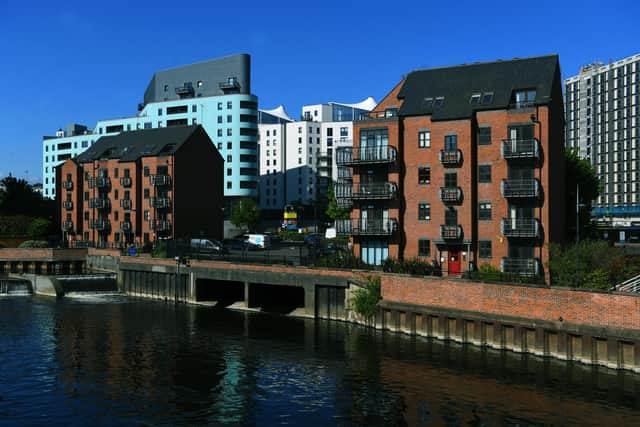
Centaur House is a five-storey converted Victorian mill, while Turlow Court is a four-storey building near the canal. She says both are regularly inspected and maintained.
Rosalyne says the blanket approach by the Government fails to take into account the nature of individual buildings. “They’ve generalised everything, and they’ve caught in their net people who shouldn’t be involved,” she says. “It’s stalling the first time buyer market. My flats now are effectively unsaleable, how is that helping get people onto the propety ladder?” she says.
Her case is far from unique. Maggie Brodie and Suzy Spilling, co-founder of the Non-Qualifying Leaseholders campaign group, are lobbying for change.
Maggie says: “When people buy a flat, they buy it with design approval, building control, approval, material and certification, approval, and these are all government systems. But suddenly it has become the fault of leaseholders.”

She adds: “In cases like Rosalyne’s where there’s no cladding, government says there may be defects that can’t be identified.”
Even where buyers are willing, she says, transactions can still collapse. “The banks don’t want to lend,” she says. “I can’t see how the government doesn’t see that they’ve got to do something in order to get the market moving.”
Rosalyne has written to her local MP, Fabian Hamilton, inset, asking him to raise the issue in Parliament, particularly around whether the “in perpetuity” nature of the status could be phased out.
A spokesperson for Fabian Hamilton told Property Post that the Labour MP for Leeds North had written to the Secretary of State about Rosalyne’s case specifically.
In a statement, he said: “The government has taken action to ease the cost of living for leaseholders in Leeds, capping ground rents and ensuring that they are not subject to sky-high service charges for very little benefit.
"That said, it's important that this is not the end of this legislation and further action is taken to free up properties for local families, supporting those who want to sell. In particular, it’s welcome that the Secretary of State has confirmed that he is looking at what can be done to sunset the “in perpetuity” status of leases which do not qualify for the leaseholder protections.
“It’s important to note that ten major mortgage lenders have signed a public statement on cladding which confirms lenders will consider mortgage applications if the building has funding for remediation works from government or the developer, regardless of the qualifying status of the leaseholder."
The Ministry of Housing, Communities and Local Government did not respond when approached by Property Post but in a letter to Rosalyne in March, it said: “While the Government understands the financial concerns you raise, there are currently no plans to expand leaseholder protections beyond the thresholds set by Parliament.
"However, the Government is continuing to build on the legislation brought forward through the Building Safety Act and has introduced further measures through the Leasehold and Freehold Reform Bill to strengthen redress and prevent those responsible for building safety defects from avoiding their liabilities.”
For Rosalyne, the situation remains unresolved. “It’s deeply frustrating that I bought three apartments in good faith only to find that somebody’s changed the goalposts and it’s out of my control,” she says.