
The evolution of coffee: how Britain became a nation of connoisseurs
Back in the 1950s, choice of a coffee in a restaurant usually meant “black or white” and the white version was probably boiled milk poured from one of those stainless steel jugs with a wooden handle on the side at right angles to the spout.
In the 1960s along came Habitat with their enamelled Turkish coffee pots even though it was virtually impossible to buy ground Turkish coffee and few knew how to make it anyway. Occasionally you might come across an Italian cappuccino in a coffee bar but these were almost always just a milky coffee with a bit of foam on top.
The 1970s brought us the elongated coffee pot at home, made in Stoke-on-Trent factories like Portmeirion or Denby who competed with each other to make them taller and taller.
Fashionable people at that time often used to fill them with instant coffee. A few fancy folk had electric or stove top percolators, the former having now virtually disappeared and the latter remain far more popular in America. An even fewer number of aficionados took to the rather scientific laboratory looking glass “Cona“ coffee makers which peaked in the seventies both at home and in cafés.

By the 1980s, specialist coffee shops began to appear on our streets with proper Italian espressos and cappuccinos but it wasn’t until the 1980s that chains like Caffé Nero or Costa Coffee sprang up and it took almost 20 years for the American Starbucks chain to cross the Atlantic.
In the home, all sorts of coffee makers began to hit the market along with the classic hexagonal shaped stove top Moka Express, which had been patented in 1933 by Afonso Bialetti. All sorts of designs followed in his footsteps.
The new designs were made of aluminium, stainless steel, glass and china in many colours, various sizes, different shapes and a huge range of prices. Miniature versions of the espresso machines used in specialist coffee shops soon followed, some with bean grinders, some without.
Today, along with the 17th century Neapolitan design where you turn the coffee pot upside down when it boils, there are cafetière, filter coffee makers and stove top designs galore. One of the newest is the Menhir by Alessi which clearly borrows its pedigree from the earlier Bialetti model. Most work surprisingly well and give you a cup of coffee at home to match the specialist cafés.
However, it’s not all plain sailing as new varieties of coffee keep appearing. Decaffeinated coffee sales skyrocketed in the eighties on the back of the American health craze. Now you have to choose between an Americano (shot of espresso with a good dose of hot water) and a Long Black which surprisingly is in fact a short Americano with less water.
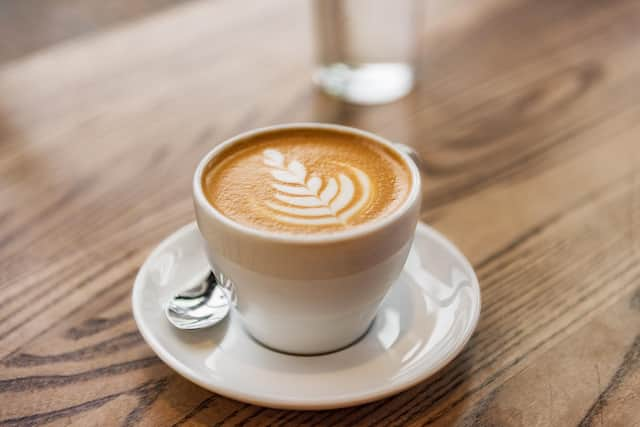
There’s a Flat White which isn’t flat or white. There’s Latte, Frappé, Ristretto (an espresso with less water), Cortado (steamed milk but no froth), and Macchiato (an espresso with a blob of foam on top).
Coffee is grown all over the world with different strengths and flavours and there also flavoured syrups, not to mention the range of sizes. Choice is generally a good thing but when typically confronted with over 200 different coffees on a supermarket shelf, it can be so confusing that you might just want a cup of tea.