
Why Britain needs more small housebuilders to solve the housing crisis - James Wimpenny
Britain’s housing shortage has become one of the defining political issues of our time.
Every government promises planning reform and ambitious housing targets. But one simple question is rarely asked, who is actually going to build these homes?
For years policy has focused almost entirely on increasing planning approvals. Yet planning permission does not build a single house, people and businesses do.
One must consider that there are two types of housebuilder, the nationals who provide volume and small to medium enterprises (SMEs) who provide lower volume within their own communities.
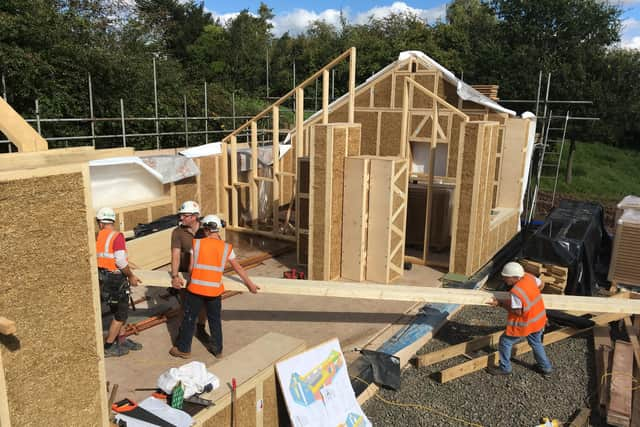

A generation ago towns and villages across Yorkshire were served by local family owned housebuilding firms, typically building ten to fifty homes. These businesses understood their communities, knowing which brownfield sites and redundant buildings could be repurposed along with new sites designed and built in the local vernacular.
Today many of these companies have disappeared. Their decline should concern everyone who cares about housing delivery.
SME builders are often willing to develop sites of five, 10 or 50 homes that are simply too small to be viable for the national house builders. Individually these sites seem insignificant but collectively can contribute thousands of extra homes while complementing existing communities.
Increasing legislation, planning delays, rising costs and access to finance chipped away at these companies. These factors create a burden falling disproportionally on SMEs with limited financial resources resulting in less competition, less diversity and fewer homes.
SMEs are important to communities because they employ local architects, engineers and tradespeople. They train apprentices, source materials locally and provide economic benefits helping sustain jobs and skills in the community.
Yorkshire has a proud tradition of such companies that have earned their reputation over years and have helped to shape many of the communities we have today.
If the government is serious about increasing housing delivery it must take much more seriously the role that these local companies demonstrate and make this a national priority. This means better resourced planning departments, improved regulation and improved access to finance, quicker decisions and proportionate regulation.
Such government support is not about favouring one part of the industry but is about encouraging diversity, a policy where local builders can have the confidence to invest, recruit, innovate and grow.
Britain undoubtedly needs more homes but unless we rebuild the number of companies to build them housing targets will remain little more than aspirational.
As chair of the Kirklees Development Consortium, I see at first hand the appetite to build but more importantly the many barriers that prevent firms from growing and succeeding.
James Wimpenny is founder and chair of the Kirklees Development Consortium which represents more than 80 housebuilding and associated businesses across Yorkshire.
He is also an independent housebuilder at James Wimpenny Homes and a property development consultant whose family have been building in Yorkshire since 1884.