
Yorkshire housing market stays steady amid Budget jitters and national slowdown
Yorkshire’s housing market is ending 2025 on a steady footing, with solid regional growth, even as national uncertainty around the November Budget tempers sentiment and slows activity in higher-value areas.
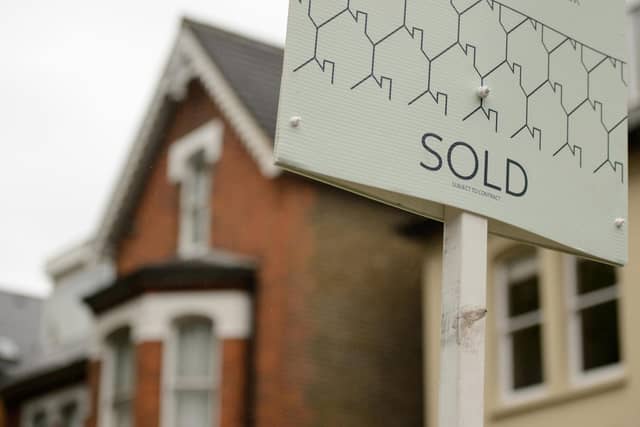


Figures from the Office for National Statistics (ONS) show that Yorkshire and the Humber saw annual house price inflation of 2.7 per cent, just under the national average of three per cent. Average prices across England rose by 2.9 per cent to
£295,670 in the year to August, while Scotland saw four per cent growth and Wales two per cent.
The ONS reported that the North East led the country with 6.6 per cent annual growth, while London was the only English region to record a fall, down 0.3 per cent.
Patrick McCutcheon, head of residential at Yorkshire estate agent Dacre, Son & Hartley, says that local conditions remain active but increasingly cautious: “There is no shortage of desire amongst buyers and sellers, but many are deferring action until the effect of Rachel Reeves’ November budget is clear, in terms of wealth taxes, stamp duty changes, capital gains tax and so forth,” he says.
He adds: "Some worries may be based on unlikely foundations, but all parties in the housing market prefer certainty – and that is a rare commodity at present.
“It’s also worth remembering that stock levels have increased in recent years. This means there’s more choice available across all price points, but with this comes less price growth, simply because sellers must price realistically in the current buyers’ market.”
That realism is helping to steady the regional market. According to Zoopla’s latest data, Yorkshire and the Humber is one of the few areas still seeing year-on-year growth in sales agreed, up four per cent compared with a national decline of three per cent.
Buyer demand across the UK fell by eight per cent as many purchasers adopted a “wait and see” approach ahead of the Budget, but Yorkshire’s relative affordability and lifestyle appeal are helping sustain activity.
Tom Robinson, director at North Yorkshire buying agent The Property Partnership, says confidence at the top end of the local market has been clouded by national politics but underlying demand remains solid.
“North Yorkshire’s upper-end housing market is entering the final quarter of 2025 with uncertainty as we deal with daily prophecy in the press in the run up to the Budget on November 26,” he says. “After two years of adjustment, the regional market has stabilised.”
He adds: "Transaction volumes have stabilised, while demand for prime homes - particularly in York, Harrogate and the surrounding villages - remains selective and value-driven.”
He says that while best-in-class homes in sought-after locations continue to attract competitive bidding, “buyers are more discerning and properties with an Achilles heel or requiring significant investment are being discounted and asking prices rarely achieved”.
Tom expects that “provided the forthcoming Budget avoids punitive tax reform, the upper end of North Yorkshire’s market is expected to post modest positive growth through 2026 as borrowing costs continue to ease and confidence returns”.
Nationally, a cooler tone has taken hold. Rightmove’s latest figures show the average asking price of a property coming to market in October rose just 0.3 per cent - or £1,165 - to £371,422, well below the 10-year October average of 1.1 per cent. The online property platform said an unusually high number of homes for sale has limited sellers’ pricing power.
The most recent Nationwide House Price Index reported that annual house price growth edged up slightly to 2.4 per cent in October from 2.2 per cent in September. Prices increased by 0.3 per cent month-on-month, bringing the average property price to £272,226.
Nationwide’s chief economist Robert Gardner says that the market’s steady performance despite higher borrowing costs “indicates resilience,” adding that affordability should improve “if income growth continues to outpace house price growth as we expect.”
The Office for National Statistics also reported easing rental inflation, with Yorkshire and the Humber recording the lowest rent increases in England - up 3.8 per cent in the 12 months to September compared with 5.5 per cent nationally. Average monthly rents across England reached £1,410, with the UK average at £1,354.
Aimee North, head of housing market indices at ONS, says: "UK annual private rents inflation has eased for the ninth consecutive month, and annual growth has slowed for all countries across the UK."