
Yorkshire property market outperforms UK as first-time buyers drive demand despite housing slowdown
While much of the UK housing market is losing momentum amid higher borrowing costs and global economic uncertainty, Yorkshire continues to show signs of resilience, with first-time buyers helping to sustain demand and house price growth across the region.

Recent data from a range of industry bodies points to an increasingly pronounced north-south divide, with Yorkshire and other northern regions outperforming many southern markets where affordability pressures remain more acute.
According to property portal Zoopla, first-time buyers are providing much of the market's momentum across Yorkshire and the Humber. Demand from first-time purchasers is growing faster than the wider market, despite continued affordability challenges and higher mortgage rates.
Richard Donnell, executive director at Zoopla, said: “In line with the national trend, first-time buyers across Yorkshire and the Humber are driving market momentum.
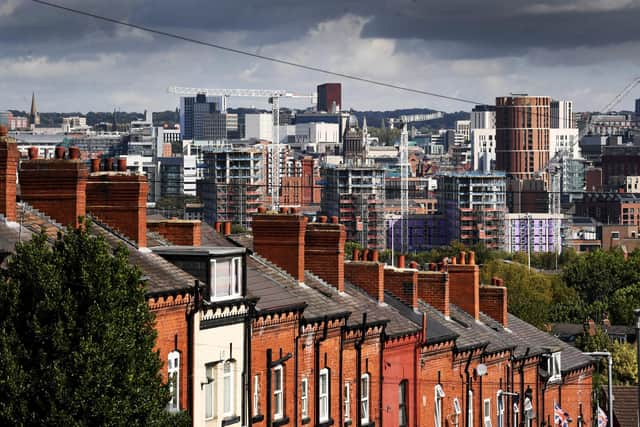

"We are seeing first-time buyer demand and purchasing power significantly outpace the wider market, with first time buyer growth year-on-year sitting at 4.8 per cent compared to just 3.4 per cent for the general Yorkshire market.
“This comes as changes to mortgage affordability continue to push up entry-level prices, yet determined buyers are adapting rather than stepping back.
“The same resilient story is also playing out at a city level; both Leeds and Sheffield are outperforming the wider UK, retaining solid house price growth at 2.6 per cent and 2.3 per cent respectively, compared to the national average of 1.5 per cent.”
The strength of northern markets has also been highlighted by Rightmove, which reported annual asking price growth of 2.7 per cent in the North East and 2.6 per cent in the North West, while London and the South East recorded annual declines of 2.4 per cent and 1.6 per cent respectively.
Yorkshire has also remained attractive to buy-to-let investors. Research from Hamptons suggests higher rental yields in northern England are helping to offset increased mortgage and tax costs, encouraging larger investors to continue purchasing properties as smaller landlords leave the sector.
The rental market remains under pressure, with demand continuing to outstrip supply. Hamptons reported that tenants moving into newly-let homes in Yorkshire and the Humber paid an average of £944 per month in April, up 1.9 per cent on the previous year.
Nationally, however, the housing market is showing clear signs of cooling.
Figures from the Office for National Statistics showed UK house prices were flat in March, with the average home valued at £268,000. In England, average prices fell by 0.6 per cent over the year, while London recorded its eighth consecutive month of annual price declines.
Meanwhile, Nationwide Building Society also suggests the slowdown has continued. Average UK house prices fell by 0.6 per cent in May, the first monthly decline of the year, while annual house price growth slowed from three per cent in April to 1.7 per cent.
Surveyors are also reporting weaker conditions. The Royal Institution of Chartered Surveyors found that a net balance of 34 per cent of professionals saw house prices falling rather than rising in April, worsening from 25 per cent in March. New buyer enquiries and agreed sales also remained subdued.
Much of the caution stems from uncertainty over interest rates and the economic impact of the conflict in the Middle East, which has pushed up energy prices and complicated expectations for future Bank of England policy.
RICS head of market research and analysis Tarrant Parsons said recent warnings that interest rates could rise again to combat inflation had created a challenging environment for buyers.
“Until there is a clearer path for inflation and borrowing costs, activity and sentiment look set to remain subdued, particularly across southern England and London where affordability pressures are most acute,” he said.
Despite the softer backdrop, there are signs that the market remains fundamentally stable. Rightmove reported that agreed sales have continued to hold up during the spring selling season, while mortgage affordability has improved slightly compared with recent years.
However, buyers have become increasingly price-sensitive. With the number of homes on the market at its highest level for this time of year since 2015, sellers are facing greater competition and are being urged to price realistically.