
Diatom Watches: 'We make watches that are total one-offs - they've been sent into space'
Do you want a watch that is out of this world? A Sheffield company has the answer, with timepieces that have flown into Space. Daniel Dylan-Wray reports.
In school, Dr Chris Rose was the guy who had a watch on each wrist.
“Even from a young age, I loved that rare yet perfect balance between two different disciplines: art and engineering,” says Rose co-founder of Sheffield-based Diatom Watches.
Now, at 39, Rose has been able to pursue his childhood love of watches but via a very unique and unusual route.
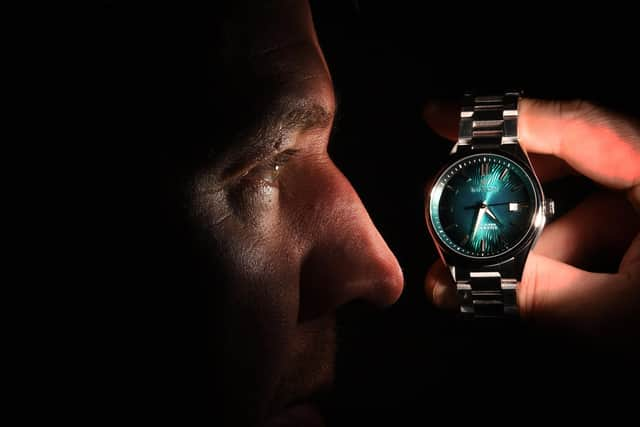

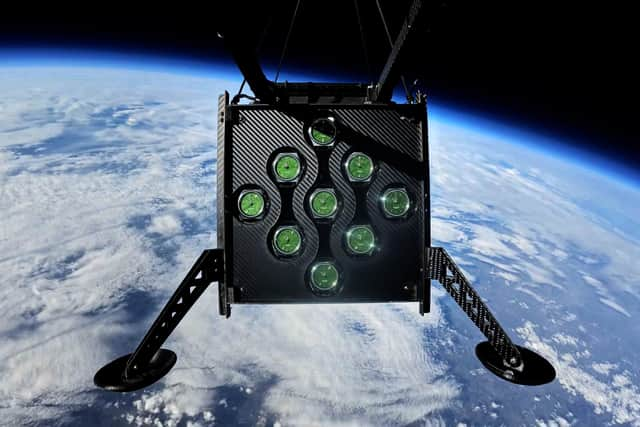
Not only do Diatom – which Rose co-founded with Dr Alex Baker in 2023 – make visually arresting watches that catch the eye, but every single one of them has been flown into space and is forged from rare and unique space elements.
You will find a variety of materials in their range of watches, including various types of meteorites and even genuine lunar regolith (moon rock).
“What we absolutely didn't want to do is create a gimmicky piece of merchandise,” says Rose.
“We've always had a fondness and excitement for space, so we wanted to make that accessible to people.
"For someone down the pub to be really excited to discuss this incredible piece of space history that's found its way to his wrist.”
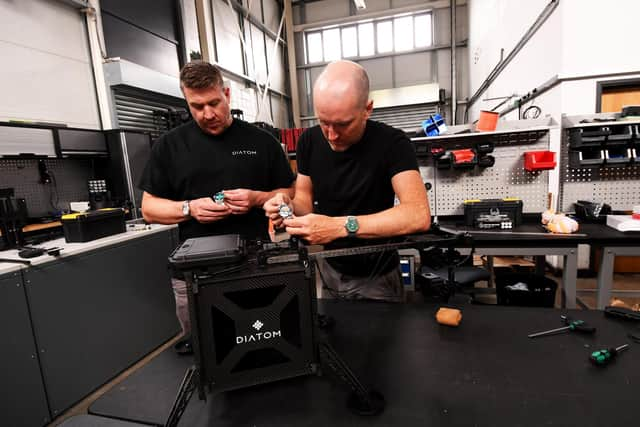
Rose and Baker’s space explorations began when they met during their PhD engineering studies in Sheffield.
“We worked in the same office and had a similar penchant for being easily distracted and getting involved with projects that weren't necessarily part of our core study focus,” says Rose.
“We entered a photography competition for National Geographic, where the call to action was to capture the earth in all its glory.”
While most people thought about nature, animals and landscapes, the pair opted for something a little more leftfield yet hugely ambitious.
“We thought: why don't we literally try to get a shot of the earth in all of its glory?” recalls Rose.
“To get this cheap camera into space, take a photo with it, and then try to get it back. So that led to the engineering objective of: how are we going to get it up there?
"How are we going to make it survive the harsh environments? How are we going to find it again? How are we going to make sure the lens doesn't freeze over?”
So, over six months, they researched the history of radiosondes, looking at ways to track a helium balloon into space, and weather prediction software to model its path up and back down again.
In 2010, they launched their very first flight from the back garden of Rose’s family home.
“There was a somewhat budget approach to it all,” he says. “Using recycled materials and salvaged bits and bobs – it was very sort of Scrap Heap Challenge.”
However, it worked and they went viral as a result.
“Geeky students doing this interesting thing was kind of the headline. And from that grew a bit of a call to action from people that were saying ‘oh, would you be able to put this, that, or the other into space?’”
They didn’t win the photography competition but the experience presented an opportunity for them to create something in a field that didn’t exist: rapidly deployable and affordable access to space.
“As we exited our PhDs we looked to take it quite seriously,” says Rose.
“To say: how could we develop this into a reliable and respected launch platform for advertisement, testing, evaluation, and sampling, so that's what we did.
"We started with simple brand placement opportunities in space.”
They launched Sent Into Space in 2011 and began to shoot promotional and marketing materials in space for a huge range of clients, which grew into Samsung, Disney, Coca Cola and Google, using their skills and expertise to reach levels that looked dazzling.
“Things look pretty special at about 24 kilometres up,” Rose says.
“And really special at about 28. But we get much higher, closer to 40 kilometres above the earth.”
This saw the company work on a vast number of projects, even shooting scenes for the hit space film Gravity, as well as showcasing the latest iPhone case in space.
They have since conducted more than 2,000 flights to the upper stratosphere and along the way they began a scientific probe, with the goal of sampling stratospheric particulates.
This led to something completely unexpected and revelatory: the presence of diatoms (microscopic organisms similar to algae) in the stratosphere.
The discovery of these microorganisms floating in the stratosphere was what inspired Diatom’s name and branding.
“Sent Into Space gave us access to space, rare materials, space history, space celebrities, astronauts and we wanted to utilise that,” says Rose.
“But this is not a piece of merchandise that Sent Into Space has released. We wanted to create a brand for Diatom, where we could indulge our eye for detail and quality.”
The aim, Rose says, was: “to start with an attractive, arresting watch that looks good without any further explanation but then has layers of talking points, such as the metalwork in it came from Apollo 11 Kapton [thermal insulation used on the Apollo 11 spacecraft]. We want to bring people into the scientific storytelling of our watches and the materials they contain, providing them with something they can point to and discuss.”
The result is a series of timepieces that are total one-offs.
“We are very literal about our inclusion,” says Rose. “So people can point at a watch and go: ‘you see the back face of that? That's the surface of the moon.’
"It's not figurative. It's not poetic. It's very literal. And we want to show you a chain of authenticity.
"You can see the behind the scenes of us using that technology, looking at the materials that are going into your watch, and get the data from it. It's so interesting, and it should not be reserved for just us.”
Because of the pair’s longstanding history in this field, they have clearances for multiple launch sites – from Sweden to America via Sheffield and Derbyshire – and the more watches they can send into space at once, the more they can bring the price down.
“We want to make these as accessible as possible to the everyday person, and not just the rich,” says Rose. And they are also looking to expand the concept behind the company.
“This started with putting space in a watch,” says Rose. “And now we've had the opportunity to really listen to our public, to hear what's exciting to them, and explore the world of specialist materials.
"So now we're broadening out that storytelling significantly.”
This means that they are going to find ways to incorporate specialist materials from all walks of life into singular timepieces.
“We don't want to just appeal to space enthusiasts,” says Rose, “but to the travel enthusiast, the rare earth mineral enthusiasts, vehicle enthusiasts, military enthusiasts.
"So that we can take meaningful physical materials to you, and not just stick it in a watch but celebrate it in a watch in the most elaborate and interesting ways possible.”
And while this may end up with the company creating bespoke watches made from everything from tanks to helicopters and bits of moon via F1 cars, the end result they are hoping will be one and the same.
“I want Diatom to be recognised on people's wrists,” says Rose. “For people to go: ‘Is that a Diatom?’
"That's success for me. I love the idea of appealing to enough people that we have a creative throughline and that people can see our identity at a glance.
"That would be very special for us.”